
 By Azzam Bilal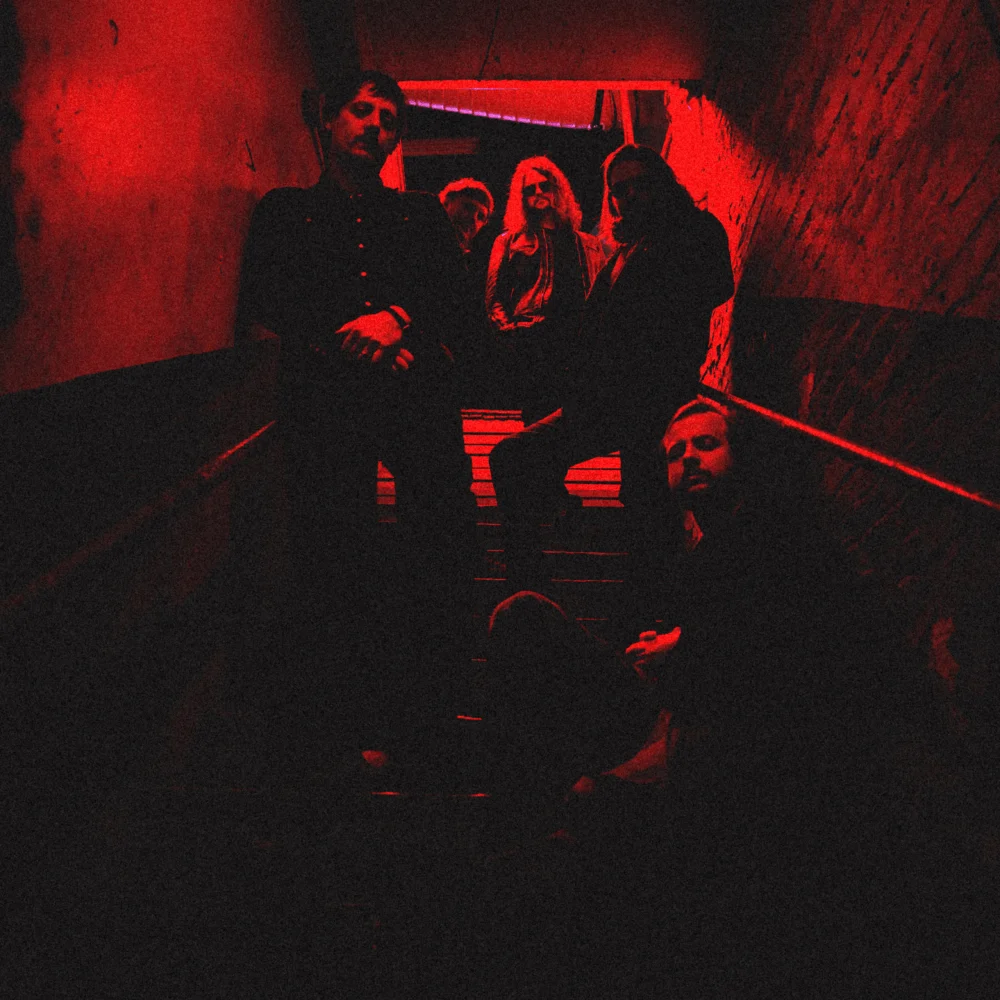
HangupsMusic.com – Nashville, The trajectory of Sturgill Simpson’s career has never followed a traditional map. From his early days as a boundary-pushing traditionalist to his mid-career pivot into psychedelic rock and bluegrass, Simpson has consistently prioritized creative autonomy over commercial predictability. Now, the Grammy-winning artist is doubling down on his commitment to artistic evolution by announcing the second full-length record under his "Johnny Blue Skies" moniker. Titled Mutiny After Midnight, the album is scheduled for a March 13 release via Atlantic Outpost. In a move that defies the prevailing digital-first logic of the modern music industry, the project will be available exclusively on physical formats, including vinyl, CD, and cassette, marking a significant stand against the "static" of the streaming era.
This latest announcement serves as a continuation of Simpson’s well-documented 2021 pledge to retire the "Sturgill Simpson" name after five studio albums. That cycle concluded with the release of The Ballad of Dood & Juanita, a concept record that showcased his storytelling prowess within a traditional framework. However, the end of the Sturgill Simpson alias did not signal an end to his musical output. Instead, it birthed Johnny Blue Skies, a persona that allows the artist to explore sonic territories that might have felt restricted under his birth name. While 2024’s Passage du Desir introduced the world to this new identity, Mutiny After Midnight appears ready to push the project into an entirely different atmosphere—one defined by rhythm, collective synergy, and what Simpson describes as "disco-hedonism."
The genesis of Mutiny After Midnight is rooted in the deep-seated kinship between Simpson and his long-time touring band, now officially dubbed "Johnny Blue Skies & the Dark Clouds." The lineup consists of a seasoned group of virtuosos: drummer and backing vocalist Miles Miller, lead guitarist Laur Joamets, bassist Kevin Black, and multi-instrumentalist Robbie Crowell on keyboards and saxophone. This ensemble is far from a group of hired guns; many of the members have shared the stage and the road with Simpson for over thirteen years. In a heartfelt letter accompanying the album announcement, Simpson noted that the band has never felt more unified. This sense of brotherhood became the foundation for the new recordings, which were captured this past September at a state-of-the-art studio in Nashville during a brief hiatus from their extensive global tour.
Musically, the album is a departure from the Americana and country-rock foundations often associated with Simpson’s earlier work. During their time on the tour bus, the band reportedly spent countless hours studying the performances of "Stuff," the legendary 1970s fusion-funk group known for their impeccable pocket and session-player chemistry. Additionally, Simpson pointed to Marvin Gaye’s 1981 masterpiece In Our Lifetime as a primary inspiration. Gaye’s record, a deeply personal and often overlooked concept album, explored the tension between the darkness of the world and the redemptive power of love and dance. Simpson has channeled this duality into Mutiny After Midnight, structuring the songs around two central themes: the "dark state of the world" and the "bright state of love."
The recording process itself was an exercise in spontaneity and group intuition. Rather than arriving with polished demos, the band started each day from scratch, building songs around foundational grooves. Simpson wrote lyrics and melodies in the moment, ensuring that the music prioritized the "primary dance" over individual egos. This method allowed the band to capture a raw, kinetic energy that Simpson believes is the only true antidote to social and personal oppression. By leaning into what he calls "unfiltered, unapologetic, relentless disco-hedonism," the artist seeks to create a space where listeners can escape the crushing weight of modern existence through rhythm and movement.
One of the most anticipated tracks on the record is the opener, "Make America Fuk Again." The lyrics, which were shared as part of the press rollout, offer a searingly honest look at Simpson’s internal life and his observations of the current social climate. He touches on his experiences with ADHD and autism, describing his ability to turn neurodivergence into a "superpower" for creative focus—or, as he bluntly puts it, "weaponizing my autism to shit out an opus." The song also references his struggles with depression and his use of ketamine therapy as a means of seeking clarity outside the "fog" of traditional antidepressants. It is a vulnerable, provocative start to a record that promises to be as intellectually challenging as it is danceable.
The decision to release the album exclusively on physical formats is perhaps the most "mutinous" aspect of the project. In an era where success is often measured by algorithmic placement and streaming numbers, Simpson is intentionally withdrawing from the digital fray. By limiting the release to vinyl, CD, and cassette, he is forcing a more deliberate engagement with the music. This "anti-static" approach aligns with his broader philosophy of the "real ones"—the dedicated fans who are willing to navigate the "cold and salty trenches" of the industry to find authentic art. It is a move that echoes the "pirate" mentality Simpson has adopted, signaling that he is no longer interested in the trophies or accolades of a generation, but rather in the meaningful connection between the sounds he makes and the ears that absorb them.
Simpson’s philosophical outlook for this era was also heavily influenced by his travels, particularly his observations of French culture. He expressed a profound admiration for the French ability to meet injustice with a "good time," citing their history of labor strikes that transform into street-wide parties. This manifested unity—where people dance in the face of infringement—served as the spark for the "Mutiny" concept. For Simpson, the album is an open rebellion not just against the music industry, but against the suppression of joy. He views the act of dancing as a "primary dance of all creation," a fundamental human right that serves as a protest against the darkness of the world.
The upcoming tour in support of Mutiny After Midnight is expected to be as intense as the album itself. Eschewing the traditional concert format, Johnny Blue Skies & the Dark Clouds will be performing in arenas and theaters without an opening act. Simpson has promised to utilize every minute the venue allows, delivering long, high-energy sets that emphasize the band’s collective power. He describes the group as a "deadly ship" on the water, with his own voice being just one element of a larger, star-studded machine. The goal is to "rock this Mutiny as hard as humanly possible," rewarding the fans who have remained loyal throughout his various transformations.
As the March 13 release date approaches, the anticipation for Mutiny After Midnight continues to build within the music community. The tracklist, which includes titles like "Excited Delirium," "Viridescent," and "Everyone Is Welcome," suggests a record that will navigate a wide spectrum of emotions and styles. While some may find Simpson’s pivot into "American Music" and disco-funk unexpected, those who have followed his career know that the only constant is change. By embracing contradictions and refusing to be pigeonholed, Simpson—or Johnny Blue Skies—remains one of the most vital and unpredictable voices in contemporary music.
Ultimately, Mutiny After Midnight is more than just a collection of songs; it is a manifesto of independence. It represents an artist who has found his "true North" by rejecting the standard metrics of success and focusing on the purity of the craft. Whether he is singing about the "dark state of the world" or the "bright state of love," Simpson’s message is clear: the rebellion is the party, and everyone is invited to the dance. As the final lines of his introductory letter suggest, he is done seeking permission or quarter from the industry. He is simply a pirate on the open sea, flying his own flag and letting the music find those it was meant for. The real ones, as he says, are for life.
Mutiny After Midnight Tracklist:
01 Make America Fuk Again
02 Excited Delirium
03 Don’t Let Go
04 Stay on That
05 Viridescent
06 Situation
07 Venus
08 Everyone Is Welcome
09 Ain’t That a Bitch
