
 By admin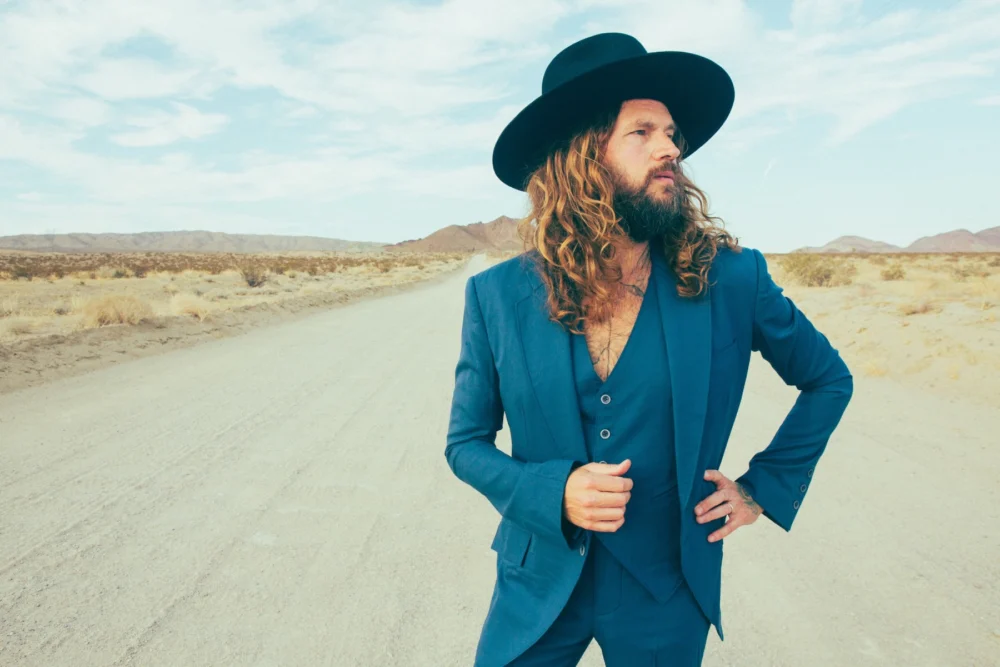
HangupsMusic.com – The vast, unforgiving expanse of the Mojave Desert has long been a canvas for introspection and a crucible for the human spirit. For Jay Buchanan, the powerful and charismatic frontman of the acclaimed rock outfit Rival Sons, this desolate landscape became the unlikely birthplace of his inaugural solo album, Weapons of Beauty. In a move that pushed the boundaries of creative retreat, Buchanan deliberately isolated himself for three months in an underground bunker, embarking on an artistic pilgrimage that promised to reshape his musical identity and deliver a deeply personal body of work.
Buchanan’s decision to sever ties with the outside world was not born of eccentricity, but a profound necessity for creative focus. In an illuminating conversation on Rolling Stone‘s Nashville Now podcast, the artist articulated the challenge of balancing domestic life with the demanding solitude required for songwriting. "I spend so much time away from home that I find myself incapable of ignoring my family in order to create," Buchanan explained, detailing the common artist’s dilemma. "I’m not one of those people that can disassociate to write when the kids are on the other side of the door. In order to tune in, I have to be able to tune out, completely." This candid admission offered a window into the intense internal struggle that often accompanies the creative process, particularly for those with familial responsibilities. For Buchanan, "tuning out" meant a complete withdrawal from the comforts and distractions of modern life, an almost monastic dedication to his craft.
The location for this extreme isolation proved as unconventional as the undertaking itself. A childhood friend, whose unique profession as an exotic reptile breeder often led him deep into the desert’s hidden corners, offered Buchanan an underground bunker. This wasn’t a purpose-built artist’s retreat, but a utilitarian, subterranean dwelling far removed from any semblance of civilization. The timing coincided with the wrap of Buchanan’s involvement in the Bruce Springsteen biopic, Deliver Me From Nowhere, where he had just completed filming his role as a singer in the Stone Pony house band, performing alongside members of Greta Van Fleet. Transitioning from the collaborative energy of a film set to the stark silence of the Mojave must have been a jarring, yet perhaps cathartic, shift. Upon returning to California, Buchanan loaded a van with essential provisions, leaving behind the bustling world for the quiet embrace of the desert.
Life within the bunker was stripped to its bare essentials, a stark contrast to the amenities of contemporary living. There was no cell service, ensuring complete digital detox. Running water and electricity were non-existent, forcing a reliance on stored resources and the rhythm of natural light. Compounding the primitive conditions was a disturbing vulnerability: the bunker’s door lacked a functional lock, a relic of a past break-in during the pandemic that had left its jamb unrepaired. This meant three months spent in a state of heightened awareness, the isolation tinged with a constant, low hum of potential threat. Buchanan’s improvised security measures—water bottles strategically placed against the door to alert him to any intrusion, and a pistol kept under his pillow—paint a vivid picture of the precarious existence. "It was trippy," he recounted, an understatement that belies the psychological toll such an environment could exact.
This self-imposed deprivation, however, became the fertile ground for Buchanan’s artistic exploration. The absence of external stimuli compelled an intense inward focus, allowing emotions and thoughts to surface unfiltered. The stark beauty and raw power of the desert, coupled with the claustrophobic intimacy of the bunker, undoubtedly seeped into the very fabric of his songwriting. It fostered a unique brand of introspection, one where the primal instincts of survival might have intertwined with the nuanced expressions of art. The resulting compositions, such as "True Black" and "Deep Swimming," are described as "intense." Buchanan himself noted, "I didn’t set out for it to sound that crazy," suggesting that the environment itself dictated the emotional depth and sonic character of the music, pushing him into unexpected creative territories. This marks a distinct evolution from the high-octane, blues-infused rock of Rival Sons, hinting at a more stripped-down, perhaps rawer and more vulnerable sound for Weapons of Beauty. The "toning it down" aspect mentioned in early discussions about the album likely refers to a shift in intensity, moving from external bombast to an internal, potent emotional landscape.
Following this extraordinary writing period, Buchanan brought his desert-forged material to the acclaimed producer Dave Cobb. The recording sessions took place in Savannah, Georgia, a setting that, while not as remote as the Mojave, still possesses a unique atmospheric charm, rich with history and southern Gothic undertones. Cobb, renowned for his work with artists across various genres, including Chris Stapleton, Jason Isbell, and Rival Sons themselves, is celebrated for his ability to capture raw, authentic performances. His collaboration with Buchanan suggests a meticulous approach to preserving the integrity of the songs born from such a unique crucible. Cobb’s touch would undoubtedly serve to refine and amplify the profound emotional resonance inherent in the tracks, translating the solitude and intensity of Buchanan’s desert experience into a compelling sonic narrative. The transition from the solitary act of creation in a desolate bunker to the collaborative, technical environment of a professional studio, especially after three months of extreme isolation, must have been a fascinating psychological and artistic adjustment.
Weapons of Beauty stands as a testament to the lengths artists will go to unearth their deepest creative wells. Buchanan’s journey into the Mojave bunker represents more than just a songwriting retreat; it’s a modern-day odyssey, a deliberate confrontation with self and environment, designed to strip away the superficial and expose the raw core of artistic truth. For fans of Rival Sons, this solo endeavor offers an unprecedented glimpse into the personal landscape of their formidable frontman, revealing a more introspective, perhaps even vulnerable, side to his artistry. It promises an album that is not merely heard, but deeply felt, a direct echo of the extreme conditions under which it was conceived.
The public’s first substantial insight into this remarkable project came through Buchanan’s interview on Rolling Stone‘s Nashville Now podcast. The episode, filmed live at Vinyl Tap, a popular record store and bar in East Nashville, provided a vibrant, intimate setting for the discussion. This weekly country-music podcast, hosted by senior music editor Joseph Hudak, has become a significant platform for artists and personalities across the musical spectrum. It regularly features in-depth conversations with a diverse array of talent, from Lainey Wilson and Hardy to Kings of Leon and Lukas Nelson, offering listeners a deeper understanding of the creative processes and personal stories behind the music. Buchanan’s appearance undoubtedly added a unique narrative to the podcast’s rich tapestry of artist interviews, underscoring the universal appeal of stories rooted in authentic, uncompromised artistic pursuit. Weapons of Beauty is poised to be more than just an album; it is a profound sonic artifact born from an extraordinary act of creative will.
