
 By Rose Miami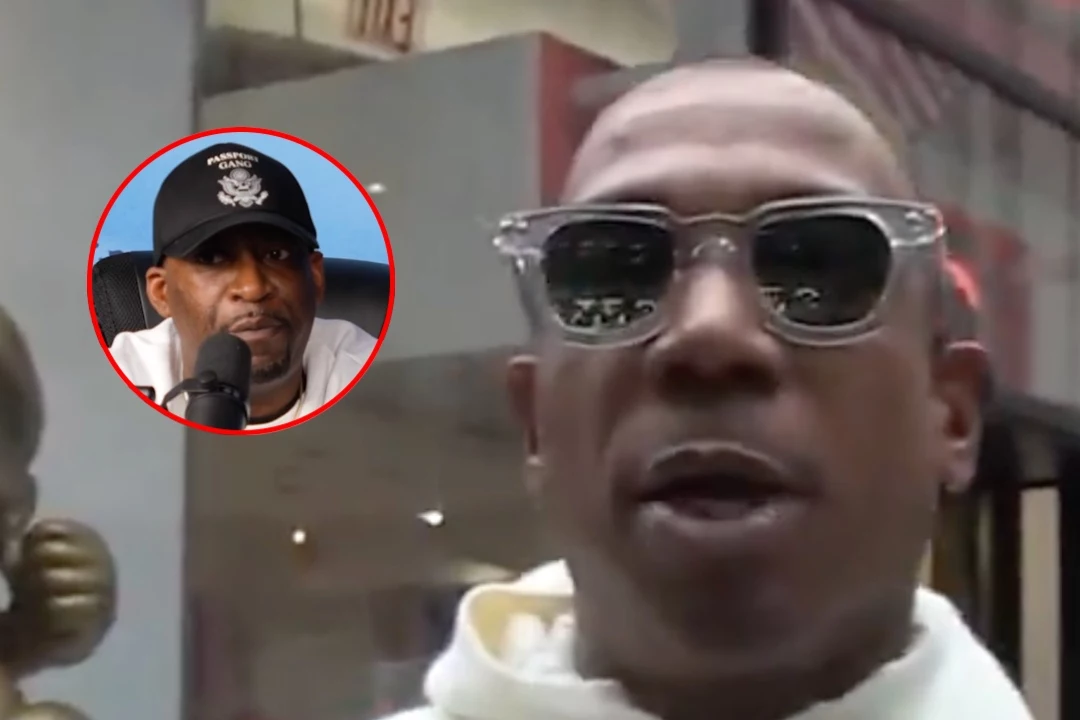
HangupsMusic.com – The long-simmering feud between Ja Rule and the G-Unit collective, spearheaded by 50 Cent, appears to be a perpetual fixture in the hip-hop landscape, with neither party showing any inclination towards reconciliation. In a recent encounter with TMZ paparazzi in New York City on Tuesday, February 17th, Ja Rule reiterated his unwavering stance, declaring that he would "never" seek to resolve his differences with 50 Cent and his associates. This declaration came in the wake of an airport altercation involving Ja Rule, Tony Yayo, and Uncle Murda, which added another chapter to their contentious history.
When pressed about the possibility of a sit-down to mend fences, Ja Rule, a prominent figure from the Murder Inc. era, articulated a philosophy of detached coexistence rather than active animosity. "Sometimes in life, people have enemies, and that’s OK," he stated, suggesting a mature acknowledgment of ongoing conflict without the need for constant escalation. "We don’t also have to be at war. So, there’s room for us to be not friends, and also not be at war. And that’s where I’m at with it right now. I don’t deal with that side. I don’t fk with them, they don’t fk with me. That’s fine. But I also don’t have to be at war." This sentiment suggests a desire to simply exist in separate spheres, free from the need for direct confrontation or forced camaraderie.
However, this measured approach did not sit well with Tony Yayo, a key member of G-Unit. Receiving word of Ja Rule’s comments, Yayo took to Instagram on Thursday, February 18th, to issue a pointed response, which has since been deleted. His post, captioned with the hashtag "#qgtm" (likely referencing "Queens Get The Money"), read, "We grown but war never dies. They was never outside." This retort directly challenges Ja Rule’s assertion of a passive stance, implying that the animosity is deeply ingrained and that Ja Rule’s current position is not a reflection of genuine historical engagement. Yayo’s words carry the weight of past confrontations and a perceived lack of genuine street-level interaction from Ja Rule’s side, suggesting that the "war" is not merely a matter of public statements but a lived experience for G-Unit.
The context for this renewed exchange stems from a rather dramatic incident that unfolded just days prior. On a flight from San Francisco to New York, Ja Rule and the duo of Tony Yayo and Uncle Murda found themselves seated in close proximity. What began as a tense proximity quickly devolved into a heated verbal exchange, escalating to the point where Ja Rule reportedly threw a pillow at Yayo. The situation necessitated Ja Rule’s removal from the aircraft. Following the incident, Ja Rule publicly apologized for losing his composure and "getting out of character," acknowledging the inappropriate nature of his actions, even within the context of their ongoing feud.
This airport scuffle and the subsequent verbal sparring highlight the persistent nature of hip-hop rivalries, particularly those rooted in the intensely competitive early 2000s. The beef between Ja Rule and G-Unit was one of the most prominent and acrimonious of that era, fueled by label rivalries, diss tracks, and street credibility. While the mainstream hip-hop landscape has evolved significantly since then, the personal animosity between these artists appears to remain largely unchanged, a testament to the deep-seated grudges that can persist within the culture.

Ja Rule’s current stance of maintaining distance without outright war is an interesting evolution. It suggests a weariness with the constant back-and-forth, perhaps recognizing the diminishing returns of prolonged public feuds. He seems to be advocating for a state of mutual avoidance, where their paths simply do not cross, and their energies are not expended on each other. This is a pragmatic approach, aiming to neutralize conflict by removing the potential for interaction.
However, Tony Yayo’s response underscores the sentiment that for some, these rivalries are more than just abstract concepts; they are woven into the fabric of their identities and histories. His claim that "war never dies" and the insinuation that Ja Rule’s recent statements are disingenuous ("They was never outside") speaks to a belief that the conflict is more than a disagreement – it’s a matter of respect and authenticity within their perceived world. The phrase "They was never outside" is a common diss in hip-hop, implying that the opposing artist lacks real-world experience and street credibility, and therefore their animosity is not genuinely earned or understood.
The airport incident, while seemingly minor in the grand scheme of their history, served as a stark reminder that the underlying tensions are still very much alive. Ja Rule’s apology afterward, while perhaps a sign of maturity, did not erase the memory of the confrontation or the deeper issues at play. It also didn’t prevent Yayo from using the incident as further ammunition.
The enduring nature of this beef, even after years of relative quiet, raises questions about the role of nostalgia and legacy in hip-hop. For fans who grew up during the peak of this rivalry, the continued animosity can be seen as a continuation of a significant chapter in music history. It also speaks to the personal stakes involved; these are not just artists trading bars, but individuals with deeply entrenched histories and perceived slights.
As the hip-hop world continues to churn, the Ja Rule-G-Unit saga remains a curious case study in the longevity of rap beefs. While Ja Rule might advocate for a peaceful, albeit distant, coexistence, Tony Yayo’s sharp retort suggests that the "war" may indeed continue to echo, fueled by past grievances and a refusal to let old wounds heal. The possibility of a true resolution seems increasingly remote, leaving fans to wonder if this will be a conflict that fades into legend or ignites anew with the next unexpected encounter.
