
 By Azzam Bilal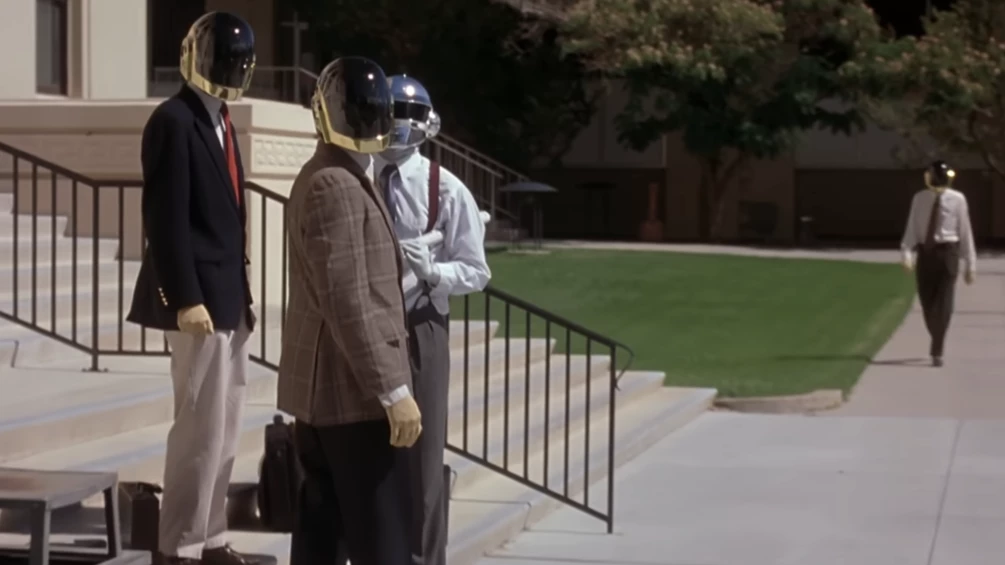
HangupsMusic.com – Paris, It has been exactly five years since the global electronic music community was rocked by the sudden and silent departure of Thomas Bangalter and Guy-Manuel de Homem-Christo, the visionary duo better known as Daft Punk. In February 2021, the pair released an eight-minute video titled "Epilogue," featuring a self-destruction sequence in the desert that signaled the end of an era. Yet, despite their official dissolution, the robots have remained remarkably present in the cultural zeitgeist. Most recently, the duo has marked this five-year milestone not with a reunion, but with a nostalgic look back at one of their most polarizing and influential eras, releasing a brand-new music video for the title track of their 2005 album, Human After All.
The newly unveiled visual serves as a sophisticated marriage of the duo’s past creative endeavors. It utilizes remastered and re-edited footage from their 2006 avant-garde science fiction film, Electroma. Edited by longtime collaborator Cédric Hervet—who co-wrote the film with the duo—the video captures the haunting, minimalist aesthetic that defined the mid-2000s Daft Punk era. In the footage, the iconic robots are seen traversing a desolate landscape in a vintage 1987 Ferrari 412, eventually arriving in a sterile, eerie small town populated entirely by residents wearing similar robotic helmets. The imagery perfectly encapsulates the themes of the Human After All album: the tension between technology and the soul, the search for identity in a mechanized world, and the inherent loneliness of the digital age.
While Human After All was initially met with mixed reviews upon its release nearly two decades ago—criticized by some for its repetitive nature and abrasive, distorted textures—it has since undergone a massive critical reappraisal. It is now viewed as a prophetic precursor to the aggressive sounds of the EDM explosion that would follow years later. The album was recorded in a frantic six-week period, a sharp contrast to the years of meticulous layering that defined their previous work, Discovery. This new video release serves as a reminder of the album’s raw energy and its pivotal role in the duo’s history, particularly how its tracks provided the backbone for their legendary Alive 2006/2007 tour, which revolutionized live electronic music performance.
The release of the "Human After All" video is only the latest in a series of strategic "archival" activities that have kept the Daft Punk brand alive. Since the split, the duo’s estate has been remarkably active, curated with the same level of mystery and precision that defined their active years. In December, fans were treated to the announcement of the first-ever vinyl edition of the Human After All remix album. This collection, which features reinterpretations from electronic heavyweights like Justice, Soulwax, and Digitalism, had previously been a rare find, particularly in physical formats outside of Japan. By bringing these deeper cuts to the forefront, the duo continues to engage both longtime collectors and a new generation of listeners who discovered them through streaming platforms.
The individual members have also begun to emerge from the shadow of the helmets in distinct ways. Thomas Bangalter, in particular, has made significant waves in the contemporary classical and electronic scenes. After moving away from the "robot" persona, Bangalter composed the score for the ballet Mythologies, a sprawling orchestral work that premiered in Bordeaux and later saw a worldwide release. This departure from synthesizers and drum machines showcased his versatility as a composer. However, he has not entirely abandoned the dance floor. In October, Bangalter surprised the music world by making his first DJ appearance in 16 years. Performing at the Centre Pompidou in Paris, he joined Fred again.. on stage, a moment that sent shockwaves through social media and reminded the world of his foundational influence on modern club culture.
While Bangalter has been more visible, the legacy of the duo as a collective entity has also received high-level institutional recognition. Recently, the "French Touch"—the filtered, house-heavy genre that Daft Punk helped pioneer alongside artists like Cassius and Air—was officially added to the UNESCO Intangible Cultural Heritage list. This designation followed a passionate campaign supported by French President Emmanuel Macron, who has long praised the duo for their contribution to France’s global soft power. By elevating electronic music to the same status as traditional crafts and historical landmarks, the UNESCO recognition cements Daft Punk’s place not just in music history, but in the cultural history of the 21st century.
The duo’s influence even extends into the realm of international sports. As the world looks toward the Milan Winter Olympics in 2026, the French Ice Dance team has already begun integrating the duo’s discography into their competitive routines. A recent performance saw the skaters blending the futuristic sounds of Daft Punk with the nostalgia of Eiffel 65, demonstrating how the "robot" sound has become a universal language that transcends the confines of a nightclub or a festival stage.
For many fans, the question remains: why does Daft Punk continue to resonate so deeply five years after they stopped making music? The answer likely lies in the meticulous way they managed their mythology. By wearing masks, they removed the cult of personality and replaced it with a conceptual narrative. When they broke up in 2021, they didn’t just end a band; they completed a story arc. This allows for projects like the new "Human After All" video to feel less like a cash-grab and more like a curated exhibition of a finished masterpiece.
The "Human After All" video also highlights the importance of Cédric Hervet in the Daft Punk universe. As a creative director and editor who worked on everything from the Random Access Memories artwork to the Electroma film, Hervet’s involvement ensures that even these posthumous releases maintain the duo’s specific visual language. The choice to return to the desert imagery—the same setting as their "Epilogue" video—creates a sense of circularity, suggesting that even though the robots are gone, the world they built remains open for exploration.
In the years since the split, the music industry has changed drastically, with AI-generated music and rapid-fire content cycles becoming the norm. In this landscape, the deliberate, slow-burn strategy of Daft Punk feels like a radical act. They are one of the few acts capable of generating global headlines with a re-edited video from an eighteen-year-old film. This enduring relevance is a testament to the quality of their work and the strength of the "Daft Punk" brand, which has successfully transitioned from a touring act to a permanent fixture of the artistic canon.
As we look toward the future, it is clear that the story of Daft Punk is far from over. Whether it is through high-end vinyl reissues, orchestral reimagining, or cinematic deep dives into their archives, the duo continues to influence the trajectory of electronic music. They proved that it was possible to be global superstars while maintaining total anonymity, and five years after their "Epilogue," they are proving that a band doesn’t need to be active to stay alive. The robots may have walked into the sunset and self-destructed, but the echoes of their "Human After All" philosophy continue to vibrate through every corner of modern culture.
