 By admin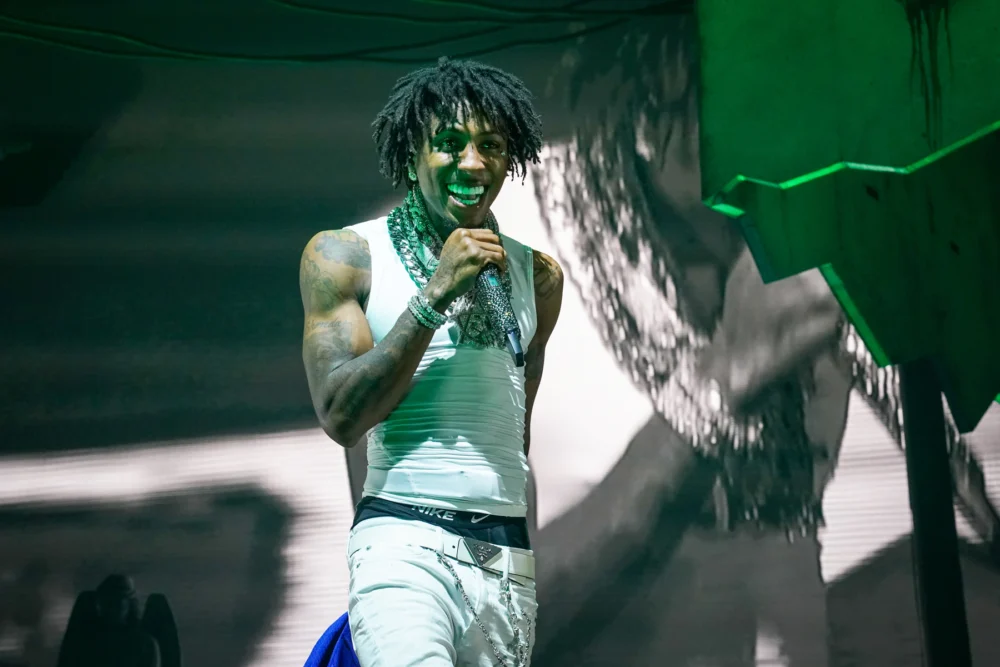
HangupsMusic.com – The digital landscape of youth culture is once again captivated by an infectious sonic phenomenon, this time manifesting as "Baby Boo Syndrome" across the pervasive platform of TikTok. Following in the footsteps of previous viral audio snippets that have momentarily commandeered collective consciousness, this latest cultural contagion is rapidly spreading, transforming casual scroll sessions into involuntary bursts of dance and lyrical recitation. It’s a testament to the platform’s power and, more broadly, to the undeniable influence of hip-hop on contemporary online trends.
It wasn’t long ago that the rhythmic utterance of "six-seven," derived from Philadelphia rapper Skrilla’s track "Doot Doot," became an inescapable auditory fixture for an entire generation. That particular meme, which saw its peak last year and briefly extended its tendrils into the current one, demonstrated the potent ability of a seemingly innocuous phrase to embed itself deep within the cultural lexicon. Now, with a similar velocity and an almost uncanny sense of timing, another rap-infused soundbite has emerged to claim its throne in the pantheon of internet earworms. This time, the culprit is YoungBoy Never Broke Again’s September release, "What You Is," featuring Mellow Rackz, which has spawned a new viral sensation perplexing parents and educators alike, all wondering: "Why is she gon’ call me baby boo?"
The genesis of this latest digital epidemic can be traced to a distinct moment within "What You Is." Towards the song’s conclusion, the intricate beat gradually fades, leaving a stark, rhythmic clapping sound – suggestive of certain adult entertainment soundtracks – accompanying YoungBoy’s repeated declaration: "she gon’ call me baby boo." Delivered with his signature, highly elastic New Orleans inflection, a vocal style that has cemented his status as one of the most streamed artists of his generation, this segment of the track possesses an inherent catchiness. It functions as a deliberate sonic intermission, designed to make the lyrical hook stand out with amplified resonance. TikTok users, ever quick to identify and amplify such moments, seized upon these lines, swiftly crafting a corresponding dance. This choreography involves a distinct motion, often interpreted as the deliberate opening of a large book before an enthusiastic dive into its contents, a visual metaphor that quickly resonated with the platform’s expressive user base.
Initially, the meme circulated within niche communities, gaining traction through organic sharing and imitation. However, the true explosion of "Baby Boo Syndrome" occurred at the dawn of the new year, catalyzed by a deluge of remixes. Creators began interpolating YoungBoy’s distinctive vocal snippet over an eclectic array of existing musical tracks, transforming the original context into something entirely new and often comically incongruous. From the melancholic introspection of Frank Ocean’s "White Ferrari" – a pairing that presented a stark sonic contrast – to the smooth R&B grooves of Drake’s "Hotline Bling" and the vibrant pop of Zara Larsson’s "Midnight Sun," no genre seemed immune to the "Baby Boo" treatment. These remixes, numbering in the hundreds of thousands, quickly permeated TikTok’s sprawling ecosystem, each iteration pushing the boundaries of absurdity and creativity.
The sheer ubiquity of the "Baby Boo" phrase has rendered it oddly inescapable, a linguistic and auditory imprint capable of embedding itself deep within one’s subconscious if sufficient exposure occurs. This pervasive influence has given rise to its own self-referential sub-meme: "Baby Boo Syndrome." This "syndrome" describes the seemingly involuntary and uncontrollable urge experienced by many, particularly among high school students, to spontaneously burst into the "Baby Boo" dance or vocalization at the most unexpected and often inconvenient moments. It’s a phenomenon that speaks to the profound, almost hypnotic, power of viral content to momentarily override rational thought and induce collective participation.
The current cultural climate surrounding "Baby Boo Syndrome" carries an almost uncanny echo of late 2019, a period of deceptive calm before the world was irrevocably reshaped by an unseen viral threat. Or, perhaps more precisely, it mirrors the moment an unassuming rapper from Philadelphia managed to subtly recalibrate the neurochemistry of countless young individuals worldwide with a simple numerical declaration. In the intricate anatomy of viral spread, there is often a discernible "patient zero," an initial catalyst whose actions spark the chain reaction across digital timelines and, ultimately, into the broader collective consciousness. For "Baby Boo," all indications point to TikTok user @selenaaa.dta, who posted a foundational dance to "What You Is" in September, thereby initiating its meteoric ascent.
The "Baby Boo" dance itself, like many internet trends, is not a singular, entirely novel creation but rather a fascinating amalgam of pre-existing movements and popular tropes. It notably draws inspiration from the choreography associated with "Innit," the viral summer hit by BunnaB and YKNIECE, which famously involved a pantomime of "diving in." Later in the year, creators Haskell and Diddybop, prominent figures within underground rap circles, infused the movement with their characteristic absurdist flair, further evolving its form. These various influences gradually coalesced, fusing into the distinct choreography observed today. However, it’s crucial to note that in the context of "Baby Boo Syndrome," the proliferation and ingenuity of the remixes often overshadow the dance itself. Each new interpolation – from cartoon theme songs to the instantly recognizable jingle of an ice cream truck – breathes new life into the meme, extending its shelf life and intensifying its grip on public attention. This dynamic makes "Baby Boo" a particularly resilient and evolving variant of "brainrot," constantly refreshing its appeal through diverse sonic landscapes.
It comes as little surprise that the internet’s most compelling and pervasive tropes continue to be mined from the rich, fertile ground of hip-hop culture. The parallel trajectories of "6-7" and now "Baby Boo" serve as compelling evidence of hip-hop’s foundational and instrumental role in shaping the contemporary online zeitgeist. These phenomena demonstrate how deeply ingrained rap music and its cultural manifestations are within the fabric of youth expression, influencing not just musical tastes but also language, humor, and collective social rituals. Regardless of fluctuating streaming metrics or shifting industry narratives, the enduring power and cultural resonance of hip-hop remain unequivocally strong, consistently proving its adaptive capacity to infiltrate and dominate the digital spheres where new trends are forged and disseminated. The "Baby Boo" phenomenon is not merely a fleeting internet trend; it is a vivid illustration of hip-hop’s continuing reign as a primary driver of global youth culture, demonstrating its ability to transcend traditional music consumption and become an integral part of everyday digital interaction.
