 By admin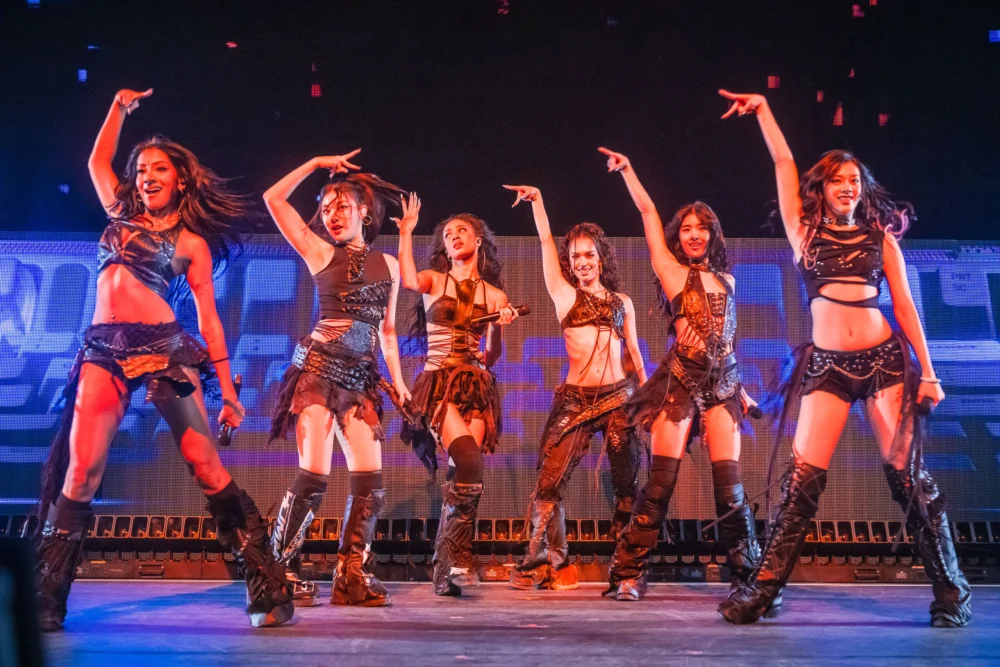
HangupsMusic.com – Los Angeles, California – The journey of Manon Bannerman into the burgeoning global pop group Katseye reads like a contemporary fairy tale, albeit one with increasingly complex layers. Emerging from a colossal pool of over 120,000 hopefuls who vied for a spot in Dream Academy, the rigorous training program designed to forge the six-member ensemble, Bannerman’s path was particularly serendipitous. Unburdened by prior professional training or industry connections, she was scouted via social media by casting director Michelle Kim, her raw, undeniable charisma shining through the digital ether. Her eventual inclusion among the twenty finalists, whose every trial and triumph was meticulously documented by Netflix in a companion reality series, underscored a narrative of destiny, where proving one’s mettle—to both fellow contestants and a global audience—was paramount.
Plucked from her life in Switzerland and propelled onto an international stage alongside Daniela Avanzini, Lara Raj, Megan Skiendiel, Sophia Laforteza, and Yoonchae Jeung, Bannerman entered an experience understood by an infinitesimally small fraction of the population. This shared, extraordinary reality fostered a discernible bond among the Katseye members, offering a collective solace as they navigated the unfamiliar terrain of sudden fame. Yet, even within this tightly knit unit, Bannerman grappled with a unique form of isolation. As the sole Black member of Katseye, her experiences of online scrutiny, which escalated to include hateful remarks and even death threats following the group’s 2024 debut, carried an additional, distinct weight. This particular dimension of her journey resonated most deeply not with her bandmates, but with a lineage of Black women in pop who have walked strikingly similar paths.
The industry’s impersonal machinery recently underscored these inherent tensions. HYBE and Geffen Records, the powerhouses behind Katseye, issued a statement via Weverse confirming Bannerman’s temporary departure from the group, citing a need for her "to focus on her health and wellbeing." Bannerman herself offered a more personal, yet carefully worded, message to fans. "I’m healthy, I’m okay, and I’m taking care of myself," the 23-year-old wrote, adding, "Sometimes things unfold in ways we don’t fully control, but I’m trusting the bigger picture." This carefully phrased update inevitably sparked a flurry of fan speculation, with many reading between the lines to discern the true nature of her hiatus. Amidst this uncertainty, a powerful, intergenerational network of Black women in music has coalesced around Bannerman, offering public and private solidarity.
Melody Thornton, an alumna of the iconic Pussycat Dolls, was among the first to extend a hand. Sharing an image of Bannerman on Instagram, Thornton’s simple yet profound caption, "We see you," resonated deeply, earning a ‘like’ from Bannerman herself. Thornton’s own career in a high-profile girl group was marred by unacknowledged struggles, including debilitating panic attacks and the pervasive insecurity of being labeled the "weakest link." "The one thing that I always kept in mind was, ‘You can’t be messing up. You got to keep it together because you are the Black girl. People know that, people see it, and they want to see you win so you must prevail through any adversity — whatever it looks like,’" Thornton recounted to Essence in 2024. This relentless pressure often left her feeling invisible, her struggles unaddressed because, as she admitted, "I didn’t want anyone to say that I was lazy or that I was making things up."
Thornton’s sentiments echo Bannerman’s own candid remarks to the Cut just weeks before her hiatus announcement. "Being called lazy, especially as a Black girl, is not fair," Bannerman stated, addressing the persistent criticism that followed her since Dream Academy, where an illness had caused her to miss rehearsals. This experience instilled in her a feeling of needing to "always put in extra work to prove something, even though I really don’t." The irony is stark: Bannerman only missed a single date on Katseye’s debut headlining tour, which concluded in December, and the group is slated for multiple Lollapalooza appearances and a Coachella debut in April. Regardless of the temporary nature of her leave, the optics surrounding her absence threaten to cast a long shadow.

Makhyli Simpson, a former member of the short-lived girl group Boys World, further illuminated Bannerman’s predicament during a recent TikTok live session. "Groups are made and every member is chosen because they have something special to bring and because all of the members together make a balance, so I think it is going to be interesting navigating without her for the time being," Simpson observed. She added a crucial insight: "I know about all of the pressure that it is, especially to be the only Black girl in a group, and I just feel like nobody knows what that’s like until you’re in her shoes." Boys World, like Katseye, was formed through social media scouting, and their disbandment in 2024 was similarly framed by the group’s statement: "We have accepted that there are some things that are out of our control," a sentiment strikingly similar to Bannerman’s own recent message.
At its core, the entertainment industry often views musical acts, particularly those meticulously assembled by corporate entities, as marketable commodities. Katseye, despite not having released a debut album, has already been strategically positioned as a vehicle for a diverse array of brands, from high fashion houses like Fendi to fast-food chains like Jollibee. The primary objective, in this commercial ecosystem, is not merely to sell records but to cultivate and sell an aspirational image—an image that critically relies on diversity, and thus, on Bannerman’s presence. "People want to see diversity," Bannerman told the Associated Press last year. "People want to see themselves represented on the TV, on billboards. And I really hope that people high up see that and see that it works, and implement that." This corporate calculus, however, often overlooks the fundamental humanity of these young women, who are tasked with immense responsibility from their teenage years.
The idealized facade of unity and sisterhood frequently presented by girl groups often fails to account for intersectional realities. Historically, the industry has struggled with how to genuinely integrate and support Black women within these structures. Normani, who joined Fifth Harmony after auditioning as a solo artist on The X Factor, possessed a natural star quality akin to Bannerman’s, commanding attention effortlessly. Yet, she found herself consistently marginalized. "I didn’t get to really sing in the group. I felt like I was overlooked," Normani revealed to Allure in 2021. "That idea has been projected on me. Like, this is your place."
Normani’s ordeal extended beyond professional sidelining, encompassing a torrent of racist abuse from Fifth Harmony fans and even confronting racist incidents from within the group, notably when problematic posts by former member Camila Cabello resurfaced. "It was devastating that this came from a place that was supposed to be a safe haven and a sisterhood, because I knew that if the tables were turned I would defend each of them in a single heartbeat," she shared with Rolling Stone in 2020. Ultimately, she concluded, "they didn’t know how to be there for me the way that I needed it because it wasn’t their own experience, and because when they look at me they don’t see me." The profound significance of this shared understanding was subtly underlined when Normani recently followed Bannerman on Instagram amidst the swirling speculation about Katseye’s future.
This seemingly minor digital action speaks volumes, a quiet nod of recognition between artists who understand a very specific burden. Normani has extended similar gestures of solidarity before. In 2020, she exchanged heartfelt messages with Leigh-Anne Pinnock, whose own journey through a television competition led her to Little Mix. "I am you and you are me, I see you sis," Normani commented on a video where Pinnock candidly discussed her experiences with racism in the music industry. Pinnock had lamented, "I learned that the dream of being in the biggest girl band in the world came with its flaws and consequences — consequences such as knowing about the existent underlying racism in the creative industries." Responding to the news of Normani following Bannerman, Pinnock succinctly articulated the collective imperative: "We need to protect each other."
Pinnock, like the other Black women in pop who have spoken out, described a pervasive feeling of "constantly feeling like I have to work 10 times harder and longer to mark my place in the group because my talent alone isn’t enough." This expectation that Black women must simply "power through" adversity, endure mistreatment, and tirelessly "prove themselves" is not an isolated incident; it is a systemic issue. It is a perpetual, often unwinnable, test designed to reinforce their perceived subordinate status. The insidious narrative suggests that they should feel privileged merely to be considered, to suffer and struggle for a place that should be theirs by right. Such suffering is never a privilege.

Bannerman herself implicitly critiqued this "grind culture" mentality, noting her upbringing in Switzerland fostered a more balanced approach to work and life—a stark contrast to the relentless pursuit of success often glorified in American and K-Pop industry models. This intensity, famously epitomized by Berry Gordy’s Motown, served as a direct inspiration for the modern K-Pop trainee system, a connection explicitly acknowledged by JYP Entertainment founder Park Jin-young in 2024. This historical lineage, in turn, directly informed the creation of Katseye. HYBE and Geffen had proudly touted their collaboration as a groundbreaking partnership between a U.S. label and a K-Pop company to develop a new group. Yet, the unfolding events suggest that perhaps, despite the grand vision, they might not truly be "better together."
A particularly egregious example of this systemic oversight came to light in November when a Katseye merch package featured a quiz personalized to each member. For Bannerman, one question posed: "What does Manon think is her best feature?" The options included "Her sense of humor, her selfishness, her laziness, or her quiet nature." This insensitivity, framing "laziness" as a potential self-perception, not only distorted Bannerman’s narrative but underscored a profound disconnect and a lack of understanding from those responsible for shaping her public image.
Keisha Buchanan of the Sugababes faced similar professional indignities. In 2020, she revealed claims that a record executive informed her she was "being used as collateral" after her ousting from the girl group in 2009. When the first album without her failed to meet expectations, the blame, she suggested, was conveniently shifted onto her. "Although it was not my choice to leave, it’s time to enter a new chapter in my life," Buchanan stated at the time, echoing the carefully chosen words of many artists navigating forced departures. Pop fans, intimately familiar with the heartbreak of group dissolutions, live in perpetual fear of official social media statements announcing "hiatus" with vague explanations. Bannerman herself acknowledged this anxiety, telling the Cut, "When One Direction split, that was really hard… I don’t want our fans to go through that. I don’t want to be responsible for breaking so many hearts."
The hope remains that history will not merely repeat itself. The pattern of Black women in girl groups being subjected to unique pressures, systemic biases, and eventual marginalization is a narrative that desperately needs to be broken. It is time for the industry to evolve beyond merely acknowledging diversity to actively fostering environments where all artists, especially Black women, can thrive without having to endure such profound and unnecessary suffering.
