
 By admin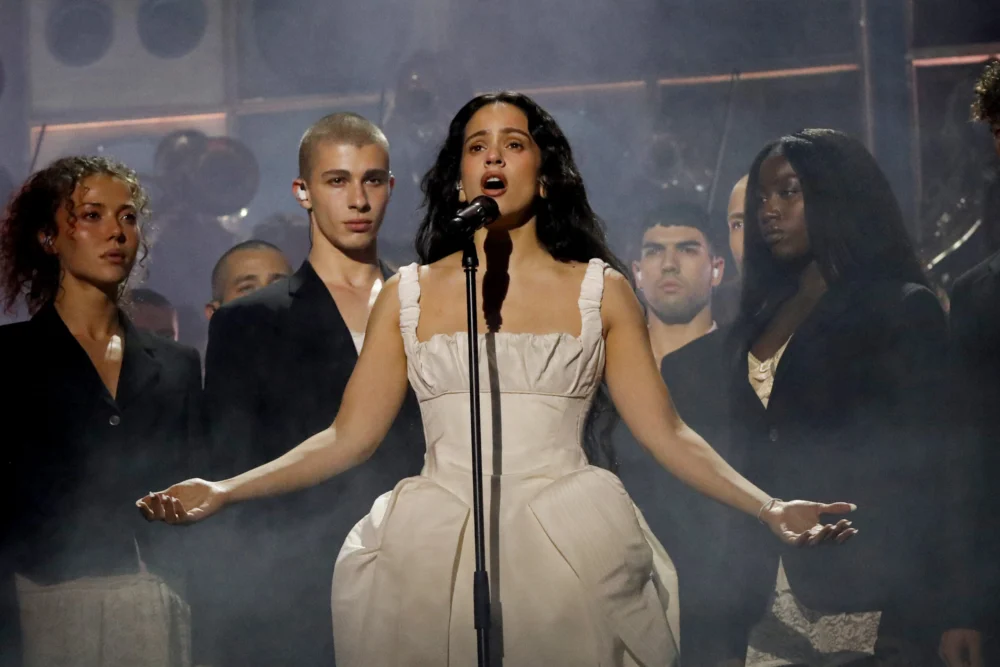
HangupsMusic.com – London, England – The 2026 Brit Awards bore witness to an electrifying and profoundly significant moment in contemporary music history as Rosalía, the Catalan phenom, delivered an unforgettable, emotionally charged rendition of her acclaimed symphonic track, "Berghain." The performance was elevated to legendary status by the completely unexpected appearance of Icelandic avant-garde icon Björk, marking not only the live debut of their collaborative masterpiece but also the very first time these two artistic titans shared a stage, intertwining their distinct, genre-defying voices for a global audience. The fusion of Rosalía’s flamenco-infused experimentalism with Björk’s ethereal electronic soundscapes created a spectacle that transcended a mere awards show performance, solidifying its place as a cultural touchstone and an audacious statement on the evolving landscape of popular music.
The atmosphere inside the O2 Arena crackled with an almost palpable anticipation as the stage transformed into a minimalist yet powerful tableau. Rosalía emerged, a striking figure draped in immaculate white, her presence commanding and serene. The choice of attire underscored a sense of purity and focus, allowing her potent vocal delivery to take center stage. The initial strains of "Berghain" resonated, immediately signaling the track’s profound theatricality. Her opening, sung in operatic German, was delivered with a gravitas that belied her youthful energy, showcasing her incredible vocal range and a deeply rooted understanding of dramatic performance. This segment was a masterclass in vocal control and emotive storytelling, drawing the audience into the song’s intricate narrative and setting a somber, almost reverent tone that hinted at the track’s namesake – the legendary Berlin techno club, known for its intense, almost sacred atmosphere.
Behind Rosalía, the esteemed Heritage Orchestra provided a lush, intricate backdrop, their live instrumentation adding layers of depth and texture to the already rich composition. Flanking her on either side, a disciplined choir, uniformly clad in sharp blazers, moved with choreographed precision, their collective voices swelling to create a formidable vocal wall. Their synchronized movements and powerful harmonies amplified the drama, creating a living, breathing soundscape that was both classical and strikingly modern. The arrangement for the live performance expertly navigated the complex interplay between traditional orchestral elements and the song’s underlying electronic pulse, a testament to Rosalía’s unwavering vision in pushing artistic boundaries.
The moment of Björk’s entrance was orchestrated with exquisite timing and maximum impact. As Rosalía’s operatic lines concluded, the choir parted almost ceremoniously, revealing the enigmatic Icelandic artist. The audience’s collective gasp was almost audible, a wave of astonishment rippling through the venue. Björk, a visionary renowned for her boundary-pushing fashion, did not disappoint. She appeared in an extraordinary, avant-garde ensemble, her head adorned with an intricate, almost architectural beaded headpiece that seemed to defy gravity, shimmering with an otherworldly luminescence. The accessory, a sculptural marvel, appeared to float around her, creating an aura of mystic beauty that perfectly encapsulated her unique artistic identity. Her attire was not merely a costume but an extension of her artistic philosophy, blurring the lines between fashion, art, and performance.
As Björk began to deliver her hypnotic verse, her distinctive, ethereal voice cut through the air, a stark yet harmonious contrast to Rosalía’s more grounded, powerful delivery. The interplay between their vocal styles was mesmerizing, a dialogue between two distinct sonic universes converging into a singular, profound expression. Björk’s contribution was characterized by her signature vocal acrobatics and poetic lyricism, adding a layer of poignant introspection to the track. Her presence on stage was a testament to the cross-generational appeal and influence of "Berghain," a track that itself explores themes of escapism, transcendence, and the raw, communal experience of nightlife. This collaboration transcended a simple duet; it was a meeting of minds, a symbolic passing of the torch, and a powerful affirmation of artistic sisterhood between two of music’s most innovative female artists.
The performance reached its crescendo in an explosion of raw energy, a deliberate shift from the initial solemnity to an unbridled celebration. As heavy synths began to pulse and electronic beats throbbed through the arena, Rosalía shed some of her earlier composure, diving into an intense, visceral dance sequence with her troupe of dancers. The stage was bathed in a furious array of strobe lights, mimicking the disorienting yet exhilarating environment of a true techno club. The choreography was fluid, powerful, and deeply expressive, embodying the cathartic release inherent in the "Berghain" experience. This final segment captured the very essence of the club the song is named after – a space of intense emotional and physical liberation, where music becomes an all-encompassing force. The transition from orchestral grandeur to electronic euphoria demonstrated the song’s dynamic range and Rosalía’s ability to seamlessly blend disparate musical worlds.
"Berghain" is a pivotal track from Rosalía’s critically acclaimed album, Lux, which was released in November 2025. The album itself has been lauded for its ambitious scope and innovative sound, further cementing Rosalía’s reputation as a groundbreaking artist unafraid to explore new sonic territories. Lux marked a significant evolution from her previous works like El Mal Querer and Motomami, venturing into more symphonic and experimental soundscapes while retaining her signature blend of flamenco, R&B, and electronic influences. The decision to record Lux with the prestigious London Symphony Orchestra was a bold artistic statement, elevating her music to a new level of orchestral complexity and demonstrating her commitment to pushing the boundaries of contemporary pop. This orchestral foundation has been a subject of much discussion among fans and critics, speculating on how such an intricate sound would translate to a live setting.
Prior to the Brit Awards, Rosalía had offered only a tantalizing glimpse of Lux in live performance, having showcased merely "Reliquia" and "La Perla" from the album. Each of these rare appearances hinted at a burgeoning theatricality, suggesting a more elaborate and visually stunning live experience than her previous tours. The dramatic and multi-faceted Brit Awards performance of "Berghain" has now set a formidable precedent, offering a thrilling preview of what audiences can expect from her highly anticipated Lux world tour. The tour is slated to commence on March 16 in Lyon, France, before embarking on an extensive global journey that will encompass 42 stops across Europe, North America, and South America.
The scale of the Lux tour, coupled with the album’s symphonic nature and this Brit Awards spectacle, has ignited fervent speculation about the inclusion of a full orchestra in her live shows. Such an undertaking would be a monumental logistical feat but would undoubtedly elevate the tour to an unprecedented level of artistry and grandeur, offering fans an immersive experience true to the album’s recorded sound. Rosalía has consistently demonstrated a commitment to delivering visually and sonically rich performances that defy expectations, and the "Berghain" debut with Björk served as a powerful declaration of her artistic intent for the upcoming tour. The world watches with bated breath, eager to discover how Rosalía will translate the intricate beauty and raw power of Lux to stages across the globe. Her Brit Awards performance was not just a collaboration; it was a revelation, a promise of the extraordinary experiences yet to come from one of music’s most visionary artists.
