
 By Azzam Bilal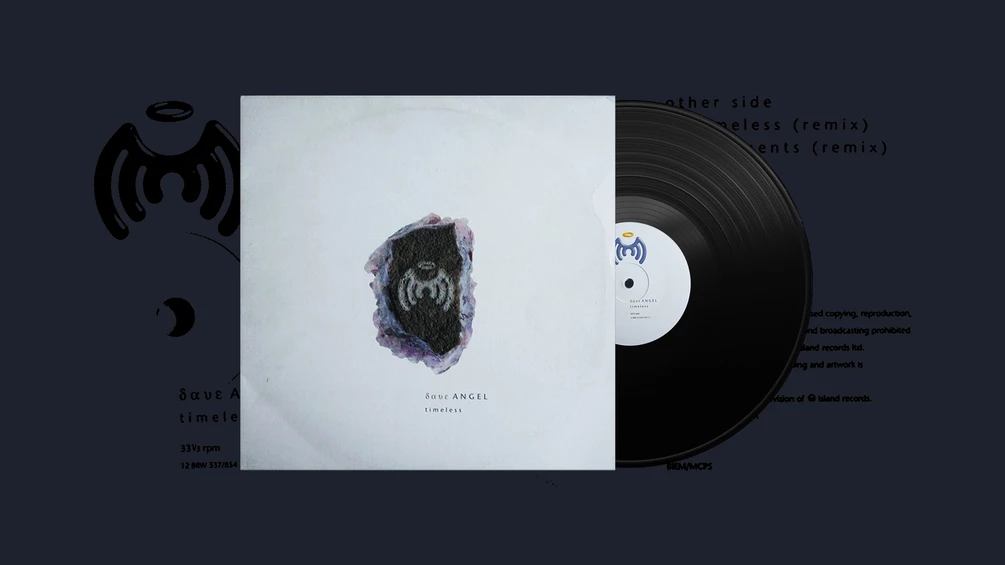
HangupsMusic.com – London, When the history of UK techno is written, few figures loom as large or as stylistically singular as Dave Angel. A producer whose work has always seemed to exist in a state of flux between the mechanical precision of Detroit and the soulful, breakbeat-driven energy of London, Angel’s career is defined by a series of forward-thinking maneuvers. Perhaps no track encapsulates this visionary approach better than "Timeless (Remix)." Originally a standout moment on his 1995 major-label debut, Tales Of The Unexpected, the track was reimagined a year later into a club-ready anthem that did more than just fill dance floors; it predicted the rhythmic evolution of British dance music while issuing a haunting, ecological warning that rings louder in the 21st century than it did in the mid-90s.
The enduring power of "Timeless" is anchored by a poignant vocal sample—a bittersweet inquiry that asks, "Why are we so careless? Treating everything like it’ll last forever." While the mid-90s were characterized by a certain hedonistic optimism in the rave scene, Angel was looking toward the horizon with a sense of trepidation. Speaking from his current home in Swindon, the producer reflects on the sample’s origins, noting that while global warming was a topic of academic discussion in 1995, it hadn’t yet permeated the collective consciousness as a daily existential threat. For Angel, the message was about the absurdity of a disposable culture—a "use and throw away" mentality that he felt was fundamentally unsustainable. By embedding this message within a high-energy techno framework, he created a "rallying call" that bridged the gap between the escapism of the club and the reality of the world outside its doors.
Dave Angel’s journey to the forefront of the electronic underground was anything but linear. Raised in Clapham, South London, he was the son of a jazz musician and the elder brother of the celebrated rapper Monie Love. This rich musical pedigree provided a foundation in funk, rare groove, and jazz, which Angel funneled into his early DJ sets on the legendary Brixton pirate station, Phase One. However, just as the "Second Summer of Love" was transforming the UK in 1988, Angel’s trajectory was interrupted by a prison sentence for cannabis possession. Missing out on the peak of the acid house explosion proved to be a catalyst; upon his release, he possessed a "dog with a bone" tenacity, determined to make up for lost time.
His breakthrough came through a stroke of accidental genius. Working with a rudimentary setup—two turntables, a basic keyboard, and a pair of cassette decks—he began experimenting with a breakbeat hardcore rhythm. While digging through his record collection for a melodic hook, he stumbled upon the Eurythmics’ synth-pop classic "Sweet Dreams (Are Made of This)." To his surprise, the sample fit perfectly in key with his production. This DIY experiment eventually led to the "Nightmare Mix," which caught the attention of the Eurythmics’ label. Rather than being sued, Angel was offered £15,000 to recreate the track in a professional SSL studio. This windfall allowed him to build the studio that would eventually produce his most iconic works, including the Tales Of The Unexpected album.
By the early 90s, Angel had established himself as a premier architect of the "UK Detroit" sound. He became a staple on R&S Records, the Belgian powerhouse that was then the "Rolls-Royce" of electronic music, sharing label space with titans like Aphex Twin and Kevin Saunderson. His ability to infuse techno with a specific "Black music" soul—an element he attributes to his upbringing and his admiration for Detroit’s Underground Resistance—set him apart from the more clinical European techno of the era. When Island Records approached him in the mid-90s, it was a testament to his crossover potential and his reputation for pushing the genre’s boundaries.
The Tales Of The Unexpected album was an ambitious departure from standard club fare. It featured jazzy house cuts like "Big Tight Flares" and the orchestral, percussion-heavy "Rudiments." "Timeless," in its original album form, was a slow-burn experimental piece that delayed its 4/4 kick drum until the halfway mark. However, when Island requested a remix for a single release, Angel saw an opportunity to expand on the track’s emotional narrative. By this time, he had relocated from London to Swindon, seeking a quieter environment after a burglary at his London flat. It was in this new home studio that the "Timeless (Remix)" took its final, prophetic shape.
Technically, the remix is a masterclass in 90s hardware manipulation. Angel utilized the Roland JD-800—a digital synth designed to bridge the gap between analogue warmth and digital flexibility—to craft the track’s soaring chords and basslines. He also leaned heavily on the Korg Wavestation for its signature "evolving layers," creating the atmospheric swirls that give the track its sense of vast, open space. To sharpen the percussion, he ran his Roland TR-909 through a Mackie mixing desk, aggressively cutting frequencies to achieve a "tight" snare sound that bypassed the standard 909 aesthetic.
One of the most striking elements of the remix is the "monster" sound—a guttural, low-frequency growl that emerges during the track’s darker passages. This was actually a manipulated fragment of the lead vocal, pitch-shifted several octaves down using an E-Mu Emax II sampler. For Angel, this sound was metaphorical, representing the "human monster" pillaging the planet’s resources. It added a layer of sonic grit that grounded the track’s more ethereal elements, reminding the listener of the stakes involved in the lyrical message.
Perhaps the most discussed aspect of "Timeless (Remix)" is its rhythmic bridge. Midway through the track, the steady 4/4 techno pulse vanishes, replaced by a swung, syncopated groove that bears an uncanny resemblance to 2-step garage—a genre that would not dominate the UK charts for several more years. Angel maintains that this wasn’t a calculated attempt to invent a new style, but rather a "happy accident" born from a trance-like state of experimentation. By refusing to let the 4/4 beat dominate the entire six-minute runtime, he inadvertently predicted the "broken" rhythms that would define the next decade of British electronic music.
The reception to the remix was immediate and widespread. It received heavy rotation from influential broadcasters like Pete Tong, Annie Nightingale, and the legendary John Peel. For Angel, hearing his work championed by his own heroes on Kiss FM and Radio 1 was a surreal validation of his unconventional path. It solidified his status as a producer who could balance major-label expectations with underground integrity.
Today, Dave Angel remains as active as ever, though his focus has shifted. While he continues to release club-focused material on labels like Rekids and Bedrock, his upcoming album project marks a significant departure. Moving away from the dance floor entirely, he is crafting a cinematic, jazz-influenced record—a project he describes as a "total reflection" of his musical identity that has been years in the making. It is a move that mirrors the experimental spirit of his early work, proving that he is still unwilling to be confined by the expectations of the techno genre.
As "Timeless" nears its 30th anniversary, its relevance has only intensified. In an era of climate strikes and global ecological anxiety, the track’s central question—why are we so careless?—feels less like a philosophical inquiry and more like an urgent demand for accountability. Dave Angel didn’t just create a techno classic; he created a sonic time capsule that continues to challenge the listener to look beyond the immediate gratification of the strobe light and consider what we are leaving behind. It is a reminder that the best electronic music does more than move the body; it speaks to the soul and the world we inhabit.
