
 By admin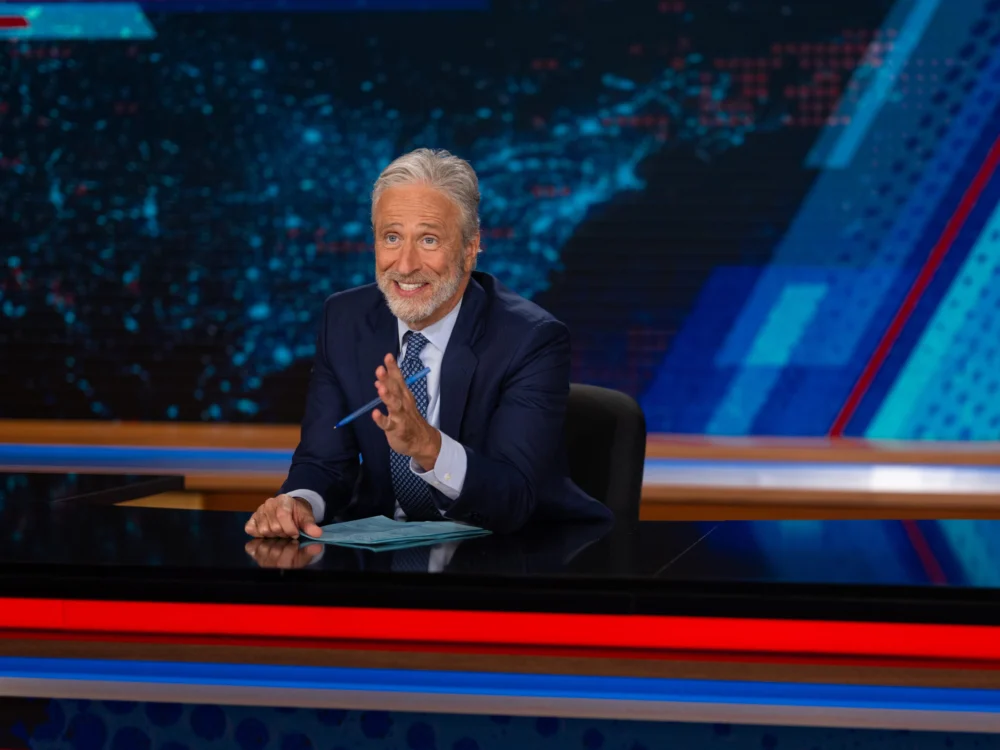
HangupsMusic.com – The landscape of political commentary recently experienced a significant tremor with the return of satirical titan Jon Stewart to the forefront of public discourse. Known for his piercing wit and unparalleled ability to dissect complex geopolitical events with a blend of humor and gravitas, Stewart recently turned his sharp gaze towards the latest military maneuvers orchestrated by the United States and Israel against Iran. His critique, delivered with the signature style that cemented his legacy, sparked widespread discussion, particularly his pointed observations regarding "Operation Epic Fury" and the circumstances surrounding the death of Iran’s supreme leader, Ali Khamenei.
Stewart, whose influence on late-night television and political satire is virtually unmatched, signaled the gravity of the unfolding events by resurrecting a long-dormant segment from his iconic "Daily Show" tenure: "Mess O’Potamia." The reappearance of this segment, which historically chronicled the quagmires and complexities of Middle Eastern conflicts, served as a potent, if darkly comedic, indicator that, in Stewart’s view, history was not merely repeating itself but perhaps doing so with an even more bewildering lack of foresight. For long-time viewers, the segment’s return was a stark reminder of the cyclical nature of international strife and Stewart’s enduring commitment to holding power accountable through the medium of humor. He posited that the current geopolitical situation bore an uncanny resemblance to previous entanglements, suggesting a weariness with the seemingly endless cycle of intervention and its unforeseen consequences.
One of Stewart’s most cutting remarks revolved around the timing of the operation that led to the death of the 86-year-old Iranian supreme leader. With characteristic irreverence, he questioned the urgency of a full-scale military campaign to eliminate an individual already in poor health. Stewart quipped about the apparent inability to "wait three weeks" for natural causes, specifically "saturated fat," to achieve the same outcome. This particular barb underscored a broader criticism: the perceived disproportionate response and the human cost of military intervention when less aggressive, or even naturally occurring, resolutions might have been on the horizon. His commentary highlighted the often-overlooked human element in strategic calculations, forcing audiences to confront the potentially unnecessary escalation of violence.
The comedic critique extended to the political figures Stewart identified as key proponents of the conflict. He highlighted Israeli Prime Minister Benjamin Netanyahu’s apparent enthusiasm for engagement with Iran, a sentiment that Stewart observed was notably echoed by former U.S. President Donald Trump. Stewart then pivoted to a meticulous, and hilariously scathing, deconstruction of Trump’s public announcement of the operations. The visual of Trump, sporting a "USA" hat, delivering a grave military announcement from what appeared to be the informal setting of a Mar-a-Lago basement, became a central point of Stewart’s lampoon.
Stewart meticulously dissected the perceived lack of decorum and professional gravitas in Trump’s announcement. He questioned the absence of formal lighting, jokingly suggesting the need for an "influencer halo," and expressed disbelief at the casual attire – a blazer, unbuttoned shirt, and notably, a baseball hat. The comedian drew parallels to a "father of the bride settling up with the caterer" rather than a commander-in-chief declaring a major military campaign. This comedic framing served to underscore a serious underlying concern: the perceived trivialization of war and the erosion of the solemnity traditionally associated with such profound national decisions. Stewart’s commentary suggested that the casual presentation might reflect a casual approach to the monumental consequences of military action, a stark contrast to the historical precedents of presidential wartime addresses. He lamented the decision to forgo the symbolic weight of the White House’s "I killed Bin Laden hallway" for a "vacation house, trucker hat" aesthetic, framing it as a choice that undermined the gravity of the situation.
The operation’s name itself, "Operation Epic Fury," did not escape Stewart’s satirical crosshairs. He famously quipped, "Is this a war or did the Paul brothers launch another energy drink?" This observation resonated deeply with audiences, drawing a humorous but pointed connection between geopolitical conflict and modern marketing lexicon. Stewart went on to playfully implore, "Stop letting the millennials name shit," a comment that, while delivered as a joke, tapped into a broader cultural conversation about the aesthetics and language used to frame serious global events. His critique suggested that such a name, perceived as overtly dramatic or even juvenile, might inadvertently diminish the seriousness of military action and reflect a disconnect between the gravity of war and the language used to describe it in contemporary society. The implication was that a name should convey the weight and purpose of an endeavor, not merely its supposed intensity.
Following the initial strikes, Iran’s reported retaliatory actions, which included attacks on multiple bases across Iraq and Kuwait, provided Stewart with further material for his biting commentary. He characterized Iran’s response as a chaotic lashing out, distilling the complex geopolitical maneuvers into a relatable, albeit crude, analogy: a bar fight. "America and Israel attack Iran," Stewart observed, "And Iran’s answer is to just fucking attack everybody." He continued, drawing on personal experience, "having been in a bar fight or two in my life, I’m pretty sure the worst thing you can do during a two-on-one beatdown is slap everyone else." This analogy, while simplistic, effectively highlighted the perceived irrationality and potential for widespread, uncontrolled escalation inherent in the situation, suggesting that Iran’s actions, from a strategic standpoint, might only serve to exacerbate its precarious position.
To further illustrate the absurdity of the situation, Stewart enlisted the comedic talents of Jordan Klepper, a long-time correspondent known for his immersive, often chaotic, field reports. Klepper appeared "live from Istanbul," satirically exclaiming, "Feels so good to be back at war!" His mock enthusiasm and follow-up quip about the boredom of the "four weeks since Venezuela" – a period so dull that "we had to pretend to care about hockey" – underscored Stewart’s central theme: a recurring, almost habitual, inclination towards military engagement. Klepper’s segment amplified the idea that global conflicts were becoming disturbingly routine, almost a form of entertainment or distraction, rather than solemn undertakings of last resort. This comedic interplay between Stewart and Klepper effectively reinforced the message that the public was being conditioned to accept a continuous state of international tension.
Stewart concluded his monologue with a powerful summation of his concerns, encapsulating the perceived ideological shifts and lack of clear direction in current foreign policy. He lamented, "I can’t believe it. Our bombs are now smarter than our president…" a statement that cut to the core of his critique regarding leadership and strategic intelligence. He then turned his attention to what he saw as a significant ideological pivot, observing "How quickly the right has gone from peace through strength to peace through war." This commentary highlighted a perceived inconsistency in political rhetoric, where the pursuit of peace, once framed through a posture of formidable deterrence, now seemed to be justified through direct military action. Stewart’s ultimate concern, expressed with a palpable sense of frustration, was that the nation was being drawn into a conflict with "no clear purpose, no end in sight," driven primarily by "the whims of Donald Trump."
Jon Stewart’s recent commentary serves as a potent reminder of the enduring power of political satire as a mirror to society and a check on authority. In an era saturated with information and increasingly polarized discourse, his ability to distill complex geopolitical narratives into digestible, often hilarious, and undeniably thought-provoking segments remains an invaluable cultural contribution. While the specific context of his remarks is grave, Stewart’s approach provides a crucial avenue for critical engagement, inviting audiences to question narratives, scrutinize leadership, and reflect on the profound implications of global events, all while navigating the challenging terrain of contemporary international relations. His return to such pointed commentary reinforces his status not just as a comedian, but as a significant cultural force capable of shaping public conversation on matters of immense national and global importance.
