
 By admin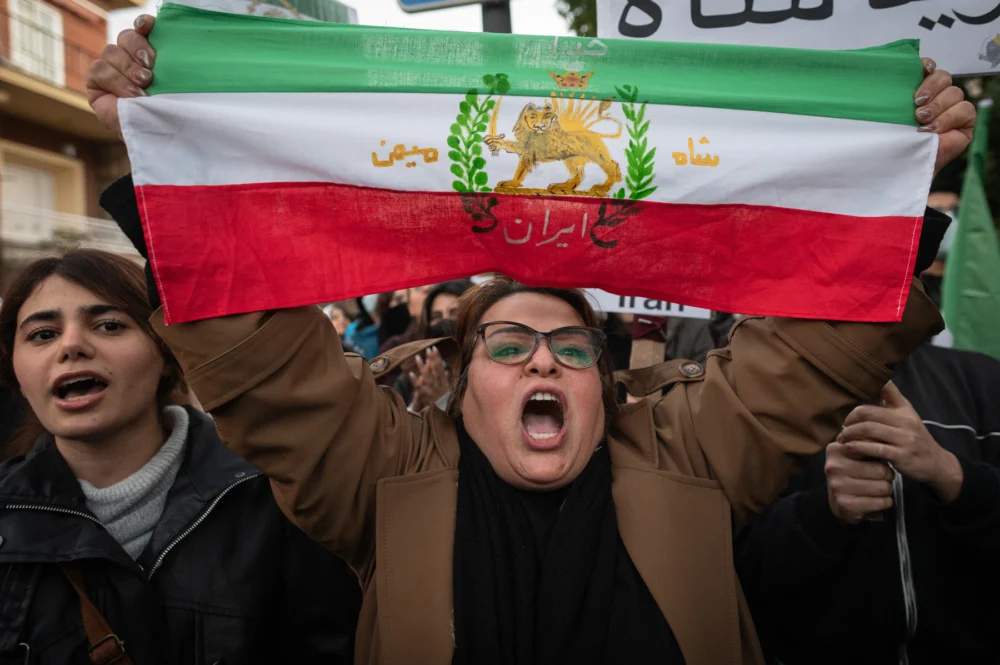
HangupsMusic.com – The geopolitical landscape surrounding Iran shifted seismically two months ago, following a coordinated military action by Israel and the U.S. that culminated in the death of Supreme Leader Ayatollah Ali Khamenei. As the dust settled from precision strikes, an unexpected chorus of jubilation erupted across Tehran’s streets, a stark departure from the desperate, life-threatening mass protests that had gripped the nation just weeks prior, beginning on December 28, 2025. This dramatic turn of events, now unfolding into major combat involving the U.S., Israel, and Iran, has been met with a surprisingly subdued response from many prominent cultural figures, particularly within the music world.
The contrast between the immediate public celebrations in Iran and the cautious silence from global artists is striking. While the streets of Tehran rang with cheers, a few notable exceptions broke the quiet: Dua Lipa, leveraging her Service95 platform for awareness; Yungblud, who voiced support at a recent concert; and U2 and Boy George, who released new tracks. Peter Gabriel also shared messages of solidarity on his platforms. Yet, a widespread, collective artistic outcry, akin to previous movements, remained conspicuously absent, leaving many to ponder the complex dynamics at play.
The recent military engagement followed a period of intense internal turmoil. In the preceding months, Iran had been a crucible of dissent, marked by harrowing images that captured the world’s attention. One particularly disturbing sight, reported before the coordinated attacks, was the word "Iran" scrawled in human blood on a sidewalk, a grim testament to the escalating anti-regime demonstrations that had ignited across the country in late 2025. These protests rapidly intensified, revealing the depth of public dissatisfaction with a regime clinging rigidly to its ideology while systematically eroding the nation’s well-being.
The brutality faced by protesters was stark and unforgiving. Images that filtered out, despite the regime’s attempts at suppression, depicted endless rows of unzipped black body bags lining the streets. Estimates from early 2026 suggested a horrific toll, with between 20,000 and 30,000 demonstrators reportedly killed by state forces. Heart-wrenching videos, like one capturing a father’s desperate cries for his son found among the dead, painted a grim picture of widespread suffering. Adding insult to profound injury, thousands of Iranian families were forced to pay exorbitant "bullet fees"—sometimes exceeding $5,000—to retrieve the bodies of their loved ones, a cruel testament to the regime’s calculated oppression.
The Islamic Revolutionary Guard Corps (IRGC) served as the iron fist of Khamenei’s archaic laws, but it was the Supreme Leader himself who, according to a BBC report, directly ordered the massacre of peaceful demonstrators on January 8 and 9, 2026. This two-day atrocity became the deadliest in modern Iranian history. Crucially, these horrific events unfolded amidst a widespread internet blackout, a deliberate tactic that largely shielded the regime’s actions from international scrutiny, leaving many in the West unaware of the unfolding tragedy.
From the heart of Tehran, AliPink, who operates Techno Tehran Records and bravely organizes illicit raves despite the threat of capital punishment, recounted the harrowing period over a shaky video call. Having served six months in prison in 2023 for his "crimes," AliPink described the scene as "worse than the most terrifying horror film." He learned of the initial protests through contacts in the Grand Bazaar, where the uprising first flared in late 2025 before engulfing the entire nation. The sheer scale and fervor of the protests initially convinced him that the regime’s collapse was imminent. Instead, he witnessed a chilling campaign of deliberate civilian murder, meticulously designed to instill terror and crush dissent.
AliPink recounted witnessing firsthand the indiscriminate violence: "I saw with my own eyes: shooting from rooftops, 15- and 16-year-old [paramilitary] Basij members walking out of school, being handed Kalashnikovs. It was like this kid put down his PS5 and picked up a rifle. I don’t know what kind of brainwashing made them capable of killing." Daily reports further detailed the regime’s barbarity. IRGC forces brazenly entered hospitals, executing wounded protesters in their beds. Soon, images of the dreaded gallows—cranes used to hang "moharabs," or infidels—began to circulate. Firefighters were compelled to hose blood off city streets. Doctors and medical personnel, daring to treat the injured, faced arrest and death threats. The nebulous charge of "indemnity against God" became a blanket accusation, used to justify the murder and imprisonment of countless dissenters.
AliPink unequivocally stated that these recent events dwarfed the "Woman, Life, Freedom" protests of 2022, ignited by the death of Jina Mahsa Amini for violating compulsory hijab laws. While women were still targets in the later demonstrations, the scale of violence was unprecedented. "People inside Iran are furious. They have nothing to lose. They are saying they’d rather die than live like this," he asserted, adding, "There is no acceptance of this regime. People outside of Iran have made the Islamic Republic out to be a giant. It’s been dead for years."
The "Woman, Life, Freedom" movement of 2022, sparked by Amini’s death, had seen a powerful outpouring of musical expression. Shervin Hajipour’s "Baraye" became its unofficial anthem, later earning the first-ever Grammy for Best Song for Social Change in 2023. Despite this international recognition, Hajipour was arrested for "propaganda against the establishment" and "inciting public unrest," though he was eventually pardoned. On February 6, he released "Iranian," a poignant tribute to those lost in the recent unrest.
Hajipour was not alone in facing the regime’s wrath. Dissident rapper Toomaj Salehi endured years of imprisonment, culminating in a death sentence in April 2024. A groundswell of international artistic solidarity, including appeals from Duran Duran, Richie Sambora, Pet Shop Boys, Jack Antonoff, Chrissie Hynde, Tom Morello, Tayla Parx, Peter Frampton, Nile Rodgers, and Sepp Osley, helped overturn the ruling. Iran-born, UK-based music activist Sepp Osley, known for his band Blurred Vision’s 2010 reimagining of Pink Floyd’s "Another Brick in the Wall Pt 2 (Hey Ayatollah Leave Those Kids Alone)," reissued the track during the 2022 movement, underscoring music’s enduring power as a protest vehicle.
Merck Mercuriadis, founder of Hipgnosis Song Management, was pivotal in mobilizing the campaign for Salehi. His interest in Iran dates back to 1979, when, he noted, "Khomeini in particular, made a very big impression on me. That was the first time I saw religion being used in a way to make you fear." Mercuriadis, who believes music is a powerful catalyst for social change, from Marvin Gaye to Sam Cooke, made a direct appeal to musicians for Salehi: "In an environment where using your voice can get you killed, I was very clear that this is a musician who has been using his voice… You never want those voices to be taken away. We can’t let him go down like this. You can’t say no to that."
While Salehi remains in Iran under strict surveillance, preeminent Iranian female rapper Justina was forced into exile seven years ago, now residing in Sweden. Her outspoken artistry rivals Salehi’s. Last year, she released "Tehran," a heartfelt homage to her beloved but distant home city, preceded by "Chasm (Yes Sir!)," whose video, directed by Iranian-German filmmaker Omid Mirnour, powerfully depicts her interrogations by regime forces. Justina has seen her family only once since leaving, during a brief reunion in Turkey. During the January internet shutdown, she lost contact for 10 agonizing days, only to learn later that her mother had broken her arm during the protests. "I’ve tried to forget Iran for years, but I can’t," she confessed. "Whenever I write anything, it’s not possible for my thoughts to not go in that direction. I can’t write about anything except pain and sadness."
Lisa Coleman of Wendy & Lisa, a steadfast public supporter of the Iranian cause, empathizes deeply with Justina’s plight. "As an artist, what really touches me is the problems and the trouble people have expressing themselves creatively and feeling safe about it," she shared. "Being an artist is a reflection and a question, and the regime doesn’t want to allow that. It’s heartbreaking and horrible."
Before the Islamic Revolution, Iran boasted a thriving economy, ranking among the top 20 globally, accompanied by a vibrant artistic flourishing. Iranian musicians dominated radio and television, while a profusion of domestically produced films and series captivated audiences. A lively café culture, bustling discos, cinemas, and cabarets defined daily life. Faryal Ganjehei, president of Chaplin Recording Studios, who left Iran as a child in 1979, recalls, "Between the years 1974 to 1979, Iranians lived life to the fullest. Everything was accessible to us. Then it was lights out." Through her 25-year tenure at Chaplin (the former Jim Henson lot), Ganjehei has been instrumental in connecting Iranian artists with the global music scene, facilitating collaborations like Iranian pop icon Googoosh with Ed Sheeran on "Azizam," and Andy Madadian with Jon Bon Jovi and Richie Sambora for a Farsi rendition of "Stand by Me" in 2013, a powerful message of solidarity.
Last year, the Southern California-based, Iranian Armenian-run label Discotchari released Tehrangeles Vice: Iranian Diaspora Pop 1983–1993, a 12-track vinyl compilation of remastered songs from that era. Zachary Asdourian, Discotchari’s co-founder and executive producer, noted, "Not only did the Islamic Republic brand this music as immoral, decadent and vulgar, it created a smear campaign around the cultural roots of the music." Asdourian, a second-generation Iranian Armenian Christian who has never visited Iran, grew up steeped in its rich lore and surrounded by the diaspora. His motivation for Tehrangeles Vice is to "steward our cultural heritage," aiming to showcase Iran’s "multinational, multi-confessional, colorful, tolerant history and culture expressed through music – as it has been before."
Osley echoes this sentiment, asserting, "In Iranians’ DNA, down to our molecular core, is peace and coexistence that dates to the start of civilization. On the flip side, you have a regime whose molecular DNA is the destruction of everything. That is the antithesis of who we are as Iranians." Sali Kharazi, artist manager at Full Stop Management, added, "What’s happening in Iran isn’t what’s happened in other parts of the Middle East. This is a fight for a culture that existed before these religious psychopaths took over and made all of this crap about God. God has been lost in this regime that just wants to control people."
Coleman observes that "Iranian people have been oppressed for a very long time. What’s both inspiring and disturbing is that so many of the protesters are young. They see the truth. They know they’re not supposed to be living this way. That this is not normal. They write letters before they go out, knowing pretty much they probably won’t come back. Americans can’t relate to that. They can’t even imagine it. They just put it aside. That happens to people who are different." Yet, Iranians are not so different; they yearn for a normal life, a desire systematically denied by the Islamic regime. Taylor Hanson, the singer-songwriter from the band Hanson, whose Voices Project brought together artists to sing his reimagining of Hajipour’s song as "Baraye—For Woman Life Freedom," recorded at Chaplin, feels the root of this perceived difference is fear.
"The times I felt the angriest about the issue of Iran is when I’ve spoken with people that have tried to compare it to things we experience in our country," Hanson explained. "We all know America has a ton of problems… But the level of violence, the level of inhumanity, the level of atrocity in Iran, is what moves me. We need to paint that picture of Iranian people. Think about the incredible change in our world if there were to be a free Iran." His project aimed to cut through political noise: "A nation of oppressed people are living under a regime of terror, and they’re calling on the world to see them."
Instagram has become Iran’s primary lifeline, serving as the "eyes and ears" for reliable news, a crucial conduit for information outflow, and a means of communication within the country. Feeds now burst with visuals of dancing and cheering, car horns rhythmically honking, and voices declaring "They did it!" amidst laughter. The Iranian diaspora shares posts filled with messages like "I’m crying." Meanwhile, state television broadcasts the performative grief of the fundamentalist minority. Mercuriadis emphasized, "We all have a responsibility to put our humanity first. Whether it’s a government that is subjecting its people to unbelievable oppression, or racism in your backyard, you have a responsibility to stand up and use whatever platform you have."
Osley concluded with a powerful message of hope and collective duty: "Three years ago, who would have thought that you would have to explain that the regime are the bad guys? This is a great opportunity to amplify and be the voice of the Iranian people, which is all we’re doing and we’re the only culture being talked down to. Would you do this to any other race or ethnicity?" He envisions a future where "the unbelievable strength of Iranians inside Iran, and the millions of us that are going to go back from the outside as the shoulder to lean on for our fellow Iranians after 50 years of the pain they’ve experienced, to stand next to them, to hug them, to hold one another… It is that deep love that is going to heal Iran after this regime falls. This is what analysts have not considered: the love in the heart of the Iranian soul. In that I hold great hope."
