
 By Azzam Bilal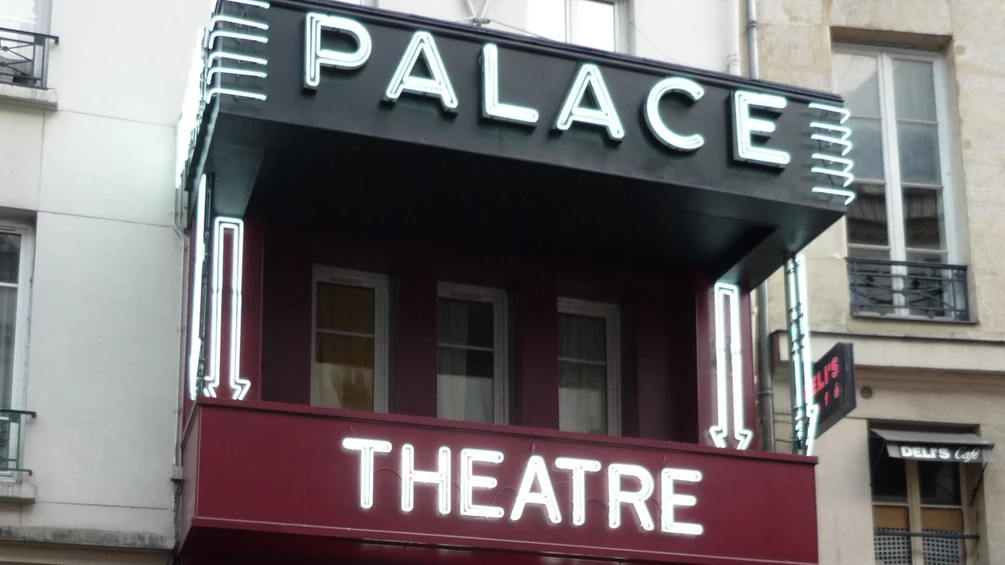
HangupsMusic.com – Paris, The beating heart of Parisian nightlife is preparing for a monumental resurrection as Le Palace, the legendary discotheque that once defined the cultural landscape of France, prepares to reopen its doors. Following more than four decades of shifting identities and intermittent closures, the venue is slated for a grand return in early 2027. This ambitious project, spearheaded by French producer Mickael Chétrit, aims to restore the Rue du Faubourg Montmartre landmark to its former glory, blending its rich historical pedigree with a forward-looking vision for live music and entertainment.
The announcement marks a significant turning point for the 9th Arrondissement, where the building at number 8 has stood as a silent witness to a century of artistic evolution. Originally constructed in 1912, the structure began its life as a cinema before evolving into a music hall. However, it was during the late 1970s that the venue achieved international immortality. Under the stewardship of the visionary Édouard Molinaro Emaer, Le Palace was transformed into the French answer to New York City’s Studio 54—a place where the rigid hierarchies of French society collapsed on the dance floor, and where the avant-garde met the aristocracy.
Mickael Chétrit, who recently acquired the venue, announced the takeover via social media, expressing a profound sense of responsibility toward the site’s heritage. "I’m thrilled to announce that I’m taking over the management of this legendary stage, where the greatest artists, from Gainsbourg to Prince, have performed," Chétrit shared. His mission is clear: to "revive this unique, world-renowned venue" and "restore the rightful place of seated and standing concerts." While initial projections suggested a reopening in October 2026, the complexity of the restoration has shifted the timeline to the start of 2027, ensuring that every detail of the iconic space is meticulously addressed.
To execute this delicate revival, Chétrit has enlisted the expertise of renowned architect Jacques Garcia. Garcia is no stranger to the intersection of luxury and history, and his involvement signals a commitment to preserving the "spirit" of the building. The renovation is not intended to be a sterile modernization; rather, it is a restoration of the atmosphere that made Le Palace a sanctuary for creativity. The building’s 1912 roots provide a neoclassical framework that Garcia and Chétrit intend to respect. "The idea of the renovation is to respect that spirit, the history and what people experienced here," Chétrit explained. "I didn’t want to change everything and create something completely new; it’s about keeping the name and using the history of what it was to create what it will become."
The history Chétrit refers to is nothing short of mythic. In its 1970s and 80s heyday, Le Palace was more than just a nightclub; it was a cultural laboratory. The venue’s "Privilège" basement club was the inner sanctum for the global elite, where figures like Yves Saint Laurent, Karl Lagerfeld, Kenzo Takada, and Paloma Picasso were regulars. On any given night, one might see Mick Jagger sharing a table with Grace Jones, or Andy Warhol observing the chaotic energy of the Parisian youth. It was a place where fashion was born and where the concept of the "celebrity" was redefined through the lens of European decadence.
Musically, the venue was a powerhouse. It served as a vital stage for artists who would go on to shape the 20th-century soundscape. Serge Gainsbourg, the provocateur of French pop, was a frequent presence, as was the American polymath Prince, whose performances at Le Palace are still spoken of in hushed tones by those lucky enough to attend. The venue also hosted the likes of David Bowie and Josephine Baker, bridging the gap between the music hall traditions of the early 20th century and the glam-rock and disco revolutions that followed.
This legacy is a primary driver for the artists currently vying for a spot on the 2027 calendar. Although Chétrit has remained tight-lipped regarding the specific lineup for the opening season, he confirmed that the interest has been overwhelming. "We’ve had lots of requests, and from some great artists," he noted. "Many French artists and foreign artists want to perform at Le Palace because they started here and want to return to where it all began for them." This cyclical nature of the industry—where established legends seek to return to the venues that fostered their early careers—suggests that the new Le Palace will serve as both a nostalgic touchstone and a launchpad for the next generation of talent.
The path back to prominence has not been easy for the venue. After the death of Fabrice Emaer in 1983, Le Palace struggled to maintain its identity. Throughout the late 80s and 90s, various management teams attempted to recapture the magic, but the cultural zeitgeist had shifted. Even a brief and high-profile stint under the management of David and Cathy Guetta in the mid-1990s could not permanently anchor the venue in the fast-moving world of electronic dance music. By the late 90s, the building fell into disrepair and was eventually occupied by squatters, a far cry from the days of velvet ropes and champagne.
A period of relative stability arrived in 2008 when the building was repurposed as a theater and events space. For fifteen years, it operated under this guise, hosting comedy shows and theatrical productions. While this kept the doors open, it lacked the electric, subversive energy that had originally made Le Palace a global household name. Chétrit’s takeover represents a desire to move away from the purely theatrical and return to the venue’s roots as a multidisciplinary music hall where the boundary between the performer and the audience is fluid.
The 2027 reopening comes at a time when Paris is experiencing a broader revival of its nightlife and live music scene. In the wake of global shifts in how people consume entertainment, there is a growing appetite for physical spaces that offer a sense of history and "place." Le Palace, with its ornate architecture and storied past, is perfectly positioned to satisfy this craving. By offering both seated and standing configurations, the venue will be able to host everything from intimate acoustic sets and high-end fashion shows to high-energy rock concerts and late-night DJ sets.
For Chétrit, the project is also a personal journey of discovery. "I’m too young to remember the club in its heyday," he admitted to the press, "but I’ve seen the photos and documentaries and I’ve spoken to people who used to come here. In those days, everyone knew Le Palace." This generational bridge is perhaps the most vital aspect of the reopening. The goal is to create a space that honors the memories of the original "Palace generation" while providing a new, equally vibrant experience for a demographic that only knows the club through the grainy filters of archival photography and legendary anecdotes.
As the renovation progresses over the next two years, the eyes of the music world will be fixed on Rue du Faubourg Montmartre. The task of modernizing a century-old building to meet contemporary sound, lighting, and safety standards—while preserving its soul—is a Herculean effort. However, with the combined vision of Chétrit and Garcia, there is a palpable sense of optimism that the "Red and Gold" will once again shine. When the doors finally swing open in 2027, Le Palace will not just be a nightclub or a concert hall; it will be the return of a Parisian institution, ready to write its next chapter in the annals of music history.
