
 By Azzam Bilal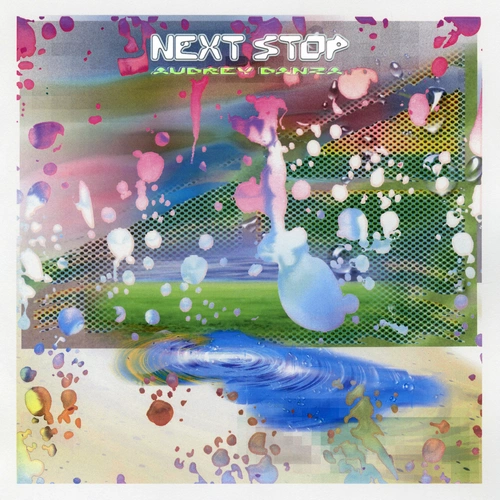
HangupsMusic.com – Geneva, the Swiss electronic landscape has long been a bastion of precision and depth, a place where the clinical efficiency of techno often meets the emotive, sprawling textures of house music. At the center of this contemporary movement is Audrey Danza, a producer and DJ whose residency at the renowned Motel Campo has served as a laboratory for a specific, high-octane brand of dance music. With the release of her latest EP, Next Stop, Danza further cements her reputation as a vital architect of the progressive house revival, a movement that seeks to reclaim the cinematic grandeur of the early 1990s while anchoring it in the punishing, reliable weight of modern techno. Released on her own burgeoning Proxima imprint, the four-track collection is more than just a functional club tool; it is a vivid exploration of hallucinogenic sound design and rhythmic endurance.
The current resurgence of progressive house is a phenomenon that has caught many by surprise, yet for those following labels like Kalahari Oyster Cult or Step Ball Chain, the shift makes perfect sense. After years of minimal textures and the dominance of utilitarian "business techno," there is a palpable hunger for music that offers a narrative arc—sounds that are "spacey" and atmospheric without sacrificing the physical impact required for a 3 AM dancefloor. Danza’s work sits comfortably within this niche, though she distinguishes herself through a particular "heft." Where some of her contemporaries lean into the lighter, breakbeat-inflected side of the genre, Danza retains a core of techno-centric power. Her drums are not merely metronomes; they are the tectonic plates upon which her fluorescent synth melodies shift and collide.
The EP’s title track, "Next Stop," serves as a manifesto for this aesthetic. From the opening bars, the listener is enveloped in a swirl of acid-tinged modulations that feel both nostalgic and futuristic. These are not the dry, squelching acid lines of Chicago house, but rather a more fluid, liquid variety that seems to bleed into the surrounding frequencies. The 4/4 percussion is unrelenting, providing a rigid framework for the "neon" synth beams that cut through the mix. What elevates "Next Stop" above standard club fare is Danza’s attention to textural detail. Between the primary rhythmic pulses, one can hear intricate layers of static, subtle delays, and micro-melodies that create a sense of constant motion. It is a track that feels like traveling through a high-speed transit system in a sprawling, neon-lit metropolis—fittingly capturing the urban energy of its creator’s home base.
Transitioning into the second track, "Dissolve," Danza pivots toward a more ethereal, though no less intense, atmosphere. Here, the production utilizes space as an instrument in its own right. The track is characterized by a "fog" of hazy electronics that threatens to obscure the rhythm, only to be punctuated by booming, resonant kicks that clear the air. The most striking element of "Dissolve" is the inclusion of disembodied vocal snippets. These voices are stripped of their humanity, processed until they become ghostly artifacts that drift in and out of the listener’s perception. This technique adds a layer of psychological depth to the music, transforming a standard club track into a piece of sonic storytelling. It evokes a sense of isolation within a crowd, a common theme in the more cerebral corners of the progressive house world.
As the EP progresses, Danza shifts her focus toward the peak-time requirements of the DJ booth. "The Run" is a masterclass in tension and release. Eschewing some of the more melodic flourishes of the earlier tracks, it settles into a "heads-down" groove designed for total immersion. This is where Danza’s techno influence is most apparent. The track relies on a driving, repetitive loop that slowly evolves over several minutes, drawing the listener into a trance-like state. It is the kind of music that thrives in a dark room with a high-fidelity sound system, where the subtle shifts in percussion and the gradual introduction of white noise can be felt as much as heard. "The Run" represents the "slammer" of the EP, a functional weapon for DJs looking to maintain high energy without resorting to cheap thrills or obvious drops.
The closing chapter of the EP, "Hallucinating," takes a darker, more experimental turn. The track is built around a creeping synth riff that feels inherently unsettled, bordering on the paranoid. As the arrangement builds toward its central breakdown, the sense of unease intensifies. Danza employs a variety of modulation techniques to make the synths feel as though they are warping and melting, living up to the track’s title. When the percussion finally returns, it does so with a renewed ferocity, likely to cause a significant commotion on any dancefloor. It is a bold way to end the record, leaving the listener not with a sense of resolution, but with a lingering feeling of intensity. This willingness to lean into the "uncomfortable" or the "weird" is what separates Danza from many of her peers who are content to stay within the safe confines of melodic house.
The success of Next Stop also highlights the importance of Danza’s label, Proxima. In an era where the digital market is oversaturated, the existence of a curated, artist-led label allows for a more cohesive vision. Proxima has become a beacon for this specific intersection of styles, providing a home for music that is too "prog" for the techno purists and too "techno" for the house traditionalists. By controlling the means of distribution, Danza ensures that her aesthetic—which balances the hallucinogenic with the physical—is presented without compromise.
To understand the impact of this EP, one must look at the broader context of the electronic music scene in 2024. There is a clear move away from the frantic BPMs of the "hard techno" trend toward a more nuanced, mid-tempo groove. This shift allows for more complexity in the mid-range and high-end frequencies, giving producers like Danza the room to experiment with the long-form synthesis that defines progressive music. The "revival" isn’t about looking back with rose-tinted glasses; it’s about taking the structural lessons of the past—the patience, the atmosphere, the building of a vibe—and applying them to the high-fidelity production standards of today.
Danza’s technical prowess is evident throughout the EP. The "potent" nature of her sound comes from a sophisticated understanding of low-end management. Even when the tracks are at their most "spacey" or "atmospheric," the kick drums and basslines remain centered and powerful, ensuring that the music never loses its connection to the floor. This duality is difficult to achieve; many producers lose the rhythm when they get too caught up in the synths, or vice-versa. Danza, however, manages to make the "acid swirls" and the "tough 4/4 drums" feel like two halves of a single, breathing organism.
In conclusion, Next Stop is a definitive statement from an artist who has fully found her voice. Audrey Danza has managed to capture the zeitgeist of the underground while maintaining a sound that is uniquely her own. Whether it is the neon-lit optimism of the title track or the paranoid depths of the closer, the EP offers a comprehensive look at what modern progressive house can and should be. It is music that demands attention, rewarding the listener with intricate textures and a physical intensity that is increasingly rare. As Danza continues to develop her Proxima label and her own production style, she stands as a key figure in the ongoing evolution of the European electronic landscape, proving that the "next stop" for the genre is one filled with innovation, depth, and undeniable power.
