
 By admin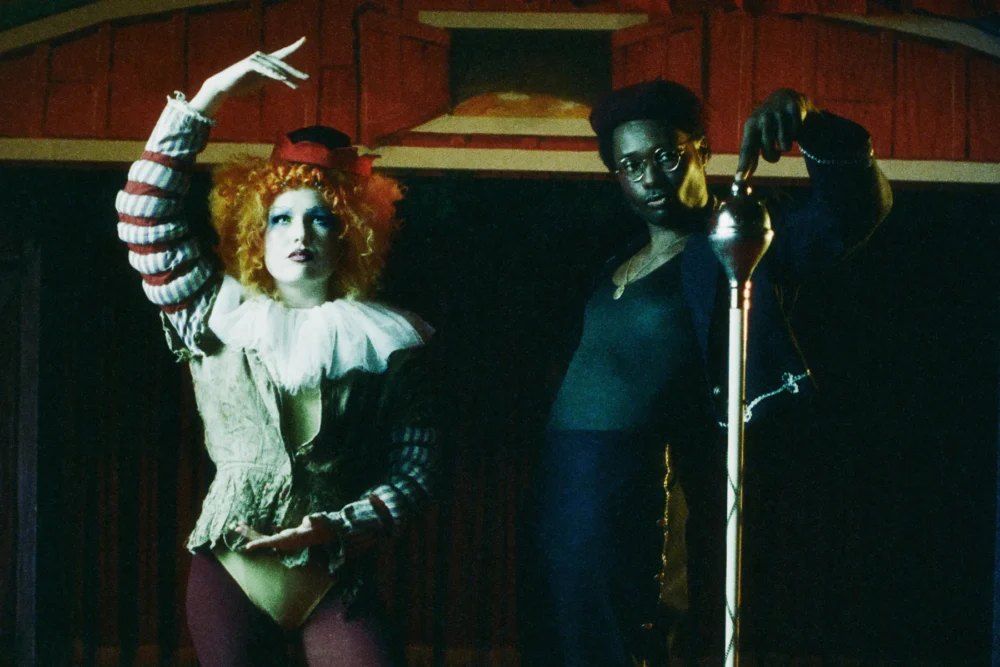
HangupsMusic.com –
In a world often saturated with manufactured sounds, a vibrant, otherworldly entity known as Haute and Freddy has emerged, poised to unleash their audacious debut album, Big Disgrace. Comprised of the visionary talents of Michelle Buzz and Lance Shipp, this duo is not merely releasing music; they are unfurling a tapestry of maximalist pop glory, woven with threads of personal struggle, profound liberation, and an unyielding commitment to authentic expression. The album, set to arrive on March 13, promises to be a no-holds-barred exploration of freedom, celebrating the beautiful madness within us all.
Big Disgrace is more than just a collection of songs; it’s an invitation to their devoted fanbase, affectionately dubbed the "Royal Court," to partake in a grand feast of thirteen tracks. These compositions pulse with the vibrant energy of soaring Eighties synths, a sonic landscape that evokes both nostalgia and a forward-looking euphoria. At its core, the record is a testament to embracing the facets of oneself that are often relegated to the shadows – the unconventional, the vulnerable, the truly wild. Lance Shipp, reflecting on this pivotal moment, shared with Rolling Stone via Zoom, "Our work now is so carefree and so joyous. Our souls are in this. It really feels like we get to be who we are making this music. And I’m just so happy that this album is coming out." His words resonate with a palpable sense of relief and triumph, underscoring the deep personal investment embedded in every note.
The journey to Big Disgrace has been anything but conventional, marked by years spent behind the scenes, crafting hits for other luminaries in the music industry. Shipp’s impressive résumé includes co-writing and production credits for global sensations like Rauw Alejandro, Britney Spears, and Calvin Harris. Michelle Buzz, equally prolific, has penned chart-toppers such as Katy Perry’s "Never Really Over," Kylie Minogue’s infectious title track "Magic," and contributed to the discographies of artists like Bebe Rexha and Lady A. Their individual successes as songwriters and producers were undeniable, yet this demanding corner of the industry, notorious for its relentless pace and creative compromises, eventually exacted a heavy toll. The pursuit of external validation and commercial success began to erode their artistic spirits.
Buzz candidly described the disillusionment that set in. "I don’t think I was prepared for how it would feel to try to chase what other people wanted my career to look like, to chase money and music," she revealed. "It really broke my spirit, and I didn’t feel like I was living my dream in the end." This sentiment, echoed by many who navigate the intricate machinery of the music business, speaks to the profound disconnect that can arise when personal artistic vision is continually bent to fit commercial molds. The pressure to consistently deliver for others, often without a direct connection to the final artistic product, led Buzz down a path of profound despair.
For two years, Michelle Buzz found herself mired in a period of intense depression. It was a dark, frightening chapter that threatened to extinguish her passion for music entirely. "It was really hard and dark and scary. That was right before we started writing this album. That was like, ‘I’m gonna quit music. I’m gonna do something else.’" Her eight years as a professional songwriter, dedicated to serving other artists’ visions, had left her feeling adrift, disconnected from the very essence of why she began making music. She elaborated on the often-abstract nature of her previous work: "It doesn’t always look like you’re working with actual artists. Sometimes you’re just working towards this very obscure hope that someone will hear it." This intangible pursuit, devoid of immediate artistic fulfillment, ultimately proved unsustainable.
It was in this crucible of despair that the seeds of Haute and Freddy began to germinate, though the duo hadn’t yet formally coalesced. Lance Shipp, observing Buzz’s struggle, recounted the nascent stirrings of her creative resurgence. "I watched her go to thrift stores, antique places, and pick up weird old items. They were all kind of in a theme, but there were no words to say what was going on," he recalled, painting a picture of a soul searching for an outlet, a tangible expression of an inner world in flux. These idiosyncratic treasures weren’t just objects; they were fragments of a burgeoning aesthetic, a silent language waiting to be deciphered. Then, crucially, he witnessed a profound shift: "Then I watched her make songs just for the joy of making songs… I just saw light come back into her eyes and laugh and life." It was this pure, unadulterated act of creation, free from industry pressures and expectations, that signaled the return of Buzz’s spirit. The realization dawned on them both: they had stumbled upon something truly precious, a shared artistic haven. It was then that the idea of crafting their own music, entirely on their own terms, took root. Shipp affirmed, "It was just like the depression kind of just slowly faded away."
Buzz further articulated the album’s profound significance as a cathartic release. "Big Disgrace is absolutely this outburst from a lot of sadness," she stated, likening her emergence from depression to "an escalator up" from a "long trench in that valley." This metaphor powerfully conveys the gradual, arduous ascent from a place of deep emotional confinement. Her journey involved a fundamental shift in mindset, moving from existential questions about joy’s presence in her life to a conscious decision to reclaim it. "I’m like breaking my own heart, not being able to feel my usual feelings," she reflected on her past state. The turning point came with the simple yet revolutionary question: "What could allow us to have fun today?" – a question posed without the burden of expectations or a predetermined outcome.
This pivot towards happiness as a core principle led Buzz to discover "a new meaning of life," one deeply rooted in the concept of "play." She found herself "less concerned with making something of myself, all those very ego thoughts." This shedding of ego, of external validation, freed both artists to create music and art that felt unequivocally true to their authentic selves. The sincerity of their new approach resonated deeply and immediately with listeners. Their fanbase, the "Royal Court," blossomed organically, drawn to the unvarnished honesty and celebratory spirit embedded in Haute and Freddy’s work.
Now, having navigated the treacherous waters of industry burnout and personal darkness, Haute and Freddy are poised to embark on an exhilarating new chapter: an international tour in May, supporting Big Disgrace. The duo will traverse North America, the United Kingdom, and Europe, bringing their maximalist pop spectacle to cities including London, Paris, Toronto, Boston, New York, Atlanta, Nashville, Austin, and Detroit. This extensive tour is not merely a series of performances; it’s a living testament to their journey, a vibrant celebration of self-discovery and artistic triumph.
The surreal reality of their current success is not lost on Buzz. "For all this to bring about what this year has been, where now we have fans and can tour… it’s so mind blowing," she marveled. Her concluding thought encapsulates the profound paradox of their journey: "I had to want to quit music to keep doing music." It was only by reaching the brink, by letting go of the industry’s suffocating expectations, that they were able to rediscover the pure, unadulterated joy of creation and, in doing so, forge a path where their authentic voices could truly soar.
The Big Disgrace tracklist itself offers a thematic roadmap to this journey of liberation and self-acceptance, each title hinting at the album’s overarching narrative:
Big Disgrace Track List
- “Symphony for a Queen”
- “Anti-Superstar”
- “Sweet Surrender”
- “Scantily Clad”
- “Freaks”
- “Shy Girl”
- “Dance the Pain Away”
- “Femme Hysteria”
- “Fashion Over Function”
- “Sophie”
- “Showgirl at Heart”
- “Fields of Versailles”
- “I Like My People Weird”
From the regal embrace of "Symphony for a Queen" to the defiant individuality of "Anti-Superstar" and the joyous embrace of "I Like My People Weird," the album’s titles alone promise an exhilarating ride through themes of self-love, vulnerability, and the celebration of the beautifully unconventional. Haute and Freddy are not just releasing an album; they are sharing a hard-won manifesto for artistic and personal freedom, inviting their "Royal Court" and indeed the wider world to join them in a grand, glorious Big Disgrace.
