
 By admin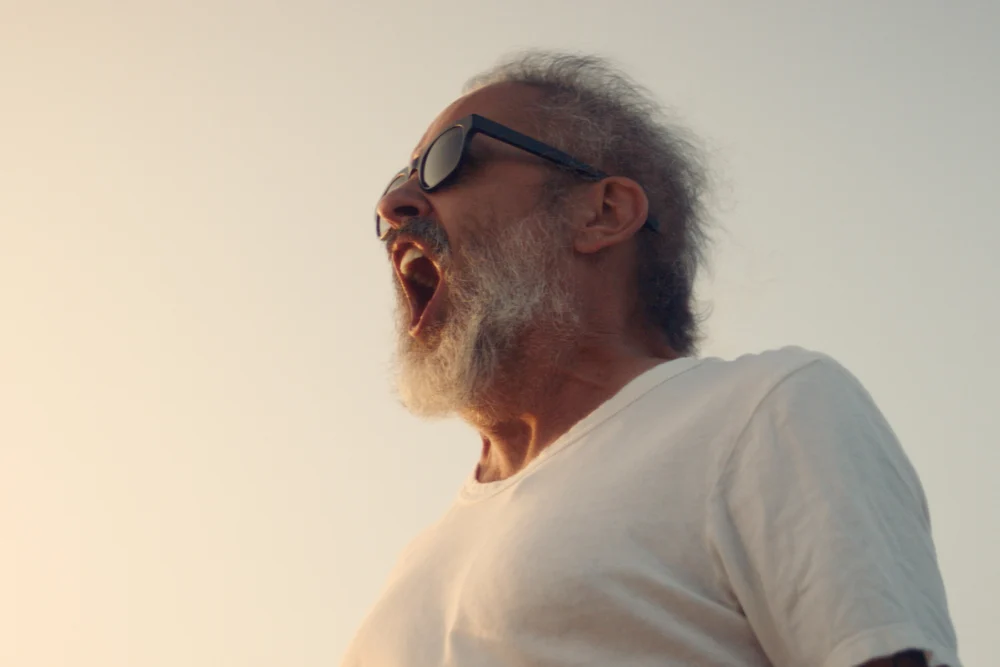
HangupsMusic.com – San Francisco, The inception of a profound friendship often begins with an unremarkable moment, but for Lee Einhorn, it involved a rather memorable canine mishap. Freshly hired at the prestigious ad agency Publicis & Hal Riney in 2003, Einhorn traveled from Boston to the bustling San Francisco office to immerse himself in a new campaign. On one fateful day, hoping to introduce his beloved dog to his new workplace, Einhorn found himself in an elevator with his new boss, André Ricciardi. The ascent was abruptly punctuated by his dog’s impromptu bowel movement, a mortifying spectacle witnessed entirely by Ricciardi. "He basically thought I was a loser," Einhorn recalls, reflecting on that less-than-stellar first impression. Yet, against all odds, this ignominious start was the prelude to an extraordinary bond, one so deep that the men would eventually describe each other as "soulmates" and even jest about undergoing a joint colonoscopy.
Years later, a different kind of meeting unfolds on a Zoom screen. Tony Benna, a director whose career trajectory frequently intersected with Ricciardi’s, gestures off-camera, bringing into view a meticulously crafted, eight-inch stop-motion puppet of André. The diminutive figure, perfect for animation, takes its place in the corner of the frame, a whimsical stand-in for the absent subject of their conversation. Benna notes he also possesses a puppet of Lee, though it remains boxed, as the real Lee Einhorn is present, occupying his own digital square beside Benna.
Benna’s path crossed with André’s a few years after Einhorn’s initial, inauspicious encounter. André, a luminary in the advertising world, known for his audacious "terror marketing" campaigns — famously orchestrating a personalized email "stalking" campaign for Toyota that bordered on the unsettling — had transitioned from Riney to the innovative firm Mekanism. Benna and André quickly forged a dynamic professional relationship, collaborating on projects that pushed the boundaries of conventional advertising. Their work together included a distinctive stop-motion animation featuring the legendary Ozzy Osbourne, a venture that undoubtedly resonated with a music-centric audience, and an ambitious shoot in Spain. "We were on the road together for weeks at a time," Benna recounts, emphasizing the intense, shared experiences that deepened their connection. "I got to know him really well."
Over the years, both Einhorn and Benna had grown accustomed to André’s penchant for pitching outlandish ideas, whether for a high-stakes client or a wild escapade involving remote landscapes and mind-altering substances. So, when an email from André landed in Benna’s inbox in 2020, hinting at a "fun" collaboration, the filmmaker eagerly joined a Zoom call. Einhorn was already on the line.
The conversation began not with a creative brief, but with a stark, unexpected declaration. "‘I’ve got Stage 4 cancer,’" Benna remembers André stating, his voice devoid of melodrama. "That was how André started the conversation." Benna, disbelieving, assumed it was a prank. "’Right, what’s the catch?’" he pressed, expecting a punchline. André’s response was chillingly direct: "‘There’s no catch. The catch is I actually have cancer.’" Then, gesturing towards Einhorn, he added, "‘We want to make a comedy about it.’ That was the pitch."
The resulting film, André Is an Idiot, premiered to critical acclaim at last year’s Sundance Film Festival, earning accolades for its unflinching yet hilarious portrayal of Ricciardi’s journey with a terminal diagnosis. The documentary invites viewers into André’s world as he undergoes chemotherapy and radioactive treatments, which he flippantly dubs "my ass cancer." We witness him embracing unconventional methods, from consuming drugs in the desert to practicing a primal "death yell" with a trained professional. He even muses about launching a game show titled Who Wants to Kill Me?, where contestants would vie for the chance to orchestrate his demise in bizarrely entertaining ways. The stop-motion puppet of André plays a significant, symbolic role throughout. True to its subject’s spirit, the film is irreverent, wildly offbeat, occasionally profoundly poignant, and arguably the most genuinely hilarious cinematic exploration of an incurable disease ever made. It’s a testament to André’s unique perspective that a film about his final years manages to be so vibrantly alive and side-splittingly funny, now seeing a limited theatrical release.
The film’s provocatively self-deprecating title, André Is an Idiot, was a toned-down version of André’s original, lengthier proposition: André’s Dying of Cancer Because He Is a Fucking Idiot. Benna recalls gently suggesting a more concise, less expletive-laden alternative. Ricciardi, however, was adamant that the self-critical descriptor remain. His insistence stemmed from a deeply personal regret. Lee Einhorn, ever the concerned friend, had suggested they undergo a "couple’s colonoscopy" when he was due for his own screening. André, in his characteristic nonchalance, declined. A mere year later, he received the devastating diagnosis of Stage 4 colorectal cancer. Had he heeded Einhorn’s advice, the disease might have been detected early and treated successfully. Instead, as the film’s title wryly implies, a profound opportunity was missed.
André first broached the idea of creating this radical, genre-defying film — part existential comedy, part gonzo public service announcement — with Einhorn. Lee’s response was immediate and unequivocal: "It was very much, whatever you want to do, André, I’m 100-percent in." Einhorn swiftly stepped into a producer role and suggested enlisting Benna to direct. Benna, however, initially grappled with the enormity of the request. "I asked André for a week or two, you know, just to digest the fact that he had cancer," Benna admits, describing his shock and confusion after that initial call. It was his wife who provided the necessary clarity. "If he’s asking you to do this very intimate project that’s probably one of the last things he’ll do while he’s alive — that’s special," she advised.
"And she was absolutely right," Benna affirms. His initial goal was modest: "I thought, if I just capture half the stories that André told me over the years, just so his kids had a record of them, that’d be enough. Start small and work up from there."
André, it must be said, led a life that would warrant a feature-length narrative even without the shadow of impending mortality. An autodidact who embodied the free-spirited bohemia of 1990s San Francisco, he navigated a myriad of unconventional creative pursuits before becoming an advertising agency’s celebrated "off-the-wall genius." Opportunities to expand his consciousness, often through experimental means, were rarely declined. André was the kind of person who, upon learning that a Canadian bartender at his regular haunt faced deportation, impulsively offered to marry her to secure her a green card. Janice, as she was known, accepted, and the unlikely pair even appeared on a revamped version of The Newlywed Game to convince skeptical immigration officials of their legitimacy. Miraculously, their marriage of convenience blossomed into genuine romance, winning them a honeymoon trip to the Caribbean.
(Full disclosure: I knew both André and Janice during that era. Janice worked at a bar opposite the restaurant where I was employed, and André was an ever-present fixture in the neighborhood. If you frequented the taverns and drinking establishments of the Inner Sunset district back then, you almost certainly crossed paths with him regularly.)
André and Janice eventually had two daughters, Tallula and Delilah. Despite his new role as a devoted father, André continued to revel in his eccentricity, a trait his family affectionately confirms. His perpetually frizzy hair, often likened to someone who’d lost a fight with an electrical socket, prompted one of his children to quip in the film, "My dad looked like he lived on the street." When his older daughter fell ill, he would soothe her by reading from Helter Skelter. In one memorable scene, he proudly displays a pair of pants he purchased off eBay, once owned by Kim Kardashian, revealing his audacious plan to clone the reality-TV mogul.

True to his nature, when André enlisted his two friends to document his final years, his primary directive was clear: "Just make it interesting. And whatever you do, don’t turn the whole thing into a boo-hoo pity party." Beyond those parameters, anything was fair game.
"We decided from the start that we’d let him choose what he wants to do, and we’ll just follow him," Benna explains. "It was very much: We’ll follow you wherever you want to go, André — if you want to go to Italy and look into getting a head transplant, we’ll go. If you want to go to a cryogenics place and talk about freezing yourself, we’ll bring our cameras." Their journey with André led them to a radon mine in Montana, where he sought to breathe radioactive air, not for a cure, but out of sheer curiosity about antiquated healing techniques. They attended crystal healing sessions, and André spoke of revisiting Ayahuasca. "André wanted to ingest nine grams of mushrooms," Benna recounts.
"He did eat nine grams of mushrooms!" Einhorn interjects, a note of incredulity still in his voice.
"He did eat nine grams of mushrooms, yes," Benna confirms with a resigned chuckle. "We ended up filming the most tangential shit. But we were literally open to anything. Which, you know, is very dangerous in the world of André."
A significant challenge arose concerning André’s father. Benna and Einhorn had successfully interviewed Janice, their daughters, and André’s older brother for the film. However, when they broached the subject of his father, André flatly refused. The elder Ricciardi, André explained, "is an extremely private person — extremely private," and would never agree to participate. Still, Benna sought someone who could speak to André’s childhood, who could portray André "before he became André," as Benna put it. (Einhorn noted that André’s mother suffered from dementia, making her inclusion impossible.) A compromise was reached: they would hire an actor to play his father.
[Possible spoiler ahead.]
"He originally wanted Barack Obama," Benna reveals. "That was his first choice. But he thought Barack Obama was a little too young to be his father. So he was like, ‘What about Tommy Chong?’" Chong, a colorectal cancer survivor himself, was an almost immediate "yes." The shoot, however, brought its own comedic chaos. "Except, when he shows up for the shoot, Tommy has zero idea what this film is or what his role is," Benna recounts. "We keep telling him, ‘You’re supposed to be his dad.’ He’s like, ‘What? No, I have my own kids.’ I’m like, ‘We know that. You’re playing his dad.’ And he’s like, ‘But André’s not my real son.’ And I’m like, ‘We understand that, but today you’re going to pretend.’ And he’s like, ‘What?!’"
"We’d told Tommy, ‘You just have the two kids, André and his brother,’" Einhorn adds, shaking his head. "Tony asks the first question: What was André like as a kid? And Tommy goes, ‘Oh, his sisters hated him.’ It’s like, Dude, we just fucking told you that he only has one brother!"
"A production company, which will remain nameless, asked if all the weed that he and Tommy were smoking for 12 hours was fake," Benna recalls with a wry smile. "‘Those are stage drugs, right?’ And I was like, Oh yeah, they’re, um, definitely fake. Definitely."
The duo continued filming even as André’s health declined and the prognosis grew increasingly grim. Shortly before the close of 2023, André Ricciardi "exited the building," as Benna gently puts it. Benna recalls a particularly raw moment during post-production, sitting in his editing suite at 4 am, weeping on the floor, his hand throbbing from punching a hole in the wall. "There was a lot of personal grieving happening during post-production," he confesses. "There was a lot of me yelling at André’s puppet: ‘I miss you. Why the fuck aren’t you here?’"
"But the thing is, I remember talking to the family after they first saw it," Benna continues, his voice softening. "I was worried about their reaction, because I knew this would be hard for them. And they all said, ‘I felt like I got to hang out with him for 90 minutes again.’ Which is such a gift, you know?" For Benna, the overriding question throughout the arduous process was always: "Am I honoring my friend? That was the goal. Not making a movie about cancer. I didn’t want to make a movie about cancer. I wanted to make an authentic portrait of the person I knew, who was irreverent, hilarious, brilliant… and who happened to have cancer."
"‘Just don’t make a sad cancer movie, guys’ — that was what he kept saying," Einhorn echoes. "I think if he saw this, he’d be happy that we didn’t do that." A long silence hangs in the digital air, filled with unspoken remembrance. "And then he would turn to the screen and yell, ‘And everyone, go get a colonoscopy! ‘Don’t be a fucking idiot!!!’"
