
 By admin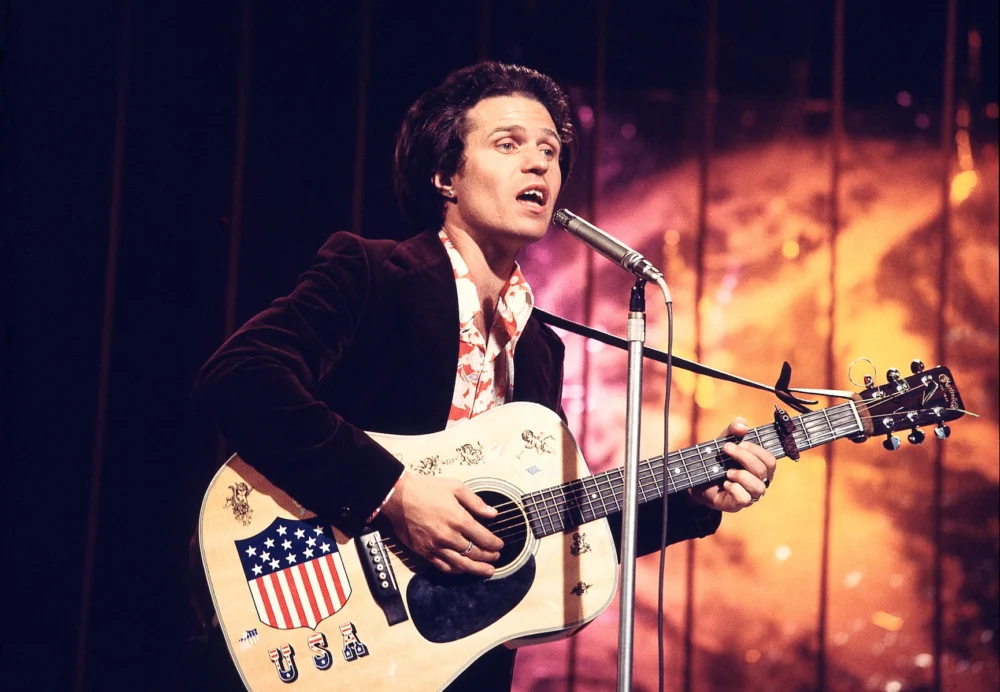
HangupsMusic.com – Berkeley, California, has lost a foundational voice of the counterculture era with the passing of Country Joe McDonald, the charismatic frontman of psychedelic-folk pioneers Country Joe and the Fish. McDonald, whose darkly comic and fiercely anti-establishment anthems defined a generation grappling with war and social upheaval, died Saturday, March 7th, at the age of 84. His family confirmed his peaceful passing in Berkeley, attributing it to complications from Parkinson’s Disease. The news was shared by the band’s official social media channels on Sunday, prompting an outpouring of tributes for the artist whose music was as much a rallying cry as it was entertainment.
McDonald’s enduring legacy is inextricably linked to the seismic shifts of the 1960s, a period he not only witnessed but actively shaped through his art. Born in Washington D.C. and raised in El Monte, California, Joseph Allen McDonald developed an early affinity for folk music, drawing deep inspiration from the storytelling prowess and protest spirit of Woody Guthrie. This influence, combined with the burgeoning folk revival and burgeoning civil rights movement, laid the groundwork for his unique musical path. He was a U.S. Navy veteran, an experience that would profoundly inform his later anti-war stance, lending an authentic, lived-in weight to his critiques of military conflict.
In the early 1960s, McDonald immersed himself in the vibrant Bay Area music scene, a crucible of experimentation and dissent. It was there he crossed paths with Barry "The Fish" Melton, a fellow musician whose guitar work would complement McDonald’s songwriting. Together, they formed Country Joe and the Fish, a band that quickly became a cornerstone of the burgeoning psychedelic movement. Their early performances in Bay Area coffeehouses were raw and intimate, showcasing McDonald’s biting wit and political commentary alongside their innovative blend of folk, rock, and blues. As the scene exploded, they found themselves sharing stages and garnering acclaim alongside contemporaries like Jefferson Airplane and Quicksilver Messenger Service, becoming integral to the San Francisco sound.
While Country Joe and the Fish released a string of influential albums, it was McDonald’s 1965 composition, "I-Feel-Like-I’m-Fixin’-to-Die Rag," that cemented his status as a cultural icon. Penned at a pivotal moment when the United States’ involvement in the Vietnam War was escalating, the song captured the sardonic disillusionment of a nation being drawn into a seemingly futile conflict. McDonald, reflecting on its creation, once told the New York Times in 2017 that he aimed to "write a song about how soldiers have no choice in the matter, but to follow orders, but with the irreverence of rock & roll. It was essentially punk rock before punk existed." This prescient observation highlighted the song’s raw, unpolished defiance, which predated the punk movement by over a decade.
The lyrics of the "Fixin’ to Die Rag" became an instant anthem for the anti-war movement, its darkly humorous verses resonating with a generation skeptical of authority. "And it’s one, two, three, what are we fighting for? / Don’t ask me I don’t give a damn / Next stop is Vietnam," McDonald sang, his voice a potent mix of cynicism and urgency. The chorus, with its chillingly cheerful refrain – "And it’s five, six, seven, open up the pearly gates / Well there ain’t no time to wonder why / Whoopie! We’re all gonna die!" – encapsulated the absurd horror of war with a gallows humor that was both unsettling and deeply cathartic.
Initially released as an acoustic track on an EP for McDonald’s Rag Baby magazine, the song gained widespread recognition when Country Joe and the Fish re-recorded it for their 1967 album, also titled I-Feel-Like-I’m-Fixin’-to-Die Rag. This electrified version often featured the band’s notorious "Fish Cheer," a call-and-response segment where the audience would spell out a profane word, further amplifying the song’s rebellious spirit. This pre-song chant, initially an irreverent take on military cheers, would become a defining, and often controversial, element of their live performances.
The band’s performance at the legendary Woodstock Festival in August 1969 etched "I-Feel-Like-I’m-Fixin’-to-Die Rag" into the annals of rock history. McDonald, initially scheduled for an acoustic solo set, was called back to the stage after a rain delay, delivering an impromptu, electrifying performance that captivated the half-million-strong audience. He famously engaged the massive crowd in the "Fish Cheer," leading them in spelling out the infamous four-letter word that, in the late sixties, was considered highly obscene. This audacious act, which had previously led to McDonald’s arrest at other venues, was not only captured by the festival’s documentary film crew but was famously included in the final cut of the Woodstock movie. "It was just unbelievable that they allowed it to go in the movie in 1969," McDonald later remarked to Rolling Stone, highlighting the groundbreaking nature of its inclusion and its profound cultural impact. His performance, raw, spontaneous, and utterly defiant, became one of the festival’s most enduring images, symbolizing the era’s rejection of conventional norms and the burgeoning power of youth culture.
Despite the monumental success and cultural resonance of their Woodstock set, Country Joe and the Fish disbanded shortly thereafter. McDonald swiftly embarked on a prolific solo career, beginning with 1969’s Thinking of Woody Guthrie, a heartfelt tribute to his early idol. His solo work continued to explore themes of social justice, environmentalism, and personal introspection, showcasing his versatility as a songwriter and performer. In 1970, McDonald’s commitment to activism extended beyond music when he was called to testify at the infamous trial of the Chicago Seven, a group of anti-war activists charged with conspiracy and inciting riots during the 1968 Democratic National Convention. His testimony underscored his unwavering dedication to political engagement and his solidarity with those challenging the establishment.
Over a career spanning more than five decades, Country Joe McDonald released over 30 albums, a testament to his creative drive and enduring passion for music. Beyond his musical output, he remained a tireless advocate for various causes, lending his voice and influence to environmental protection efforts, particularly the "save the whales" movement, and tirelessly working on behalf of Vietnam War veterans. His advocacy for veterans, often overlooked by the very movement he helped ignite, demonstrated his deep empathy and nuanced understanding of the war’s complex human toll.
Country Joe McDonald’s life and work represent a powerful fusion of art and activism. He was a fearless satirist, a gifted musician, and an unwavering voice for peace and justice. His ability to distill complex political sentiments into catchy, memorable folk-rock anthems, infused with a distinct brand of dark humor, ensured his place not just in music history but in the broader narrative of American social change. As the world mourns his passing, McDonald’s songs continue to echo, reminding new generations of the enduring power of protest, the importance of questioning authority, and the timeless call for peace.
