
 By Azzam Bilal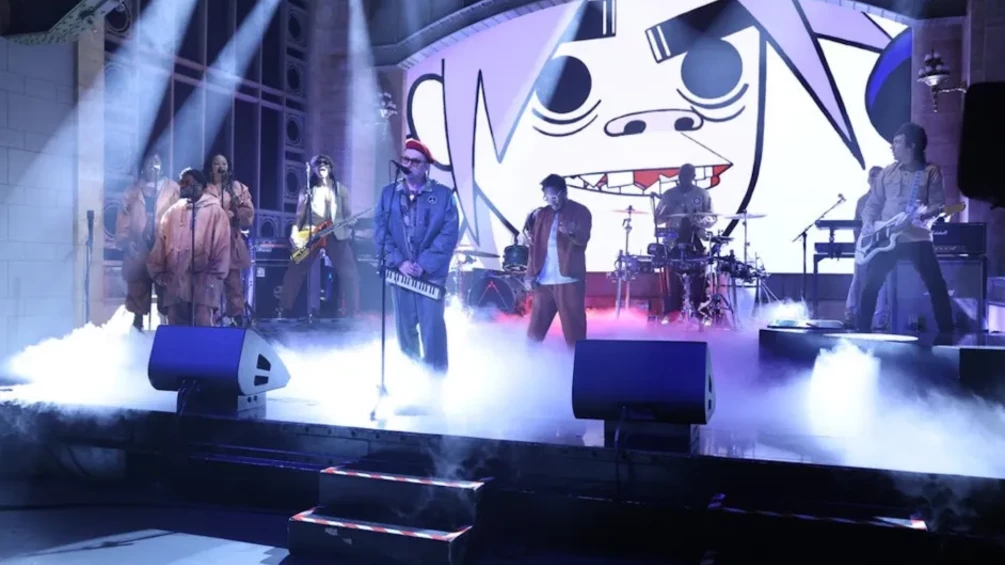
HangupsMusic.com – New York, the iconic stage of Studio 8H at Rockefeller Center has hosted decades of musical history, but few performances have carried the same weight of anticipation and multidisciplinary ambition as the recent debut of Gorillaz on Saturday Night Live. While the "virtual band" created by Damon Albarn and Jamie Hewlett has been a global phenomenon for over two decades, their appearance this past weekend marked a significant milestone in their storied career. Hosted by actor Ryan Gosling, the episode served as a high-profile platform for the group to celebrate their foundational legacy while simultaneously pushing the boundaries of their current creative era, centered around their latest studio album, The Mountain.
The evening was a carefully curated journey through the band’s evolution, bridging the gap between the trip-hop-infused nostalgia of the turn of the millennium and the sprawling, experimental world-music textures of their modern output. By bringing together a diverse array of legendary collaborators, Albarn and his team transformed the SNL stage into a living, breathing tapestry of global sound, proving that even after twenty-five years, the Gorillaz project remains one of the most innovative forces in the contemporary landscape.
The centerpiece of the nostalgia-driven segment of the night was a rousing rendition of "Clint Eastwood." The track, which officially celebrated its twenty-fifth anniversary just last week, remains the definitive Gorillaz anthem, a song that successfully merged alternative rock, dub, and hip-hop into a chart-topping masterpiece in 2001. For this special performance, the group was joined by the legendary Del The Funky Homosapien. Del’s presence was particularly poignant; his original verses as the "ghost rapper" Del the Ghost Rapper provided the supernatural backbone of the band’s early lore. On the SNL stage, the chemistry between Albarn’s melancholic, melodica-driven vocals and Del’s rhythmic precision was as sharp as ever, reminding the audience why the track remains a staple of festival sets and radio playlists worldwide. The performance served not just as a trip down memory lane, but as a testament to the enduring relevance of the "Gorillaz sound"—a genre-blurring aesthetic that paved the way for the modern era of cross-genre collaborations.
However, Gorillaz have never been a band to rest solely on their laurels. The second half of their debut performance shifted focus toward the present, specifically their critically acclaimed new record, The Mountain. They chose to perform "The Moon Cave," a track that encapsulates the ambitious, panoramic scope of the new album. If "Clint Eastwood" represents the band’s roots in gritty, urban experimentation, "The Moon Cave" represents their ascent into a more ethereal, globalized sonic territory.
To bring "The Moon Cave" to life, Albarn assembled an extraordinary ensemble of guests, each representing a different corner of the musical universe. The performance featured the legendary Indian-born singer Asha Puthli, whose pioneering work in jazz-fusion and disco has seen a massive resurgence in recent years. Her celestial vocals provided a haunting contrast to the track’s driving rhythm. Joining her was Black Thought, the virtuosic frontman of The Roots, who delivered a characteristically intricate and powerful lyrical contribution. The arrangement was further elevated by the presence of Anoushka Shankar, the world-renowned sitar player and composer. Shankar’s contribution added a layer of classical Indian sophistication to the performance, weaving complex melodic lines through the electronic production. The result was a stunning display of musicality that transcended the typical "musical guest" format of SNL, feeling more like a high-concept short film or a miniature festival set.
The choice of "The Moon Cave" as a lead-in for their new era is significant. The Mountain, as an album, has been described by critics as a thematic exploration of isolation, perspective, and the search for meaning in an increasingly chaotic world. The record follows the band’s recent foray into multimedia storytelling, including an animated short film released last month that provides a visual companion to the album’s narrative arc. By performing this track on national television, Gorillaz underscored the idea that their project is no longer just about four animated characters; it is a collaborative vessel that can hold the weight of disparate cultures and genres.
The logistics of bringing a Gorillaz performance to the SNL stage are notoriously complex. Throughout their history, Albarn and Hewlett have experimented with various ways of presenting the band live, from hiding behind screens to using cutting-edge hologram technology. In recent years, they have found a balance that places the live musicians at the forefront while still incorporating the iconic visual identity of 2D, Murdoc Niccals, Noodle, and Russell Hobbs. On SNL, this balance was executed flawlessly. The lighting and stage design reflected the aesthetic of The Mountain, utilizing shadows and stark contrasts to create an atmosphere that felt both intimate and grand.
The presence of Ryan Gosling as host added another layer of cultural synergy to the night. Gosling, himself a musician and a fan of genre-defying art, introduced the band with genuine enthusiasm, setting the stage for what many are calling one of the most sophisticated musical segments in the show’s recent history. The appearance comes at a time when SNL is increasingly looking toward legacy acts who continue to innovate, rather than just focusing on the latest viral sensations.
Beyond the immediate thrill of the performance, the Gorillaz debut on SNL serves as a reminder of Damon Albarn’s unique position in the music industry. Having transitioned from the height of Britpop with Blur to the conceptual frontier of Gorillaz, Albarn has spent the last quarter-century acting as a curator of talent. His ability to bring together artists like Del The Funky Homosapien, Black Thought, and Anoushka Shankar on a single stage is a testament to his reputation as a collaborator who respects the heritage of his peers while pushing them into new territories.
The reception to the performance has been overwhelmingly positive, with fans and critics alike praising the band’s ability to maintain their edge. Much of the discourse has centered on the 25-year milestone of "Clint Eastwood." It is rare for a song rooted in such specific subcultures of the late 90s to retain its "cool" factor for two and a half decades. Yet, as the SNL audience’s reaction proved, the track’s minimalist bassline and haunting refrain continue to resonate with new generations.
As Gorillaz continue their promotional cycle for The Mountain, this SNL appearance will likely be remembered as a definitive moment in their "Phase Seven" era. It successfully communicated the depth of the new material while paying the necessary respects to the history that made the project possible. For those who have followed the band since the early days of grainy flash animations and mysterious websites, seeing them command the stage at Studio 8H was a full-circle moment.
For viewers who might have been less familiar with the band’s recent output, the performance of "The Moon Cave" offered a gateway into a more complex, worldly sound. The inclusion of Asha Puthli and Anoushka Shankar, in particular, highlighted a commitment to global sounds that few Western pop acts pursue with such sincerity. It wasn’t just a performance; it was a cultural exchange.
As the credits rolled on the Gosling-hosted episode, the conversation online immediately turned to the legacy of Gorillaz. From the early days of Jamie Hewlett’s sketches to the massive, multi-guest spectacles of today, the project has defied every expectation of what a "cartoon band" could achieve. By making their Saturday Night Live debut with such a high level of artistry and collaborative spirit, Gorillaz have once again proven that they are not just a gimmick or a side project, but a vital, evolving institution in the world of modern music. With The Mountain now available and a short film further expanding their lore, the horizon for Albarn and Hewlett’s creation remains as vast and unpredictable as ever.
