
 By admin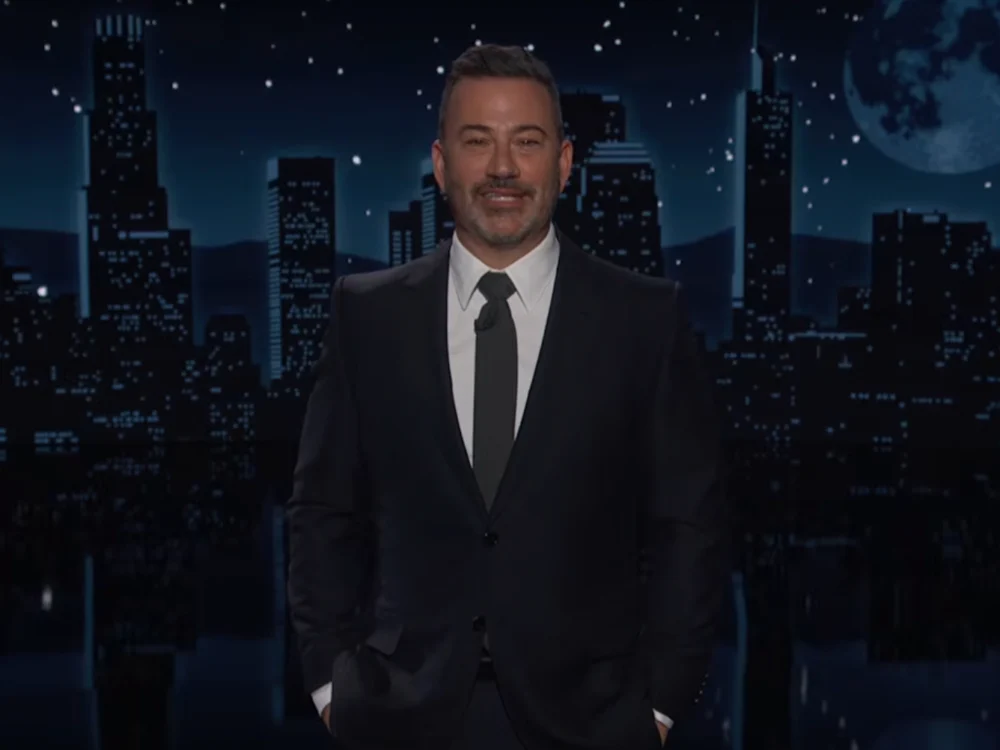
HangupsMusic.com – Los Angeles, The intersection of political discourse and popular culture was starkly illuminated recently as late-night host Jimmy Kimmel delivered a biting monologue, dissecting claims made by former President Donald Trump regarding escalating fuel prices and their broader economic implications. Kimmel’s segment on Jimmy Kimmel Live transcended mere political commentary, evolving into a sharp critique of public rhetoric, economic realities, and the very concept of "gaslighting," particularly when applied to the literal commodity of gas.
Kimmel opened his segment by drawing attention to a pervasive concern for many Americans: the steady climb of gas prices. He highlighted that fuel costs had been on an upward trajectory for nearly two weeks, a trend that directly impacts household budgets and the national economy. This established the immediate, tangible context for his subsequent critique of Trump’s public statements. The host then introduced what he termed "Ex-con Mobile," a pointed moniker for Trump, setting a confrontational tone for the discussion to follow.
The core of Kimmel’s commentary revolved around a Truth Social post from Trump, which the former president had issued in response to the rising prices. Trump’s assertion was multi-faceted: he claimed that the United States, as the world’s leading oil producer, would "make a lot of money" when oil prices increased. Simultaneously, he pivoted to a foreign policy concern, stating his primary interest as president was "stoping" (a misspelling Kimmel notably highlighted) Iran from acquiring nuclear weapons and thereby preventing regional and global destruction. Trump concluded his post with a definitive "I won’t ever let that happen!"
Kimmel meticulously dismantled this statement, beginning with the grammatical error, which he used to underscore a broader perceived intellectual deficit. More significantly, he challenged the economic premise. The host argued that while soaring oil prices might indeed benefit certain oil producers or corporate entities, they certainly do not translate into increased wealth for the average American consumer. Instead, for the vast majority, higher oil prices directly lead to elevated costs at the pump, eroding disposable income and increasing the financial burden of daily life. Kimmel’s sardonic implication was that Trump might believe the public to be as "dumb as he is," capable of accepting such a contradictory economic argument.
The irony, as Kimmel underscored, was particularly acute given Trump’s past campaign promises. The former president had famously vowed to drive gas prices "under $2 a gallon." Now, according to Kimmel, he was attempting to persuade the public that higher prices were, in fact, advantageous. This stark reversal led Kimmel to coin a memorable phrase: "You hear the term gaslighting a lot, but rarely when it comes to actual gas." This witty turn of phrase resonated deeply, highlighting the psychological manipulation inherent in "gaslighting" – making someone doubt their own perception of reality – and applying it directly to a commodity that dictates a significant portion of daily life for millions. The choice of words amplified the perceived absurdity of Trump’s economic interpretation, suggesting a deliberate attempt to redefine an unfavorable economic situation as a positive development.
Kimmel’s monologue then broadened its scope beyond fuel prices, connecting the issue to a wider array of economic pressures faced by Americans. He cited a recent survey indicating that a substantial portion of the population – one-third – was resorting to drastic measures such as skipping meals or reducing essential utility usage, like heating, simply to manage the rising costs of healthcare premiums. This grim statistic served as a powerful counterpoint to Trump’s optimistic portrayal of economic benefits. It painted a picture of genuine hardship, making the former president’s claims appear even more detached from the lived experiences of ordinary citizens.
This segued into Kimmel’s critique of other unfulfilled promises from the Trump administration. He specifically invoked the "great healthcare plan" that Trump had announced months prior, which, according to Kimmel, had simply "disappeared." He drew a parallel to the seemingly forgotten "invasion of Greenland" proposal, using these examples to illustrate a pattern of grand pronouncements that failed to materialize, fading away without tangible impact or explanation. This segment of the monologue effectively portrayed a leader whose rhetoric often outpaced his actions, leaving the public with unaddressed problems and unfulfilled expectations.
Beyond the weighty economic and political critiques, Kimmel’s monologue also veered into the more eccentric corners of the news cycle, showcasing his versatility as a late-night satirist. He briefly touched upon Trump’s endorsement of controversial internet personality and boxer Jake Paul. While seemingly a lighter note, this mention subtly contributed to the broader narrative of Trump’s public persona, hinting at a strategic alignment with figures who command significant, if sometimes unconventional, media attention. For a music news publication, this highlights the growing symbiosis between political figures and figures from the entertainment and digital spheres, underscoring how influence and public perception are increasingly shaped across diverse platforms.
A significant portion of the latter part of Kimmel’s monologue was dedicated to Pete Hegseth, a Fox News personality, who had recently expressed frustration over unflattering photographs taken of him by the press. Kimmel seized on this, transforming it into a moment of sharp comedic dissection of vanity and public image. He began by questioning the surprise over Hegseth’s apparent self-absorption, humorously referencing reports that Hegseth had previously spent significant taxpayer dollars on a makeup studio. This established a foundation for the ensuing mockery.
Kimmel then proceeded to peel back the layers of Hegseth’s public persona, specifically targeting the "phony tough guy" image often projected by such figures. He juxtaposed this with the perceived fragility of Hegseth’s concern over his appearance, sarcastically dubbing him a "sensitive little snowflake." This was a deliberate and effective inversion of a derogatory term often used by conservatives to criticize liberals, turning it back on a prominent conservative media figure. Kimmel’s punchline – "I like that he thinks it’s the photos that are making him look bad" – delivered a cutting blow, implying that the issue lay not with the photography, but with Hegseth’s inherent character or actions, which the photos merely captured.
This segment, while seemingly lighter, carried a profound undercurrent. It explored themes of authenticity, media portrayal, and the often-fragile egos behind public personas. Kimmel used Hegseth’s perceived vanity to critique a broader cultural phenomenon: the meticulously crafted image versus the often-messy reality of public life. For a music news platform, this kind of social commentary on public figures and their image is akin to dissecting the constructed realities often presented by artists, revealing the layers beneath the surface.
In summation, Jimmy Kimmel’s recent monologue was a masterclass in late-night satire, seamlessly weaving together incisive political critique with pointed social commentary. From dismantling economic "gaslighting" on gas prices to exposing the perceived vanity of media personalities, Kimmel leveraged humor and wit to challenge narratives, expose hypocrisy, and articulate the frustrations of everyday Americans. His ability to connect seemingly disparate issues – from global energy markets to celebrity endorsements and personal grooming habits – into a coherent, compelling, and often hilarious critique solidifies his role as a significant voice in contemporary cultural discourse, offering a unique blend of entertainment and social accountability.
