
 By Azzam Bilal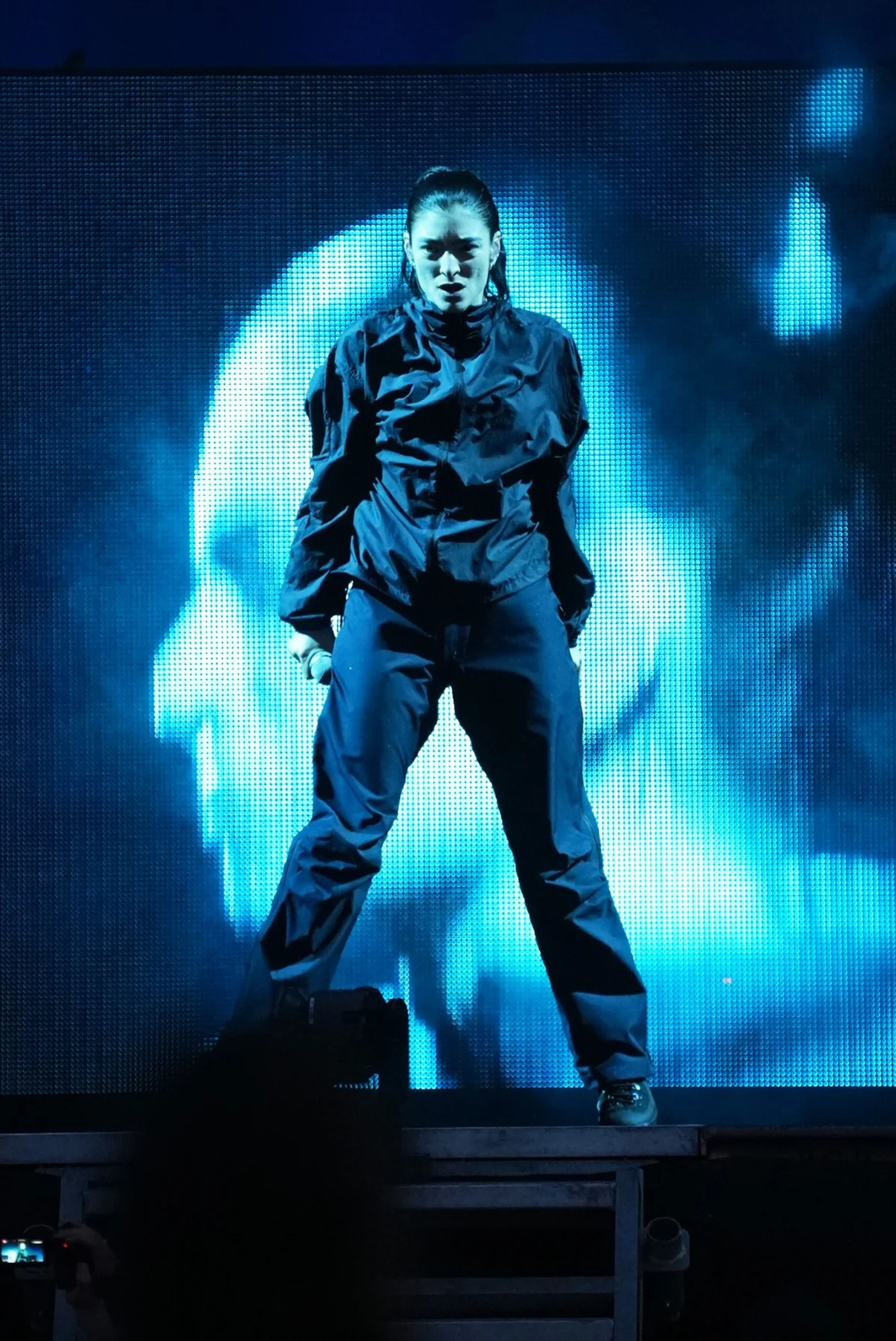
HangupsMusic.com – Auckland, The intersection of Silicon Valley’s technological ambitions and the nuanced world of musical expression has reached a new point of friction. Lorde, the Grammy-winning singer-songwriter known for her meticulous approach to her craft, has become one of the most vocal critics of the encroaching influence of artificial intelligence in the streaming ecosystem. In a series of recent public statements, the artist has challenged the industry’s reliance on automated tools, specifically targeting Spotify’s latest experimental features and the broader trend of hardware-integrated AI. The dispute highlights a growing divide between platforms that prioritize data-driven engagement and artists who view their work as a sanctuary for subjective human experience.
The most recent flashpoint occurred on July 16, when Lorde took to her Instagram story to address a new Spotify functionality titled "About the Song." This feature, currently in its beta phase, utilizes artificial intelligence to generate concise summaries of tracks, purportedly to give listeners deeper context about the music they are consuming. However, the implementation has been met with immediate backlash from the very creators it aims to highlight. Lorde shared a screenshot of the feature as it appeared during a playback of "Current Affairs," a track from her latest album, Virgin. The AI-generated summary provided a specific description of a performance moment from her 2025 Ultrasound World Tour, claiming the song was the backdrop for a sequence where she removes her clothing and has water poured over her by a dancer.
The issue, as Lorde pointed out, was twofold: the information was factually incorrect, and the existence of the summary itself was fundamentally reductive. The choreographed sequence described by the AI actually takes place during the performance of "GRWM," not "Current Affairs." By misattributing the theatrical elements of her live show to the wrong song, the algorithm demonstrated the "hallucination" tendencies common in large language models—where AI confidently presents false information as fact. Lorde’s frustration was palpable as she tagged the streaming giant, stating that she was "going out on a limb" to suggest that neither artists nor fans want such features.
Beyond the simple factual error, Lorde’s critique delved into the philosophical implications of AI-mediated art. She argued that providing an automated, "official" meaning for a song at the point of consumption serves to stifle the listener’s imagination. For an artist like Lorde, whose lyrics often lean into metaphor and emotional ambiguity, the beauty of a song lies in its ability to mean different things to different people. When a streaming platform inserts an AI-generated blurb into the interface, it effectively "mansplains" the music to the audience, creating a narrow, standardized interpretation that can overshadow the listener’s personal connection to the work. Lorde emphasized that this process limits free interpretation and called for Spotify to implement an "opt-out" mechanism, allowing musicians to maintain control over how their intellectual property is framed and described on the platform.
Spotify’s "About the Song" feature was officially launched in February, framed in a corporate press release as a way to "explore the meaning behind the music." The company revealed that these summaries are compiled using information harvested from "third-party sources," though it did not specify which databases or websites are being scraped to feed the algorithm. This reliance on external data often results in the recycling of outdated or unverified fan theories, which the AI then repackages as definitive metadata. The launch of this feature is particularly ironic given Spotify’s public commitment to artist protections. In September 2025, the company made headlines by claiming it had strengthened its policies against "spammy" AI tracks, reporting the removal of over 75 million low-quality, machine-generated songs in a single year. Yet, while the platform purports to scrub the library of AI-generated content, it simultaneously uses similar technology to narrate the work of human artists.
This confrontation with Spotify is not an isolated incident but rather the latest chapter in Lorde’s ongoing campaign against the dehumanizing effects of modern technology. Earlier in July, during her set at Madrid’s Mad Cool Festival, she used her platform to warn fans about the social and psychological costs of the "AI revolution." Specifically, she targeted Meta’s new line of AI-integrated smart glasses. These devices, equipped with built-in digital assistants and facial-recognition capabilities, represent the next frontier of wearable tech. Lorde’s assessment was blunt and unfiltered. Addressing the thousands in attendance, she spoke about the increasing difficulty of discerning what is real in a world saturated with digital filters and synthetic intelligence. Her advice to the crowd was a succinct rejection of the trend: "Fuck the glasses. Don’t get the glasses. Not sexy."
Her comments in Madrid resonate with a broader cultural anxiety regarding the "uncanny valley" of AI. As technology moves from our screens to our faces and into the very descriptions of our art, the boundary between authentic human connection and algorithmic simulation becomes dangerously thin. Lorde’s rejection of the "sexy" marketing of these devices suggests a desire to return to a more tactile, unmediated reality—a theme that has been present in her work since the release of her 2021 album, Solar Power, which famously encouraged listeners to look away from their devices and reconnect with the natural world.
The tension between Lorde and Spotify underscores a systemic issue within the music industry: the lack of agency granted to creators regarding the presentation of their work. In the era of physical media, an artist controlled the liner notes, the cover art, and the overall aesthetic presentation of an album. In the digital age, these elements are often stripped away or replaced by platform-specific features like "About the Song," "Canvas" loops, and algorithmic playlists. When these features are powered by AI without the artist’s consent, it creates a power imbalance where the platform’s desire for "rich metadata" overrides the artist’s right to silence or mystery.
For Lorde, the 2025 Ultrasound World Tour and the Virgin album cycle represent a deeply personal era of performance and storytelling. The "GRWM" sequence—a vulnerable and highly choreographed moment of baptismal imagery—was designed to evoke specific emotions and themes of rebirth and exposure. To have that moment mislabeled and clinicalized by a bot is more than a technical glitch; it is an erasure of the intent behind the performance. The error serves as a cautionary tale for the industry at large. If AI cannot distinguish between two different songs on a major label release, its utility as a tool for "meaning-making" is fundamentally compromised.
As the "About the Song" feature remains in its beta stage, the industry is watching closely to see if Spotify will heed the calls for an opt-out system. Other artists have begun to echo Lorde’s sentiments, suggesting a potential movement of "human-only" metadata where descriptions are either written by the creators themselves or left blank to preserve the listener’s experience. The debate is no longer just about whether AI can write music, but whether it should be allowed to speak for it.
Lorde’s stance is a reminder that in the rush to automate every facet of the human experience, something essential is often lost in translation. By standing up against both the streaming giants and the hardware manufacturers, she is positioning herself as a guardian of the "unquantifiable"—those parts of music and life that cannot be summarized by a third-party algorithm or captured by a pair of smart glasses. As she continues her world tour, her message remains clear: the most profound meanings are those we discover for ourselves, without the help of a digital assistant. In a world of increasing artificiality, the most radical act an artist can perform is to demand the right to remain humanly misunderstood.
