
 By Azzam Bilal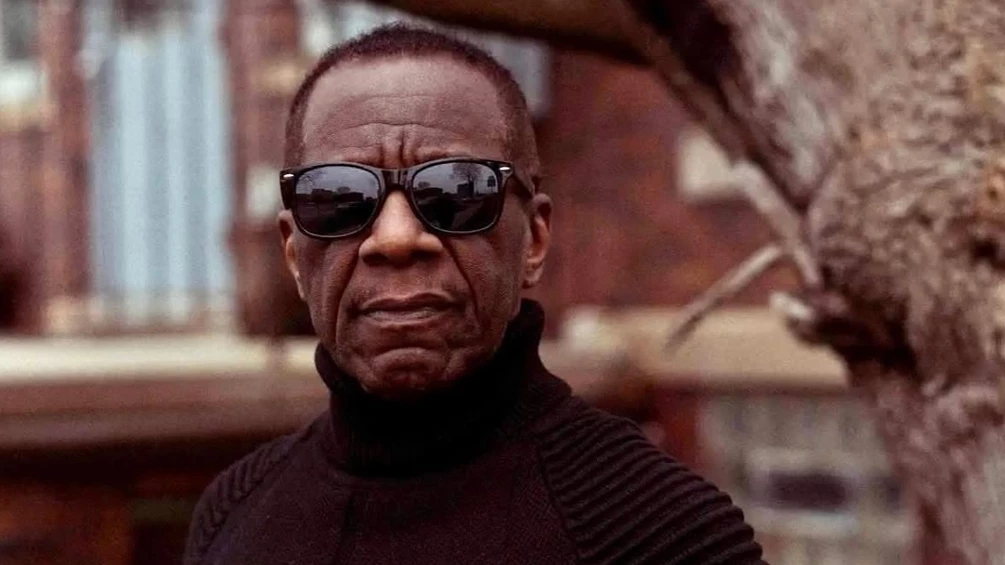
HangupsMusic.com – Detroit, The global electronic music community is reflecting on the profound loss of one of its most steadfast pillars, John “Jammin” Collins, whose passing has left an indelible void in the heart of the Motor City. The news, which began circulating on July 26th, was confirmed by the Detroit Techno Militia, a collective that has long stood as a vanguard for the city’s musical heritage. In a poignant tribute, the group highlighted Collins’ foundational role in sculpting the very fabric of Detroit’s nightlife and sonic identity, noting that his influence stretched back over four decades. From the strobe-lit interiors of early 1980s discotheques to the hallowed halls of techno museums, Collins was more than just a disc jockey; he was a mentor, an archivist, and a visionary who ensured that the spirit of Detroit remained authentic even as it conquered the world.
While the specific circumstances surrounding his death have not been made public, the outpouring of grief from peers and fans alike speaks to a man who was universally respected. To understand the weight of his passing, one must look at the breadth of his career, which sat at the intersection of rigorous science and avant-garde art. Born and raised in Detroit, Collins was a man of remarkable intellectual depth. Before he was a household name in the underground, he was a dedicated student of the sciences, earning a degree in biology from Wilberforce University. This academic background led him to a career as a cancer researcher, a role he maintained even as his nighttime persona began to take flight. This duality—the precision of the laboratory and the intuition of the DJ booth—perhaps explains the meticulous care he took in his musical curation.
The genesis of his musical journey began in the late 1970s, but it was in 1982 that he truly found his footing with a residency at Cheeks Nightclub. At the time, Detroit was undergoing a seismic cultural shift. The polished sounds of Motown were giving way to something more mechanical, experimental, and raw. Cheeks became a laboratory for this new sound, and Collins was its lead scientist. During his six-year tenure at the club, he helped bridge the gap between various subcultures. In an era where genres were often siloed, Collins championed a philosophy of radical inclusion. His dance floors were a tapestry of Detroit’s diverse population: gay and straight, Black and white, city dwellers and suburbanites. He understood that the power of the beat was its ability to dissolve boundaries.
In his own reflections on that era, Collins often spoke of the marathon nature of those early sets. In an age before digital shortcuts, a DJ was expected to command the room for five or six hours at a time. This required an immense musical vocabulary. Collins would seamlessly weave together the robotic precision of Kraftwerk, the infectious grooves of Italian disco like Kano, and the soulful house of Class Action’s “Weekend.” To him, these records weren’t just tracks; they were participants in a conversation. He often remarked that the music felt like it was talking to itself, creating a narrative that could only be understood on a crowded dance floor. For Collins, the modest pay of $45 a night was a small price for the joy of witnessing a crowd move in unison to a vision he had crafted.
As the 1990s dawned and techno began to transition from a local secret to a global phenomenon, Collins expanded his reach. He took up a residency at The Warehouse, another legendary fixture in the Detroit scene, and began to formalize the business side of the music he loved. Recognizing that local artists needed a structure to protect their interests and promote their work, he co-founded the Moshi Company alongside Joy Santiago. This venture eventually evolved into Premier Entertainment, a booking and management agency that became a vital artery for the city’s talent. It was through this work that he solidified his relationship with Underground Resistance (UR), the militant and fiercely independent collective led by “Mad” Mike Banks. Collins became a trusted advisor and manager for the group, embodying their ethos of "sonic warfare" against the commercialization of the art form.
His commitment to the professionalization of the scene culminated in 1993 with the founding of the Detroit Regional Music Conference. Inspired by the success of the Winter Music Conference in Miami, Collins sought to create a platform that would draw international eyes to Detroit’s local talent. He wanted the world to see that techno wasn’t just a commodity to be exported; it was a living, breathing culture with deep roots in the city’s industrial landscape. This desire to educate and preserve led him to a role at Submerge’s Exhibit 3000, the world’s only museum dedicated to techno. There, Collins served as a guide, walking visitors through the history of the Roland TR-808 and the stories of the Belleville Three, ensuring that the pioneers were never forgotten.
The airwaves also served as a canvas for Collins’ expertise. In the early 90s, he earned his “Jammin’” moniker during a successful run at WJLB FM 98, bringing the sounds of the underground to a mass audience. He later moved to WDRQ FM 93.1, where his program, "Live From Detroit: John Collins Presents The Soul of Detroit," became essential listening for anyone wanting to understand the pulse of the city. His voice was a calming, knowledgeable presence, a bridge between the intense energy of the clubs and the everyday lives of Detroiters. This broadcast legacy continued well into the digital age with a show on Red Bull Radio, where he continued to champion new artists alongside seasoned veterans.
Despite his massive influence behind the scenes, Collins was relatively late to the world of music production. It wasn’t until 2009 that he released his debut EP, “Yeah,” on Underground Resistance. The record was a testament to his "less is more" philosophy—a driving, soulful piece of techno that felt both modern and timeless. It was a physical manifestation of his belief that Detroit music was something encoded in the city’s DNA. He often spoke of a "Detroit gene," a unique creative energy born from the city’s triumphs and struggles. To Collins, the music was an expression of the soul, a reflection of experiences that could only happen in the Motor City.
Throughout his later years, Collins never lost his passion for the craft. He remained a constant fixture in the community, serving on the Detroit Entertainment Commission and acting as Treasurer for the Detroit-Berlin Connection, an initiative aimed at fostering cultural and economic ties between the two techno capitals. He was a mentor to countless young DJs, offering advice not just on how to mix records, but on how to navigate the industry with integrity. Even as he reached veteran status, he stayed active in the clubs, holding down a residency at Spkrbox and proving that his ability to read a room had only sharpened with age.
The legacy of John “Jammin” Collins is one of service. He served the music, he served his city, and he served the people who sought refuge on his dance floors. He was a man who saw the beauty in the machine and the humanity in the rhythm. As the Detroit Techno Militia aptly stated, the city’s music scene would look vastly different—and arguably far less vibrant—had Collins not been there to guide it. He was the "Ambassador of Techno" not because of a self-appointed title, but because he spent his entire life representing the best of what Detroit had to offer. As the speakers at Spkrbox and clubs around the world fall silent in his honor, the echoes of his five-hour sets and his tireless advocacy will continue to resonate through the streets of the city he loved so dearly.
