
 By Rose Miami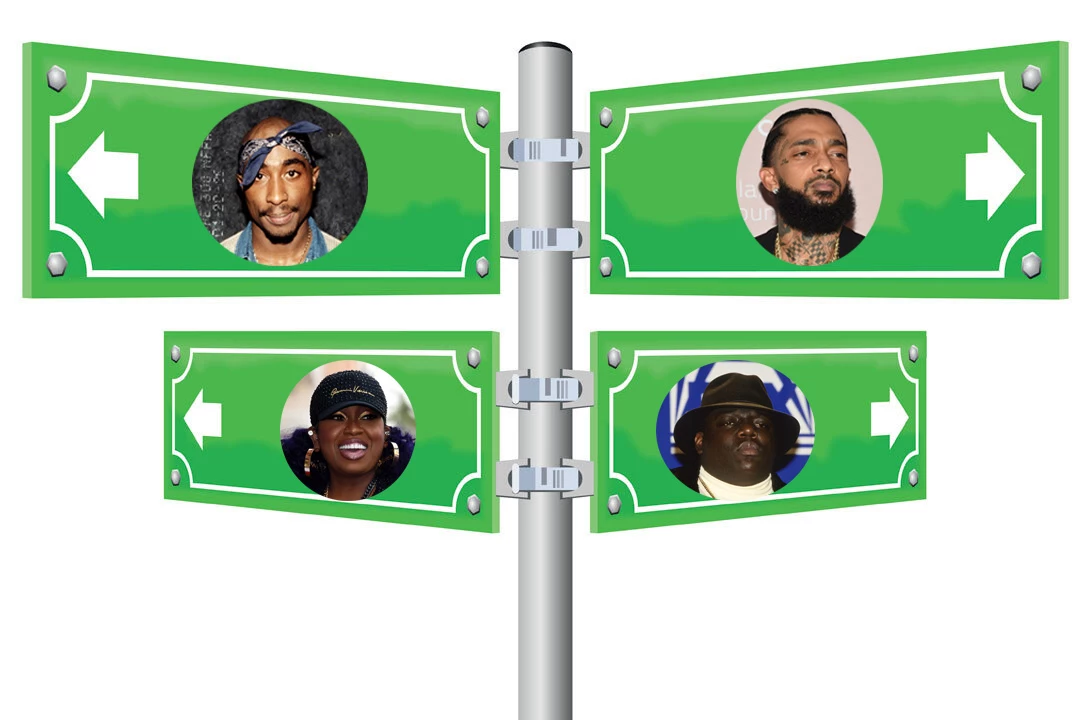
HangupsMusic.com – As the cultural impact of hip-hop continues to permeate mainstream society, evidenced by its increasing presence in esteemed institutions like the Rock and Roll Hall of Fame, a more tangible and geographically rooted form of recognition is emerging: street naming. This trend signifies a profound acknowledgment of hip-hop’s enduring influence, transforming urban landscapes into living tributes to the artists who have shaped generations.
The pioneering act in this movement was none other than the legendary trio Run-DMC. In 2009, their hometown of Queens, New York, officially honored them by renaming the intersection of 205th Street and Hollis Avenue in Hollis, Queens, as Run-DMC JMJ Way. This designation served a dual purpose, not only celebrating the group’s iconic status but also commemorating their late DJ, Jam Master Jay, whose presence was integral to their groundbreaking sound. This act set a precedent, establishing street naming as a deeply meaningful way for communities to express gratitude and solidify the legacies of their most celebrated musical ambassadors.
The tradition of honoring deceased hip-hop titans through street dedications has since become a poignant ritual. In Brooklyn, a borough synonymous with the birth and evolution of hip-hop, Christopher Wallace Way now marks the corner of Fulton Street and St. James Place. This renaming, officially recognized in 2019, serves as a perpetual homage to The Notorious B.I.G., a titan of lyricism whose impact transcended his tragically short career. The timing of these dedications often coincides with significant anniversaries or cultural moments, amplifying their resonance. For instance, the establishment of Tupac Shakur Way in Oakland, California, in November 2023, precisely 27 years after his untimely passing, underscored the enduring power of his artistry and activism.
The significance of these honors was articulated powerfully by Tupac’s sister, Sekyiwa “Set” Shakur, at the Oakland street dedication ceremony. She expressed that the recognition would have deeply pleased her brother, emphasizing his profound commitment to fostering love and peace within the Oakland community and his desire to represent safety and empowerment for his people. Her words at the ceremony invoked a powerful sentiment: "Let his spirit live on the rest of these years in these streets and in your hearts." This sentiment highlights the deeply personal and communal dimensions of these urban tributes, transforming street corners into conduits for remembrance and inspiration.
A driving force behind many of these heartfelt dedications is the persistent advocacy of LeRoy McCarthy and his company, HeteroDoxX Inc. McCarthy’s journey began in 2013 with an initial, though ultimately unsuccessful, proposal to co-name St. James Place and Fulton Street as Christopher Wallace Way. Undeterred, his unwavering dedication and meticulous efforts have been instrumental in securing street names for a constellation of hip-hop luminaries. His persistent campaigning has brought this honor to artists such as Tupac Shakur, the seminal Wu-Tang Clan, the aforementioned Biggie Smalls, the late Phife Dawg of A Tribe Called Quest, and many others.
McCarthy articulated the broader significance of these achievements in an interview with XXL, stating, "It’s a great look in America for hip-hop art and culture to have the same respect as other American music creations: blues, country, jazz, rock & roll, etc. have received over the decades, including a Hip Hop Resolution in the U.S. Senate." He further expressed pride in his company’s role in initiating this momentum, extending from the initial efforts in New York City and Washington D.C. to broader recognition across America, culminating in the recent dedication of Tupac Shakur Way in Oakland. This perspective underscores the evolving perception of hip-hop from a subculture to a foundational pillar of American artistic heritage.
The inherent connection between hip-hop artists and their hometowns makes being honored with a dedicated street name one of the highest forms of local acknowledgment. These artists often serve as powerful advocates and inspirations for their communities, and a street bearing their name becomes a permanent symbol of that bond. The practice extends to a diverse range of influential figures, acknowledging the multifaceted nature of hip-hop’s impact. Among those who have received this prestigious honor are DMX, whose raw energy resonated deeply with fans; Rick Ross, a mogul and influential voice in modern hip-hop; Missy Elliott, a visionary innovator in music and visual artistry; Big Pun, a lyrical powerhouse whose legacy continues to inspire; and Nipsey Hussle, whose entrepreneurial spirit and community activism left an indelible mark. This ongoing recognition ensures that the pioneers and architects of hip-hop culture are not only remembered but are woven into the very fabric of the cities they helped to define.
