
 By admin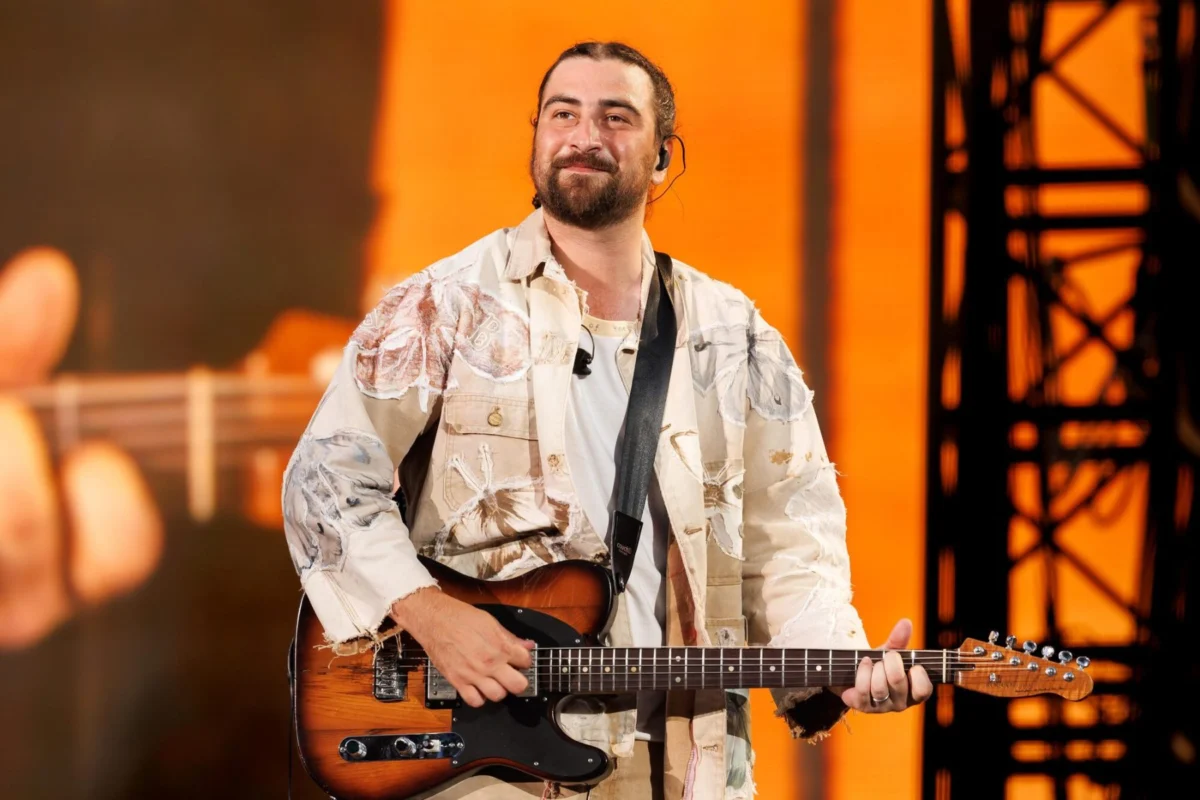
HangupsMusic.com – The celebrated singer-songwriter Noah Kahan has joined a growing chorus of musical artists publicly denouncing the White House’s use of their compositions in promotional social media content. The latest controversy erupted following President Trump’s recent visit to an automotive manufacturing facility in Michigan, intended to highlight domestically produced vehicles. Videos and photographs from the event, disseminated across popular platforms like TikTok and Instagram by the administration, were set to Kahan’s track, "American Cars," from his acclaimed chart-topping album, The Great Divide.
Kahan, a 29-year-old artist hailing from Vermont, swiftly expressed his unequivocal disapproval of this unauthorized deployment of his work. In a direct comment left on the Instagram post, which has since seen the audio track seemingly removed, Kahan asserted, "Would never approve of my music being used in support of you or this administration." This statement, posted on Monday, July 27, garnered significant attention, accumulating over 21,000 likes at the time of reporting, underscoring the widespread support for his stance among his fanbase. Despite the removal of the audio from the Instagram post, the song remained audible in the corresponding White House TikTok video. This particular clip depicted President Trump inscribing his signature on a white Corvette during his visit to the General Motors proving grounds in Milford, Michigan. Noah Levine, Kahan’s frequent collaborator and co-writer on "American Cars," also weighed in with a more pointed comment on the Instagram post, which, according to fan reports, was subsequently deleted.
Noah Kahan has rapidly ascended the ranks of contemporary folk and indie-pop, known for his introspective lyrics, heartfelt delivery, and a distinctive blend of acoustic and electronic elements. His fourth studio album, The Great Divide, released earlier this year, marked a significant milestone in his career, debuting at No. 1 on the Billboard 200 chart. The album, which includes "American Cars," explores themes of longing, nostalgia, and the complexities of human connection, often drawing on his New England roots and experiences. "American Cars," in particular, is an evocative piece, imbued with a sense of reflective melancholy rather than overt patriotic fervor. Its lyrics delve into personal narratives and the metaphorical journey of life, making its appropriation for a political advertisement promoting specific industrial policies feel incongruous with its artistic intent. The song’s contemplative nature, far from being a jingoistic anthem, instead offers a nuanced look at the American experience, which artists and fans argue stands in stark contrast to the administration’s utilitarian use of the track.

The White House’s decision to use "American Cars" in its social media campaign was part of a broader messaging strategy aimed at connecting with working-class voters and highlighting economic policies perceived to benefit American manufacturing. President Trump’s visit to the Michigan auto plant was a carefully orchestrated event designed to project an image of support for domestic industry and job creation. The accompanying videos, set to popular music, are a common tactic in modern political communication, leveraging cultural touchstones to amplify political messages and engage younger audiences on platforms like TikTok, where such content can go viral. However, this strategy frequently clashes with artists’ rights and their desire to control the political associations of their creative works.
The legal framework surrounding music usage on social media platforms presents a complex landscape. Kahan’s music, like that of many artists, is accessible through the public Instagram library, a result of a 2024 licensing agreement between Universal Music Group (UMG) and Meta, the parent company of Instagram, Facebook, and other platforms. This deal generally allows users to incorporate UMG-licensed music into their personal and non-commercial content. However, the use of such music by political campaigns or governmental bodies for official promotional content often enters a grey area, blurring the lines between personal use and commercial/political endorsement. While the White House might argue that its use falls under general platform licensing agreements, artists consistently contend that such usage implies endorsement, which they have not granted, and violates their moral rights to control the context in which their art is presented. At the time of this report, the White House had not responded to Billboard’s request for comment regarding Kahan’s objection, a common occurrence in these disputes, leaving the artists’ complaints largely unaddressed by the administration.
Kahan’s protest is not an isolated incident but rather the latest in a long and increasingly frequent series of objections from artists against the Trump administration’s unauthorized use of their music. Just days prior, pop superstar Katy Perry voiced her outrage when the White House utilized her seminal 2010 hit, "Firework," in a TikTok video that featured footage of military strikes. Perry explicitly condemned the act on X (formerly Twitter), stating, "I am deeply appalled and angry to see ‘Firework’ used on the @WhiteHouse TikTok account as a backing track for video footage of military strikes. I did not approve this, I was not asked, and I absolutely do not condone it." The video had controversially synchronized the "boom, boom, boom" lyrics of Perry’s song with black-and-white imagery of explosions, accompanied by the caption, "Iran has been warned." Perry emphatically reiterated her song’s purpose, adding, "My music is for bringing people together, not celebrating warfare." Her statement highlighted the fundamental dissonance between her song’s message of empowerment and resilience and its co-option for a potentially inflammatory political message.

Similarly, in June, global sensation Ariana Grande took issue with the White House’s use of a rendition of her 2024 track, "Bye," in a TikTok video depicting Immigration and Customs Enforcement (ICE) agents carrying out arrests and handcuffing individuals. Grande’s forceful comment, which has since been removed from public view, read, "Please do not ever use my music in relation to this barbaric, inhumane, heinous nonsense. F–– ICE." These incidents, involving artists of such high public profile, underscore the significant ethical and artistic concerns raised when political entities appropriate cultural works without explicit consent or thematic alignment. The artists’ unequivocal rejections emphasize their desire to maintain artistic integrity and distance their work from political ideologies they do not support.
The roster of artists who have publicly expressed their displeasure over the Trump administration’s use of their music is extensive and diverse, illustrating a widespread sentiment across the music industry. This comprehensive list includes iconic figures such as Beyoncé, Adele, Celine Dion, Foo Fighters, Guns N’ Roses, Jack White (representing The White Stripes), Kenny Loggins, Neil Young, Olivia Rodrigo, Ozzy Osbourne, and Rihanna, among many others. Each artist, often through their representatives or direct social media posts, has asserted their right to control the narrative surrounding their art, particularly when it intersects with political campaigns or government messaging. Their objections typically stem from two primary concerns: the unauthorized use of their intellectual property and, more importantly, the implicit endorsement of political figures or policies that may directly contradict their personal beliefs or the messages embedded within their music.
These ongoing disputes highlight a crucial tension between political messaging strategies and artists’ autonomy. In an era where social media serves as a primary battleground for public opinion, the use of popular music can be a potent tool for engagement and persuasion. However, for artists, their music is often an extension of their identity and values. When their work is used to promote agendas they do not align with, it can be perceived as a violation of artistic integrity and a forced association that could alienate their fanbase or misrepresent their stance. The consistent pushback from artists across genres and political spectrums indicates a collective stand against the instrumentalization of their art for political ends without consent. It forces a critical examination of the ethical responsibilities of political campaigns and government bodies when engaging with cultural content, especially when the implied endorsement can have significant reputational implications for the artists involved. As the digital landscape continues to evolve, so too will the complexities of intellectual property rights and moral rights in the realm of political communication, ensuring that these clashes between melody and message will likely persist.
