
 By Azzam Bilal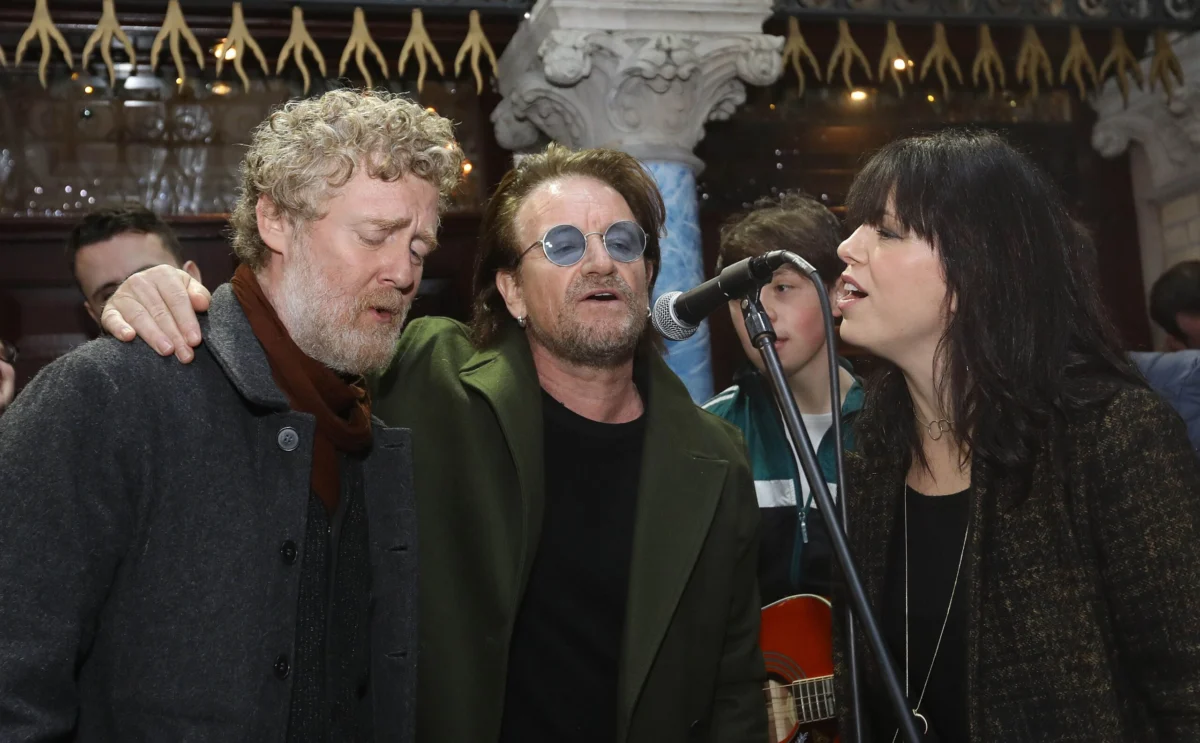
HangupsMusic.com – DUBLIN, The international music community is grappling with a profound sense of loss following the sudden passing of Glen Hansard, the influential Irish singer-songwriter and Academy Award winner. Hansard, who served as the emotional heartbeat of the Irish rock scene for over three decades, died early this morning following a tragic motorcycle accident. He was 56 years old. News of the incident has sent shockwaves through the streets of Dublin and far beyond, as fans and fellow artists mourn a man whose career was defined by a rare, unvarnished authenticity and an unwavering commitment to the marginalized.
Hansard’s journey began on the pavements of Grafton Street, where he dropped out of school at age 13 to pursue a life as a busker. This formative period did more than just hone his vocal prowess; it established a lifelong philosophy that the most powerful music happens at eye level, without the artificial barriers of a stage. While he would eventually perform in the world’s most prestigious concert halls, Hansard never truly left the street behind. His career was a bridge between the grit of urban struggle and the heights of cinematic and critical success.
In 1990, Hansard formed The Frames, a band that would become synonymous with the Irish indie-rock identity. Throughout the 1990s and early 2000s, albums like Fitzcarraldo and For the Birds established the group as a powerhouse of emotive, folk-infused rock. Hansard’s songwriting was characterized by its vulnerability and its ability to build from a whisper to a cathartic, soul-baring roar. The Frames were more than just a musical act in Ireland; they were a cultural institution, known for their legendary live performances where the boundary between the band and the audience often dissolved entirely.
However, it was the 2007 film Once that catapulted Hansard onto the global stage. A low-budget independent project directed by John Carney, the film told the story of a Dublin busker and a Czech immigrant, played by Markéta Irglová, who find a shared language through music. The film’s centerpiece, "Falling Slowly," became an international anthem for longing and hope. The song earned Hansard and Irglová the Academy Award for Best Original Song, a moment remembered for their humble and genuinely shocked acceptance speeches. The success of the film led to the formation of The Swell Season, a collaborative project that allowed Hansard to explore more intimate, orchestral folk arrangements.
Despite the accolades of Hollywood and the Grammys, Hansard remained deeply rooted in his community. He was a vocal advocate for the homeless in Ireland, famously participating in the 2016 occupation of Apollo House to provide shelter for those living on the streets. This activism was not a public relations exercise but a core part of his identity. He viewed his platform as a tool for social change, often using his annual Christmas Eve busk in Dublin to raise hundreds of thousands of euros for charities like the Simon Community. These busks became a staple of the Irish holiday season, drawing thousands to the city center to hear Hansard lead a rotating cast of musicians—from Bono to Hozier—in songs that reminded the public of the humanity of those often overlooked by society.
The outpouring of grief from the music industry has been immense, reflecting the deep respect Hansard commanded among his peers. Bruce Springsteen, with whom Hansard shared a mutual admiration and occasional stage, was among the first to offer his condolences. The two shared a similar "blue-collar" approach to their craft, viewing songwriting as a form of labor and service. Other tributes came from a wide spectrum of the industry, including Cat Power, the Mountain Goats, Warren Ellis, and Courtney Marie Andrews, all of whom highlighted Hansard’s generosity of spirit and his role as a mentor and friend to touring musicians.
Bono, a longtime friend and frequent collaborator on the Dublin busking circuit, shared a particularly moving reflection on Hansard’s character. He described Hansard as an "angelic presence," though one firmly grounded in the reality of the human condition. Bono characterized him as a "smiling rascal" and the "mischievous archangel of Ballymun," referring to the working-class Dublin suburb where Hansard was raised. The U2 frontman noted that Hansard’s greatest gift was his ability to be "utterly himself" by focusing his energy on the well-being of others. He recalled how Hansard resisted the transition of their charity busks from the pavement to a formal stage, insisting that the street was the only place where the music truly belonged.
Hansard’s solo career, which began in earnest with the 2012 album Rhythm and Repose, showcased a songwriter maturing into a master of his craft. His solo work was often more contemplative, drawing on influences from Van Morrison’s soulful explorations and Bob Dylan’s lyrical complexity. Subsequent albums like Didn’t He Ramble and Between Two Shores cemented his reputation as one of the finest lyricists of his generation. His songs often dealt with the themes of persistence, the complexities of love, and the search for grace in a fractured world.
The technical brilliance of Hansard’s work was often overshadowed by its emotional weight. He was a master of the "crescendo," a technique where a simple folk melody would slowly accumulate intensity until it reached a fever pitch of raw, unadulterated passion. This was best seen in his live performances, where he would often play his acoustic guitar with such fervor that he would wear a hole through the wood. That battered guitar, much like the man himself, bore the scars of a life lived intensely and without reservation.
In the wake of his passing, the Irish government and cultural organizations have also paid tribute. Statements from the President of Ireland and various arts councils have emphasized that Hansard was a "voice of the people," a man who represented the best of the Irish spirit—resilient, poetic, and fiercely compassionate. His death is being viewed not just as the loss of a musician, but as the loss of a moral compass for the city of Dublin.
As the music world reflects on his 56 years, the consensus is clear: Glen Hansard was a performer who refused to recognize the traditional separation between the artist and the observer. Whether he was playing for a handful of people in a pub, thousands on a rainy street corner, or a televised audience of millions at the Oscars, his approach remained the same. He was a "performer at eye level," a man who believed that music was a communal act of healing.
The legacy Hansard leaves behind is one of profound empathy. His life’s work serves as a reminder that the highest form of art is that which serves the common good. To his friends, he was the "Angel Gabriel" of the Dublin streets; to his fans, he was the man who gave words to their deepest sorrows and joys. While his physical presence has been silenced by tragedy, his voice will undoubtedly continue to echo wherever a guitar is uncased on a street corner or a song is sung for those who have nowhere else to go.
Bono’s tribute concluded with a sentiment that many are echoing today: that Hansard’s essence was so vital that it seems impossible for it to truly vanish. He suggested that Hansard would live on in the simple, everyday acts of street performance—in the image of a coin spinning into an open guitar case. For a man who spent his life championing the "voice of the streets," there could be no more fitting memorial. As the sun sets over Dublin tonight, the silence left by his absence is heavy, yet the music he created remains—a testament to a life lived with "no airs and plenty of graces." Hansard’s journey from a Ballymun busker to an international icon was a testament to the power of the human voice when it is used to lift others up. He will be remembered as a man who gave peace to many, and who now, tragically, finds his own.
