
 By Azzam Bilal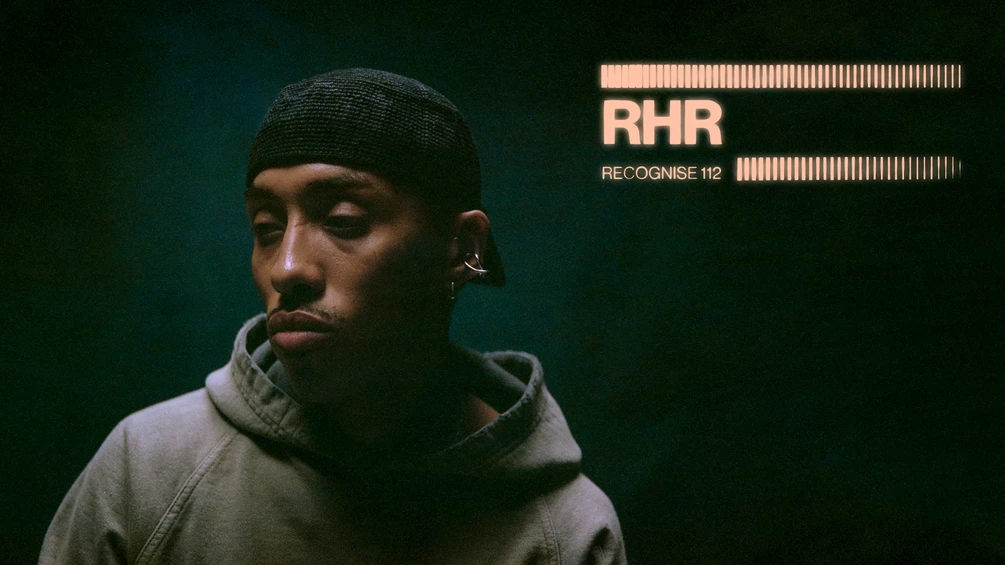
HangupsMusic.com – São Paulo, the sprawling industrial heart of Brazil, is a city defined by its staggering contrasts. It is a place where gleaming skyscrapers overlook weathered concrete peripheries, and where the rhythmic pulse of the street competes with the mechanical roar of transit. For Roniere Santo, known professionally as RHR, these contradictions are not merely background noise; they are the fundamental building blocks of his artistic identity. Currently traversing the globe, RHR finds himself in a hotel in Greece, fresh from a performance in Athens, yet his creative spirit remains firmly anchored in the "ghetto" aesthetics of his homeland. To Santo, the term "ghetto" is less about a specific geographic location and more about a visceral, emotional state—a way of moving, dancing, and existing that prioritizes "swag," resilience, and raw energy over polished artifice.
Born in Diadema, a satellite city within the Greater São Paulo area, Santo’s upbringing was steeped in a rich tapestry of Afro-Brazilian culture and urban survival. His childhood memories are a kaleidoscopic blend of family gatherings on rooftops, the scent of charcoal smoke from weekend barbecues, and a constant soundtrack of reggae and Brazilian folk music. A pivotal influence was his uncles’ practice of capoeira, the Afro-Brazilian martial art that seamlessly weaves together combat, dance, and complex percussion. The concept of "ginga"—the fundamental footwork and swaying motion of capoeira—became a blueprint for Santo’s future approach to electronic music. Just as a capoeira practitioner moves with a deceptive, fluid grace that can turn explosive at any moment, RHR’s productions and DJ sets navigate the space between tension and release with a master’s precision.
The transition from a consumer of culture to a creator began in the streets. As a teenager, Santo was a dedicated dancer, participating in neighborhood dance teams and absorbing the aesthetics of global hip-hop. This period was crucial for his self-esteem; in an environment where systemic challenges were the norm, the braggadocio and rhythmic complexity of North American and Brazilian rap provided a necessary armor. Parallel to his interest in hip-hop was a growing fascination with baile funk. His mother would return from local street markets with CDs of the genre, introducing him to the minimalist, high-impact sounds of artists like MC Primo. The track "Diretoria" became an early obsession, its infectious drum patterns providing the first spark of musical ambition. While he initially harbored dreams of a professional football career—a common aspiration in Brazil—the sheer statistical improbability of success led him to pivot toward the decks and the DAW.
A family move to Londrina opened a "side door" into the world of electronic music. Through friends, Santo was introduced to the burgeoning rave scene, where he was exposed to the hypnotic depths of Detroit techno and deep house. The shift was transformative. He spent his early twenties learning the intricacies of beatmatching on vinyl, developing a "salad" style of DJing that refused to be pinned down to a single genre. This refusal to conform became his signature. Whether he was playing a 20-square-meter basement or a massive festival stage, his goal remained the same: to make the body move in unexpected ways. This experimental streak was further refined when he enrolled in an audio engineering course. Approaching sound as a technical challenge, he began recording "crazy sounds that were not supposed to go together," forcing them into a coherent, albeit fractured, whole.
This "Frankenstein" approach to composition is perhaps most evident in his recent work for the prestigious Berlin-based label PAN. His EP GÍRIA—a title referring to the malleable slang used in Brazilian peripheries—serves as a manifesto for his current sound. The record is a breathless sprint through dancehall, Miami bass, and chest-caving techno. Tracks like "CICLONADA" showcase his ability to hybridize electro-funk with abyssal choral samples and aggressive MC work, while "INNA COMBINATION" offers a more nuanced, jungle-dembow fusion. In the hands of a lesser artist, these elements might clash, but under Santo’s direction, they coalesce into a singular RHR lexicon. His music is a digital diary of his travels, often incorporating field recordings manipulated through glitch-heavy apps like Shin:e Player. A New York siren or a Tokyo subway chime becomes a rhythmic texture, a subtle layer in a track that honors its roots while looking toward a global future.
The international community has taken notice. In recent years, RHR has become a fixture at high-profile European festivals, including Italy’s LOST, London’s GALA, and Albania’s KALA. However, it was a 2022 Boiler Room set in São Paulo that truly catalyzed his ascent. The performance, which featured a triumphant rinse of his childhood favorite "Diretoria," caught the attention of Sonny Moore, better known as Skrillex. A cold DM from the American superstar led to a ten-day studio session in Brazil, where the two producers found common ground in their mutual appreciation for boundary-pushing rhythms. Their collaboration, "SYRINX," which appears on the GÍRIA EP, is a masterclass in cross-cultural synthesis. It blends Skrillex’s signature melodic sensibilities and heavyweight bass with Santo’s skull-shaking funk rhythms and sharp, "ghetto" attitude.
Despite his growing fame, Santo remains deeply committed to the community that raised him. He is a vocal advocate for the "terroir" of Brazilian music, often pushing back against international promoters who expect a stereotyped, two-hour baile funk set. To Santo, the question of what "his" Brazil sounds like is far more interesting. It is a sound rooted in memory—not a flag or a postcard, but the emotional residue of the streets of Diadema. This sense of responsibility extends to the next generation of Brazilian producers. Santo is an active mentor, maintaining a close-knit network with emerging talents like NOTRN, izumo, alys, and bieL onLine. He views his future label as a platform to uplift these voices, ensuring that the "ghetto" sound continues to evolve and challenge the global dance music hegemony.
The philosophy of RHR can be likened to a rubber band. He pushes the boundaries of genre, stretching the listener’s expectations until the tension is almost unbearable, only to let it snap back into a familiar, driving groove. It is a delicate balance of experimentation and accessibility, informed by a lifetime of diverse influences. He recalls the profound impact of seeing a video of Naná Vasconcelos, the legendary Brazilian percussionist and vocalist. Watching Vasconcelos treat percussion as an experimental, god-like art form gave Santo the permission he needed to be himself. "I can do my own sound," he realized. "I can be myself."
Today, as he prepares for a back-to-back set with Skrillex at Dekmantel in Amsterdam, Roniere Santo stands as a bridge between the local and the global. He is a producer who understands that the most powerful music is often the most personal. By staying true to the "ghetto" emotions of his youth—the swag of the dancer, the precision of the capoeirista, and the grit of the São Paulo streets—he has created a sonic world that is entirely his own. RHR is no longer just a representative of Brazil; he is an architect of a new, universal language of the dancefloor, one where the contradictions of the city are transformed into the rhythms of the future. Whether he is recording the glitchy textures of a Greek morning or rinsing a funk classic in a Berlin club, Santo remains a "good listener," forever attuned to the journey and the intentionality of the beat.
