
 By Azzam Bilal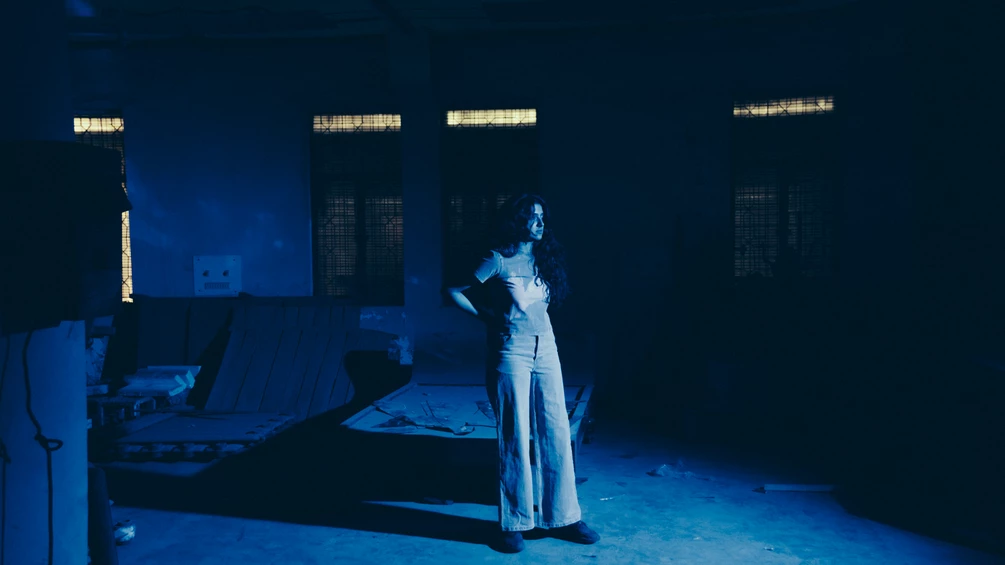
HangupsMusic.com – London, the landscape of contemporary electronic music is frequently defined by its ability to collapse geographical boundaries, merging disparate cultural influences into a singular, cohesive sonic identity. Few artists in recent years have navigated this intersection as fluidly as Sijya. The New Delhi-born producer, vocalist, and visual artist has rapidly ascended from the underground circles of India’s capital to the global stage, a journey punctuated by her latest release, "Turbine." Issued via the prestigious UK-based label One Little Independent Records, the single serves as both a literal and metaphorical reflection of her artistic expansion, drawing direct inspiration from one of the world’s most imposing architectural and cultural spaces: the Tate Modern’s Turbine Hall.
The genesis of "Turbine" is rooted in a pivotal moment in Sijya’s career. Last year, the artist made her international debut at the Tate Modern in London, performing within the vast, industrial expanse of the Turbine Hall. For any artist, a first performance outside their home country is a milestone; for Sijya, the setting transformed the experience into something transcendental. The hall, which once housed the massive electricity generators of the Bankside Power Station, retains a haunting, mechanical ghostliness. It is a space where sound behaves unpredictably, bouncing off towering concrete walls and steel girders. Sijya’s encounter with this environment provided the blueprint for her new single. She described the experience as "wild," noting that the name "Turbine" felt like a natural fit for the composition. The track itself attempts to capture the internal machinery of the mind, utilizing textures that mimic the rhythmic, grinding hum of an aging turbine—a sound that exists somewhere between industrial decay and functional beauty.
Sijya’s signing to One Little Independent Records in 2023 marked a significant shift in her professional trajectory. The label, renowned for nurturing idiosyncratic and fiercely independent voices like Björk and Ásgeir, provides a fitting home for an artist whose work defies easy categorization. "Turbine" arrives as a follow-up to her 2025 EP, Leather & Brass, a project that showcased a more mature, experimental side of her production. That EP was notably shaped under the mentorship and guidance of Matthew Herbert and Hugh Jones, the latter performing under the moniker Crewdson. Herbert, a pioneer of musique concrète and an artist who famously uses everyday objects to create political and social narratives through sound, seems to have left a profound mark on Sijya’s approach. In "Turbine," one can hear a similar dedication to the "found sound" aesthetic, where the mechanical and the organic are blurred until they become indistinguishable.
The sonic architecture of "Turbine" is a masterclass in restraint and tension. Unlike the high-energy club tracks often associated with the electronic genre, Sijya’s work favors a slow-burn atmospheric pressure. The track is built on a foundation of polyrhythmic elements that echo her earlier interest in traditional instrumentation, such as the tabla, which featured heavily in her previous single of the same name. However, in "Turbine," these rhythms are processed through a cold, industrial filter. The "old turbine" sounds she envisioned are present in the low-end frequencies—throbbing, consistent, yet slightly unstable. Over this, her vocals drift like smoke, providing a human vulnerability that contrasts sharply with the metallic surroundings. It is a dialogue between the machine and the maker, a theme that has become a cornerstone of her creative output.
Accompanying the release is a visually striking music video directed by Tito, Sijya’s long-term visual collaborator. The partnership between Sijya and Tito is essential to understanding her work, as she is a trained graphic designer who views music and visuals as two sides of the same coin. Their collaborative history ensures that the visual language of "Turbine" is not merely an afterthought but a vital extension of the music. The video captures the same sense of industrial isolation and rhythmic motion found in the track, utilizing light and shadow to mimic the rotating energy of a generator. This synergy highlights Sijya’s holistic approach to art; she is not just producing songs, but constructing immersive worlds that the listener is invited to inhabit.
To appreciate the significance of "Turbine," one must look back at Sijya’s debut in 2022. Her first EP, Young Hate, was a raw and evocative introduction to her sound. It was during this period that she first caught the attention of international tastemakers, with tracks like "Tell Me" receiving critical acclaim for their emotional honesty and avant-garde production. Young Hate was a document of a young artist finding her voice amidst the chaos of New Delhi’s burgeoning independent scene. In the years since, Sijya has moved away from the more conventional structures of that debut, leaning into the abstract and the experimental. The transition from the intimate, bedroom-produced feel of Young Hate to the cavernous, industrial resonance of "Turbine" reflects an artist who is unafraid to let her environment dictate her evolution.
The influence of Matthew Herbert and Hugh Jones on her recent work cannot be overstated. By working with such figures, Sijya has refined her ability to use sound as a storytelling medium. Herbert’s philosophy—that every sound carries a history and a meaning—is evident in the way Sijya approaches her samples. When she speaks of the "sounds of an old turbine," she isn’t just referring to a mechanical noise; she is referring to the weight of history, the passage of time, and the physical sensation of being dwarfed by architecture. This depth of thought is what elevates her music above standard electronic fare. She is part of a new generation of Indian producers who are moving beyond the "fusion" tropes of the past, instead engaging with global electronic movements on their own terms, bringing a unique cultural perspective to the avant-garde.
As Sijya prepares for her upcoming tour dates, the live translation of "Turbine" remains a point of high anticipation. Her performance at the Tate Modern proved that her music is best experienced in spaces that can accommodate its scale. The challenges of bringing such a texture-heavy, atmospheric sound to different venues across the globe will likely result in further iterations of the track, as she has a reputation for improvising and adapting her sets to the acoustics of the room. This fluidity is a hallmark of her live presence, ensuring that no two performances are exactly alike.
"Turbine" is more than just a single; it is a statement of intent. It represents the closing of a circle that began with a transformative night in London and continues with her continued partnership with One Little Independent. For Sijya, the turbine is a symbol of perpetual motion—a machine that converts energy into power. In her hands, that energy is purely creative. As she continues to bridge the gap between her roots in India and her growing influence in the UK and beyond, Sijya is proving to be one of the most vital and cerebral artists in the contemporary electronic landscape. Her ability to find music in the hum of a machine and beauty in the coldness of a concrete hall suggests that her journey is only just beginning to reach its full velocity. With "Turbine," she has not only captured the sound of a specific place and time but has also signaled her readiness to take on the vast, echoing spaces of the global music stage.
