
 By Azzam Bilal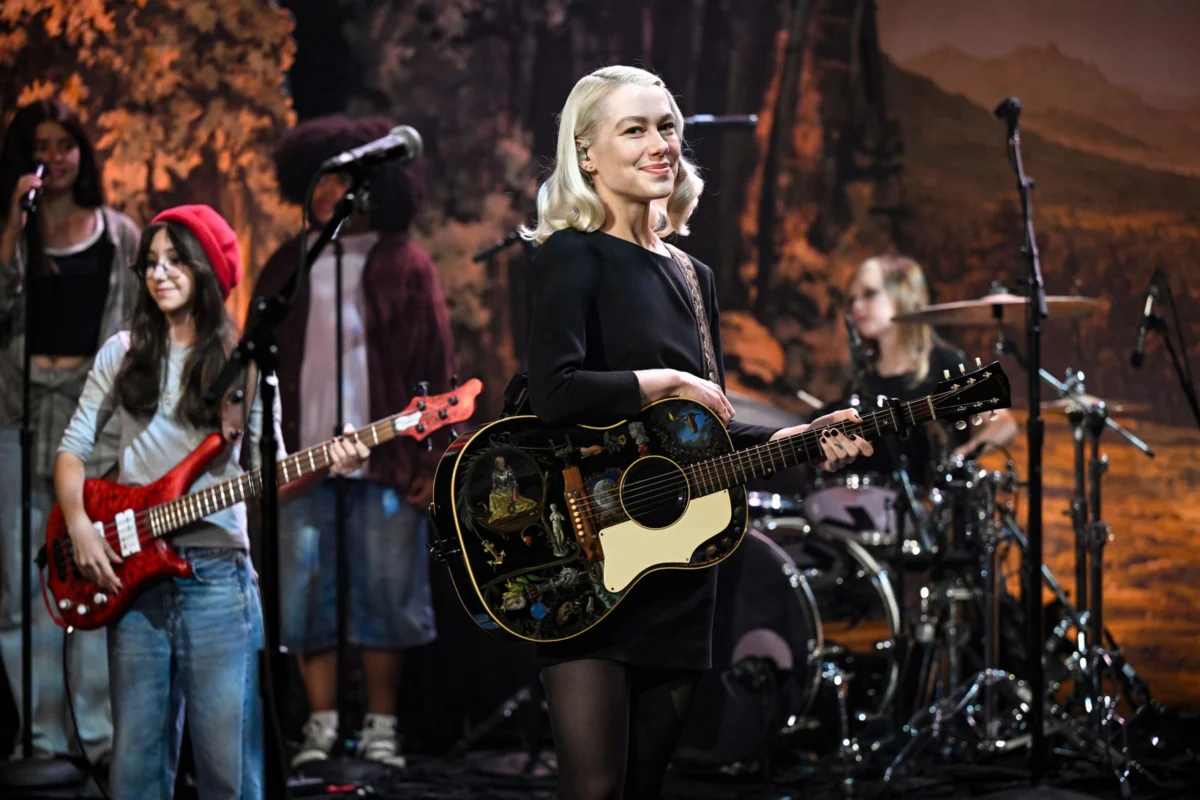
HangupsMusic.com – Los Angeles, The four-year interval following the release of Punisher has been anything but a period of rest for Phoebe Bridgers. Since that 2020 landmark propelled her into the upper echelon of contemporary songwriters, she has been a ubiquitous force in the musical landscape—reuniting with boygenius for a Grammy-winning run, launching her own record label, and lending her distinctive voice to everyone from SZA to The National. Yet, despite this constant activity, the absence of a solo full-length project created a palpable void in the indie-rock zeitgeist. That void has finally been filled with the arrival of Lost Weekend, a sprawling, 16-track odyssey that marks Bridgers’ most ambitious and collaborative effort to date.
Lost Weekend is not merely a collection of new songs; it is a meticulously constructed environment. Arriving after a calculated and creative rollout, the album represents a shift in Bridgers’ sonic architecture. While the haunting, skeletal folk of Stranger in the Alps and the cinematic, apocalyptic chamber-pop of Punisher established her identity, Lost Weekend feels like a synthesis of those styles, filtered through a new lens of experimental production and a "more-is-more" philosophy regarding instrumentation. The album features a dizzying array of guest stars, ranging from indie-rock royalty and folk virtuosos to unexpected names from the worlds of comedy and heavy metal.
The path to Lost Weekend was paved with a series of unconventional promotional events that signaled the album’s introspective and atmospheric nature. Bridgers opted for a rollout that emphasized physical presence and shared experience over digital saturation. This included a series of global listening parties hosted in planetariums, where fans could experience the album’s lush arrangements beneath projected celestial bodies—a fitting backdrop for an artist whose work often grapples with the scale of the universe versus the intimacy of the human heart. Additionally, Bridgers performed a high-profile, phones-free charity concert at Madison Square Garden, a move that forced the audience into a rare state of total presence, mirroring the "analog" ethos that permeates much of the new record.
The credits for Lost Weekend read like a "who’s who" of the modern alternative scene. Longtime collaborators Tony Berg and Ethan Gruska return to the production chair, but they are joined by Jack Antonoff and Alex G, two figures whose distinct sonic fingerprints help push Bridgers into new territory. Antonoff, known for his ability to blend pop sensibilities with stadium-sized intimacy, brings a rhythmic urgency to several tracks, while Alex G’s penchant for lo-fi experimentation and off-kilter melodies adds a layer of grit and unpredictability.
The album opens with "The Outside," a track that immediately establishes the record’s expansive palette. Featuring synthesizers from the legendary Jon Brion and vocal contributions from Bo Burnham, the song balances Bridgers’ signature lyrical vulnerability with a sophisticated, electronic-leaning arrangement. This lead-in sets the stage for the lead single, "Lost Boys," which serves as a spiritual centerpiece for the album. On this track, Bridgers is joined by her boygenius bandmates, Julien Baker and Lucy Dacus, as well as Pulitzer Prize-winning composer Caroline Shaw. The result is a dense, choral-infused piece that utilizes everything from upright bass and mandolin to electric sitar and trumpets, showcasing the orchestral ambitions of the project.
As the album progresses, it becomes clear that Bridgers is using her platform to foster a sense of community. "Kill Me" features a sprawling vocal ensemble that includes her brother, Jackson Bridgers, and Maria Taylor, while the instrumentation is bolstered by the likes of Nick Zinner of the Yeah Yeah Yeahs and pedal steel maestro Greg Leisz. The track "Bobby" is perhaps the most surprising on the record, bringing together the disparate worlds of emo pioneer Mike Kinsella (American Football) and industrial-metal veteran Justin Broadrick (Jesu). This collision of influences highlights Bridgers’ refusal to be pigeonholed, as she moves seamlessly between delicate acoustic passages and dense, distorted textures.
The title track, "Lost Weekend," is a masterclass in modern folk-tronica. It notably features a sample of "Notjustmoreidlechatter" by Paul Lansky, a pioneer of computer music. By sampling a figure known for manipulating the human voice through technology, Bridgers underscores a recurring theme of the album: the search for authentic connection in a digitized world. This track, like much of the album, benefits from the string arrangements of Rob Moose, whose work has become an essential component of the "Phoebe Bridgers sound," providing a bridge between the traditional and the avant-garde.
The middle section of the album delves into deeper, more experimental waters. "Haunted" reunites Bridgers with the members of Nickel Creek, blending bluegrass virtuosity with Jack Antonoff’s drum programming and vocoder-heavy production. "Panorama" and "Still Standing" offer moments of relative stillness, emphasizing the delicate interplay between Chris Thile’s mandolin and Bridgers’ crystalline vocals. However, even these quieter moments are layered with complexity, featuring horns by CJ Camerieri and banjo by Christian Lee Hutson.
"Liberty Tree" stands out as a highlight of the album’s second half, featuring the distinctive guitar work of Meg Duffy (Hand Habits) and Blake Mills. The track is a sprawling, mid-tempo meditation that utilizes five different guitarists to create a shimmering, interlocking wall of sound. This leads into the starker "Other Plans," a brief, piano-led reprieve that focuses entirely on Bridgers’ voice and Ethan Gruska’s sound design, proving that despite the massive guest list, she remains the undisputed gravity at the center of the record.
The album’s final act is a grand culmination of its various themes. "Lost Parade" features the return of Jon Brion on electric guitar and Nate Walcott on trumpets, creating a sense of funeral-march-meets-carnival that feels uniquely "Bridgers." The penultimate track, "I Can’t Wait," is an emotional powerhouse, bringing together Conor Oberst, Caroline Shaw, and Nickel Creek for a song that feels like a summation of her career thus far—folk-rooted, orchestrally rich, and devastatingly honest.
The record concludes with "Lost Weekend (Reprise)," a haunting bookend that brings the journey full circle. In a characteristic touch of whimsy and personal intimacy, the track features vocal "contributions" from Bridgers’ pug, Maxine, alongside the ethereal strings of Rob Moose. It is a reminder that for all its high-concept rollout and star-studded credits, Lost Weekend is a deeply personal document, rooted in the small, domestic details of Bridgers’ life.
Looking ahead, Bridgers is set to take this massive production on the road. The upcoming North American and European tours reflect the album’s dual nature. For the domestic dates, she will be supported by Alex G, a choice that emphasizes the album’s indie-rock and experimental leanings. For the European leg, she will be joined by Isaac Wood, the former frontman of Black Country, New Road, whose reputation for sprawling, emotional epics aligns perfectly with the grand scale of Lost Weekend.
Lost Weekend is a testament to Phoebe Bridgers’ evolution from a quiet indie-folk songwriter into a true auteur of modern music. It is an album that demands attention, not just for the names in its credits, but for the way it weaves those voices into a singular, cohesive vision. In an era of fleeting digital singles, Bridgers has delivered a heavy, textured work that encourages the listener to get lost within its walls. As the final notes of the reprise fade out, it is clear that Bridgers hasn’t just returned; she has redefined the boundaries of her own world.
