
 By Azzam Bilal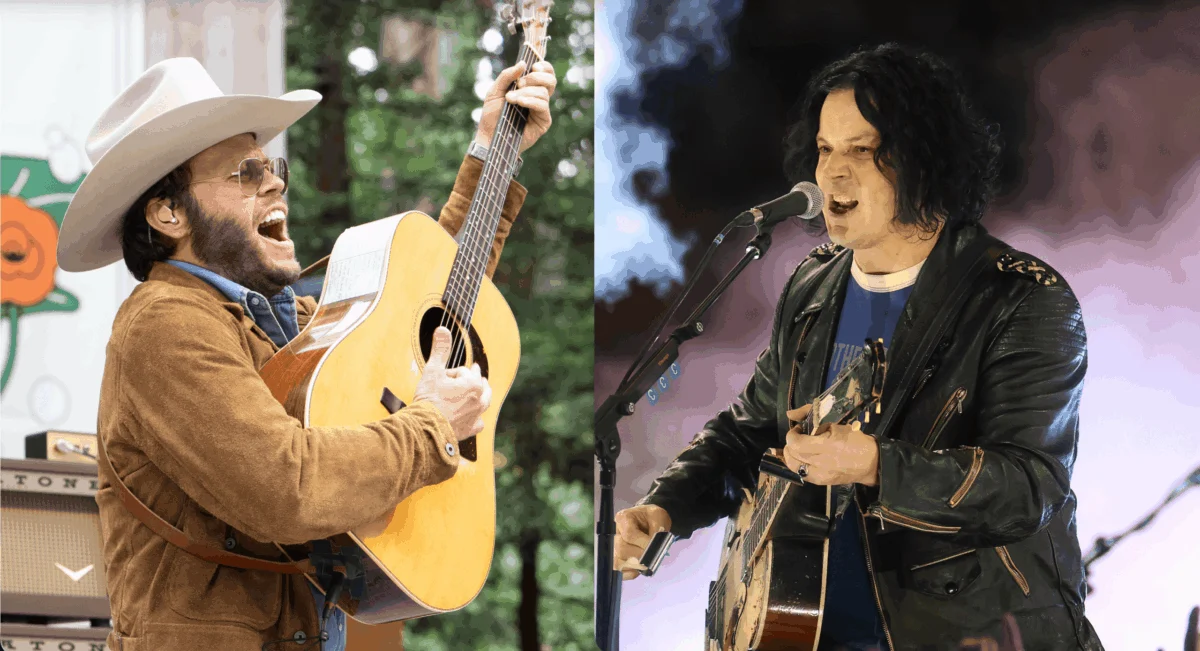
HangupsMusic.com – In the modern landscape of independent music, where genres frequently bleed into one another and artistic alliances are often formed in the name of counter-culture, a sharp and unexpected divide has emerged between two of the industry’s most prominent figures. What began as a localized dispute over a tour lineup has spiraled into a high-profile ideological clash involving country traditionalist Charley Crockett and rock icon Jack White. At the center of this storm is Twin Temple, a duo whose "Satanic doo-wop" aesthetic became the catalyst for a conversation regarding creative tolerance, political legacy, and the authenticity of the "outlaw" persona in the 21st century.
The friction first ignited in July, during the summer leg of Charley Crockett’s "Age of the Ram" tour. Crockett, a prolific singer-songwriter known for his "Gulf & Western" sound and his meticulously crafted image as a wandering troubadour, had originally booked Twin Temple as his opening act. Twin Temple, comprised of Alexandra and Zachary James, occupies a unique niche in the music world, blending the polished vocal harmonies of 1950s and 60s rock-and-roll with overt occult themes and Satanic imagery. While the pairing initially seemed like an exercise in genre-bending, the professional relationship disintegrated rapidly. Crockett made the decision to remove the duo from the tour, a move that Twin Temple immediately attributed to their religious and aesthetic choices. In a public statement, the band claimed they were dismissed specifically "due to their Satanic imagery."
Crockett’s initial response to the dismissal was blunt, signaling a disconnect between his expectations and the duo’s reality. He suggested that he had initially viewed the band through the lens of classic heavy metal theatrics, comparing them to Black Sabbath, but eventually found their specific brand of occultism to be a bridge too far for his tour’s environment. His comment, "I thought they were like Black Sabbath, but they ain’t. Not today, Satan," quickly became a flashpoint for fans and critics alike, highlighting the cultural boundaries that still exist within the world of Americana and country music.
However, where one door closed for Twin Temple, another was swung open by Jack White. The Third Man Records founder, long a champion of the eccentric and the avant-garde, stepped in to support the duo. White’s intervention began with a high-profile invitation for Twin Temple to open his Los Angeles concert, a gesture that served as a silent but firm rebuke of Crockett’s decision. This endorsement acted as a springboard for Twin Temple, leading to a surge in national media coverage and culminating in a debut performance on late-night television. For several weeks, the narrative appeared to have settled into a familiar pattern: an establishment-leaning artist rejects a provocative act, and a progressive peer validates them.
The relative silence was broken on August 18, when Charley Crockett returned to social media to provide a more detailed—and significantly more aggressive—account of his perspective. In a lengthy Instagram post that has since been deleted, Crockett attempted to "clear this up right quick," accusing Twin Temple of fabricating the narrative surrounding their dismissal to garner sympathy and publicity. He claimed that the duo had "dragged me by a rope real good" by framing the situation as a matter of religious discrimination rather than a standard professional disagreement.
Crockett’s frustrations were not limited to the opening act. He turned his sights on the broader music community, expressing a sense of betrayal by peers who had previously offered him support. He described a scenario where musicians who had "showered me with praise" for years were quick to "kick me in the dick" once the Twin Temple controversy went viral. This sentiment suggests a deeper isolation felt by Crockett, who has often positioned himself as an outsider working within the traditionalist frameworks of country music.
The most surprising development in Crockett’s post, however, was his direct critique of Jack White. Crockett accused White of being opportunistic, suggesting that the rock star used the controversy as a marketing tool to "sell tickets." Furthermore, Crockett questioned White’s historical standing as a political and social provocateur. He pointed back to the early 2000s, the era of The White Stripes, alleging that White had "purposely avoided political issues" during his rise to fame. Crockett’s argument posited that White only became outspoken once his career was secure, suggesting a lack of courage during the years when "it was all on the line."

This critique of Jack White’s political history is a complex one. While White has indeed become more vocally political in recent years—frequently speaking out on stage and social media regarding civil rights, corporate overreach, and electoral politics—his defenders point to a career-long dedication to preserving marginalized musical histories and supporting independent infrastructure. To Crockett, however, White’s current activism appeared as a convenient posture rather than a lifelong commitment.
Jack White’s response to these accusations was as unconventional as his musical career. Rather than engaging in a point-by-point rebuttal of Crockett’s claims regarding the White Stripes’ political neutrality, White opted for a surrealist form of digital warfare. He posted a lengthy response on Instagram, addressed to "Cowboy Charley" and "this young buck." The bulk of the response consisted of the lyrics to "Rappin’ Duke," a 1984 novelty rap song by Shawn Brown that parodies the legendary Western actor John Wayne.
By using the lyrics of a song that mocks the ultimate cinematic cowboy, White appeared to be taking a jab at the authenticity of Crockett’s "outlaw" persona. The lyrics—filled with Western tropes delivered in a rhythmic, humorous cadence—served to infantilize the conflict, suggesting that White did not view Crockett’s accusations as a serious threat to his reputation. The choice of "Rappin’ Duke" was a quintessential Jack White move: deeply referential, slightly eccentric, and dismissive of the traditional rules of celebrity feuding.
While the social media back-and-forth has provided plenty of fodder for the music press, the underlying tension reflects a genuine schism in the industry. Crockett represents a segment of the Americana world that values a specific type of traditionalism and decorum, even while operating outside the Nashville mainstream. His discomfort with Twin Temple’s "Satanic" branding may be less about personal theology and more about the "brand" of his tour and the expectations of his audience. Conversely, White represents the "indie-rock" ethos where provocation is often viewed as a virtue, and where the rejection of an artist by a traditionalist is seen as a badge of honor.
Amidst this public disagreement, all parties involved remain highly active on the professional front. Charley Crockett continues to tour in support of his June release, Age of the Ram, an album that has been praised for its atmospheric production and Crockett’s evocative songwriting. Despite the controversy, he remains one of the most successful independent country artists of his generation, maintaining a rigorous touring schedule that sees him playing to devoted crowds across the country.
Jack White is similarly occupied, having released Frozen Charlotte in July to critical acclaim. His current tour, which has seen him performing in a variety of intimate and mid-sized venues, is largely sold out through the end of the year. White’s ability to remain at the center of the cultural conversation, whether through his music or his eccentric social media presence, remains undiminished.
Twin Temple, perhaps the biggest beneficiaries of the visibility generated by the feud, are preparing for the release of their own new project. Their upcoming album, Doomed Lovers, is scheduled for release on October 9. In a move that leans directly into the controversy that brought them into the national spotlight, the album will be released via Pentagrammaton, a label name that reinforces their commitment to their occult aesthetic.
As the dust settles on this particular "rodeo," the incident serves as a reminder of the volatile nature of artist relations in the digital age. What could have been a private dispute over a contract or a creative difference became a public referendum on character, history, and the definition of "cool" in the modern music industry. Whether Charley Crockett and Jack White will ever find common ground remains to be seen, but for now, the lines in the sand have been clearly drawn. The "Age of the Ram" and the world of "Frozen Charlotte" appear to be moving in two very different directions, with Twin Temple carving out a third, darker path between them.
