
 By Azzam Bilal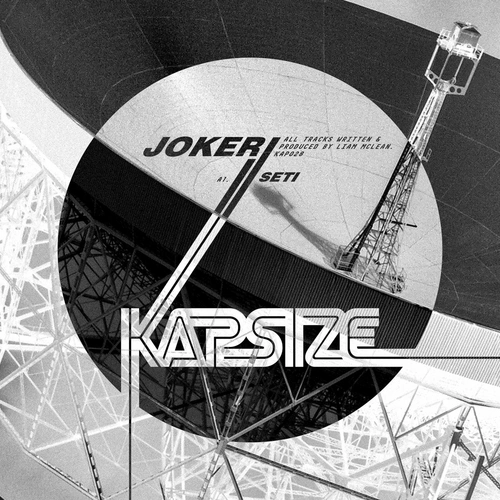
HangupsMusic.com – Bristol, In the vast, neon-lit annals of British electronic music, few figures command as much mythic reverence as Liam McLean, the producer known to the world as Joker. Hailing from the creative crucible of Bristol, a city synonymous with low-end innovation, Joker has long been the primary architect of the "Purple Sound"—a vibrant, maximalist subgenre that fused the weight of dubstep with the melodic swagger of West Coast G-funk and the jagged energy of grime. After periods of relative silence that left the global bass community yearning for his signature cinematic touch, 2024 has emerged as a landmark year for the producer. Following the thunderous reception of his March release, "Maelstrom," Joker has once again descended from his studio laboratory to deliver "SETI," a track that serves as both a nostalgic nod to his roots and a bold step into a refined sonic future.
To understand the weight of "SETI," one must first understand the legacy Joker carries. Emerging in the late 2000s, he disrupted the then-dark and brooding dubstep landscape with a palette of vivid violets and deep indigos. While his contemporaries were exploring the depths of sub-bass minimalism, Joker was layering thick, soaring synthesizers that felt like they belonged in a high-budget sci-fi epic or a classic Sega Genesis title. This "Purple" aesthetic wasn’t just a gimmick; it was a fundamental shift in how bass music could be composed, emphasizing harmony and "funk" without sacrificing the physical impact required for a sound system. With "SETI," named after the Search for Extraterrestrial Intelligence, McLean leans into the cosmic implications of his moniker, crafting a piece of music that feels like a transmission from a distant, much more soulful galaxy.
The track arrives on the heels of "Maelstrom," a composition that reminded listeners of Joker’s ability to create "skankers"—tracks designed specifically to move a dancefloor through sheer kinetic force. While "Maelstrom" was a high-octane display of "welly" and aggressive rhythmic structures, "SETI" takes a more nuanced approach. It represents a subtle recalibration, moving away from the pure frontal assault of his previous 2024 output and returning to the intricate, atmospheric world-building that defined his seminal works like "Purple City" or "The Vision."
From the opening moments of "SETI," the listener is greeted by those unmistakable synth stabs. There is a specific texture to a Joker lead—a certain brassy, digitized grit that feels expensive yet raw. These stabs act as the rhythmic backbone of the track’s introduction, cutting through the mix with surgical precision. However, where "SETI" truly begins to distinguish itself is in its restraint. Rather than overwhelming the listener with a wall of sound immediately, McLean allows the groove to breathe. The percussion is crisp, hitting with a rhythmic swing that suggests a deep appreciation for the foundational elements of funk and soul, albeit filtered through a futuristic, British lens.
As the track progresses, it becomes clear that Joker is playing with the concept of "maximalist funk." This has always been his specialty—taking sounds that should, by all accounts, be "too much" and arranging them with such harmonic sophistication that they feel essential. In "SETI," the bassline doesn’t just rumble; it sings. It snakes around the percussion, providing a warm, analog-sounding counterpoint to the sharp digital edges of the lead synths. It is a masterclass in frequency management, ensuring that even as the arrangement grows more complex, the core "skank" remains intact.
The true emotional and technical heart of "SETI," however, lies in its midpoint breakdown. Joker has always been a master of the bridge, using these moments to pivot the mood of a track entirely. In "SETI," the maximalist energy suddenly recedes, making way for a sequence of chirpy, 8-bit melodies that evoke the golden age of handheld gaming. These Gameboy-esque flourishes are a recurring motif in Joker’s discography, reflecting a childhood spent immersed in the soundtracks of Yuzo Koshiro and other video game music legends. In this specific context, the chiptune breakdown serves as a moment of levity and innocence before the track regains its composure and hits the listener with its final, most potent drop.
This transition is where Joker’s genius is most apparent. The shift from a heavy, club-ready rhythm to a playful, melodic interlude could easily feel disjointed in the hands of a lesser producer. Yet, McLean manages the transition with a fluidity that keeps the listener off-balance in the best way possible. It is a reminder that electronic music can be unpredictable and narrative-driven, moving beyond the static "intro-drop-break-drop" formula that plagues much of modern dance music.
The title "SETI" also invites a deeper conceptual reading. The Search for Extraterrestrial Intelligence is a scientific quest for a signal in the noise, a search for something recognizable in the vast emptiness of space. In many ways, Joker’s music has always felt like that signal. In a crowded market of derivative bass music, his "Purple" frequencies stand out as something distinctly "other." By naming the track after this cosmic search, he reinforces his identity as an outsider artist—a producer who operates on a different frequency than his peers, looking toward the stars while his feet remain firmly planted in the Bristol pavement.
Furthermore, the production quality of "SETI" highlights how much Joker has evolved as a technical engineer. The mixdown is immaculate, possessing a three-dimensional depth that is often lost in the loudness wars of contemporary streaming. There is a clear separation between the high-end sparkle of the Gameboy melodies and the subterranean weight of the sub-bass. This clarity allows the "funk" to resonate more effectively; you can hear the "fingers" on the virtual strings, so to speak. It is this attention to detail that earns him the title of "Professor." He isn’t just making beats; he is conducting a digital orchestra.
The reception of "SETI" within the broader music community also speaks to the enduring relevance of the Bristol sound. While genres like dubstep and grime have gone through various cycles of mainstream explosion and underground retreat, Joker’s specific brand of electronic music seems immune to the whims of fashion. This is because his work is rooted in melody and soul—elements that are timeless. "SETI" doesn’t sound like a relic of 2010, nor does it sound like it’s trying too hard to mimic the trends of 2024. It sounds like Joker, and in an era of algorithmic homogeneity, that is perhaps the highest compliment one can pay an artist.
As we look toward the remainder of the year, the release of "SETI" suggests that Joker is in the midst of a highly productive creative phase. The pairing of "Maelstrom" and "SETI" showcases two different sides of his personality: the aggressive dancefloor commander and the cerebral, melodic explorer. If these tracks are precursors to a larger body of work, such as a new long-player, the electronic music world should be on high alert.
In conclusion, "SETI" is more than just a new single from a veteran producer; it is a reaffirmation of Joker’s status as one of the most vital voices in UK bass music. It successfully bridges the gap between the raw energy of his early EPs and the sophisticated production of his later career. By blending maximalist funk with nostalgic chiptune aesthetics and his trademark "Purple" synths, Liam McLean has delivered a track that is as compelling as it is danceable. He continues to knock his audience off balance, proving that even after more than a decade at the forefront of the scene, the Purple Professor still has plenty of lessons to teach. Whether you are a longtime follower of the Bristol scene or a newcomer to his neon-drenched world, "SETI" is a signal worth tuning into.
