
 By admin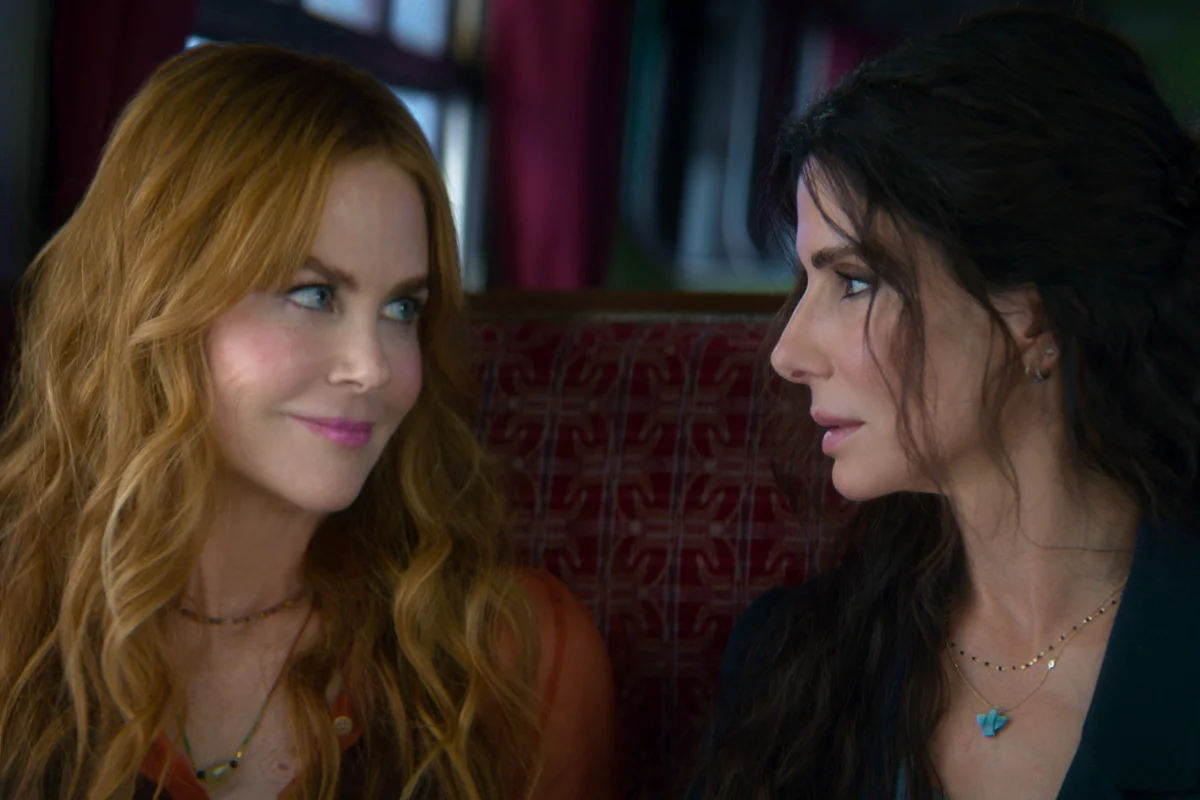
HangupsMusic.com – New York, NY – The long-awaited return to the enchanting world of the Owens family has been met with a critical reception even colder than a winter’s night in New England. Nearly three decades after the original film carved out its unique niche, Practical Magic 2 has landed on Rotten Tomatoes with a meager 34 percent approval rating, faring even more poorly than its 1998 predecessor. Yet, amidst the flurry of harsh reviews, an underlying truth emerges: this sequel was never intended to be an Oscar contender; it was crafted as a heartfelt homage to sisterhood and a cherished reunion for a dedicated fanbase.
The 1998 cult classic, Practical Magic, starring Sandra Bullock as the stoic Sally Owens and Nicole Kidman as the vivacious Gillian Owens, has garnered a fervent following over the years. Their reprisal of these iconic roles, under the direction of Susanne Bier, twenty-eight years later, was a moment many fans had only dreamed of. However, critics have largely wished this dream had remained in the realm of fantasy. The narrative thrust of the sequel centers on the Owens sisters’ renewed quest to dismantle the ancient family curse, which dooms any man they love to an untimely demise. This urgency escalates when Sally’s daughters, Kylie (Joey King) and Antonia (Maisie Williams), uncover their own burgeoning magical abilities and the terrifying reality of the curse, previously dismissed as mere ancestral folklore.
The catalyst for their latest magical entanglement arrives when Kylie’s boyfriend, portrayed by Xolo Maridueña, is critically injured in a car accident and falls into a coma. Convinced the curse is manifesting, Kylie flees to London, determined to break the malevolent spell. Sally and Gillian, ever protective, follow suit, enlisting the expertise of a magic historian, played by Lee Pace, to aid their supernatural endeavor. This transatlantic journey, however, has become a significant point of contention for many reviewers.
A comprehensive list of grievances has been articulated by critics. Many lament the visual aesthetic, describing the sequel’s lighting as stark and overly bright, a stark departure from the original’s atmospheric, autumnal glow that so perfectly complemented its mystical themes. Concerns have also been raised about the handling of key characters, with some feeling sidelined while others seem to exist solely to advance the plot through their demise. The magical elements themselves have drawn criticism; where the original embraced a subtle, almost organic form of magic, the sequel reportedly leans heavily on CGI, diminishing the charming minimalism that made the first film’s spells so compelling. Adding to the dismay, the beloved Owens family home in New England, an architectural marvel that has captivated audiences for decades and inspired countless online discussions, is barely featured, with much of the action inexplicably shifted to London. This geographical pivot has left many questioning the narrative necessity. Furthermore, the film’s runtime, clocking in at 130 minutes, is nearly half an hour longer than the original, contributing to a sense of bloat rather than enrichment.
It’s crucial to remember that the original Practical Magic, based on Alice Hoffman’s novel and directed by Griffin Dunne, was itself met with a barrage of negative reviews upon its initial release. Critics frequently chastised its perceived tonal inconsistencies, struggling to categorize it as a romantic comedy, horror, or drama. Yet, as Dunne explained in 2024, these shifts were entirely deliberate, reflecting his artistic inclination towards blending "the light and the dark" within the same scene, mirroring the complexities of real life. The subplot involving Kidman’s character Gillian and her abusive boyfriend, Jimmy Angelov (Goran Visnjic), while jarring to some, held profound personal significance for Dunne, whose sister, actress Dominique Dunne, was tragically murdered by her ex-partner in 1982. This contextual understanding adds a layer of depth often missed in surface-level critiques.
Sandra Bullock, reflecting on the original film two years prior, candidly shared how they were "eviscerated" by critics. Producer Denise Di Novi, who also returned for the sequel, recalled the pervasive sexism within the film industry at the time. "Believe it or not," she stated, "we actually got criticism for having too many women in the movie." She vividly recounted one review that bluntly asked, "How many women can you fit in one movie? In Practical Magic, too many." Such an anecdote underscores the challenging environment for female-centric narratives in the late 90s, a climate that, while improved, still influences how certain films are perceived.
Despite the initial critical drubbing, the first Practical Magic transcended its reviews to become a beloved cult classic. It offered an escape into the nostalgic embrace of the late Nineties, characterized by chunky knit cardigans, luxurious velvet dresses, and a whimsical charm. Audiences reveled in the subtle magic of spoons stirring themselves, the comforting presence of impeccably cool aunts (Dianne Wiest and Stockard Channing) who served chocolate for breakfast, and the liberating reminder that clothing was optional when dancing naked under the full moon. It evolved into a quintessential comfort film, watched repeatedly on VHS, its memorable lines becoming ingrained in the cultural lexicon of its fans. It was never intended to be a cinematic masterpiece like Citizen Kane, nor did its devotees ever wish it to be. Its value lay in its heartfelt simplicity and its celebration of an unconventional family.
This distinction is precisely what many serious film critics appear to overlook: Practical Magic 2 was not conceived for them. Its true audience lies with the "lovable geeks" who proudly adorn their rearview mirrors with "the belladonna is in my bag" decals and meticulously organize annual midnight margarita parties every Halloween. It was crafted for the legion of fans who have patiently waited nearly three decades to witness the dynamic return of these witchy sisters – the steadfast, protective, and occasionally rigid Sally alongside the carefree, charming, and sometimes reckless Gillian – as they once again confront their ancestral curse. (A nostalgic nod here to Gary Hallet, the undeniably foxy Arizona police officer played by Aidan Quinn in the original. His saguaro cactus-shaped pancakes remain unparalleled, and he undoubtedly would have appreciated True Detective).
While Practical Magic 2 is far from flawless, some of its shortcomings are acknowledged even by its most ardent supporters. The recasting of Sally’s daughters, with Joey King and Maisie Williams stepping into roles previously held by Evan Rachel Wood and Alexandra Artrip, was necessitated by the source material, the 2021 novel The Book of Magic: A Novel, which depicts the daughters as college graduates. However, the absence of even a cameo from the original actresses, who expressed willingness to participate, feels like a missed opportunity and a disservice to longtime fans. The underutilization of Xolo Maridueña, a charismatic talent from Cobra Kai, whose character spends a significant portion of the film in a coma, is another regrettable narrative choice. As for Lee Pace… well, the only critique one might offer is that he is perhaps too impossibly handsome.
The original Practical Magic faced a deluge of negativity, and history, in many ways, is repeating itself. One critic recently quipped, "The worst version of Kidman the actor is when she performs as a ditz. So guess what version of her we get in this film." Considering the kind of dismissive commentary, it’s almost miraculous that this sequel saw the light of day. For its devoted fanbase, however, every moment of it is to be cherished. A 130-minute runtime? Many wish it were longer. Fans are already flocking to theaters, perhaps singing along to Stevie Nicks and Olivia Rodrigo – artists whose ethereal and empowered sounds perfectly align with the film’s witchy aesthetic and themes of female strength. Music, after all, has always been an integral part of the Practical Magic experience, from the whimsical score of the original to the iconic "Midnight Margaritas" chant, creating an auditory landscape that complements the visual magic. The original film’s soundtrack, featuring artists like Stevie Nicks with her titular track "Practical Magic," deeply cemented its atmosphere and resonated with its audience, much like how a modern sequel might integrate contemporary artists to capture a similar spirit. This powerful fan movement is already projected to propel the sequel to an impressive $30 million opening weekend, with audience scores on platforms like Rotten Tomatoes soaring to 92 percent. And for this kind of enchantment, no actual magic was required—just unwavering belief and collective celebration.
