
 By Azzam Bilal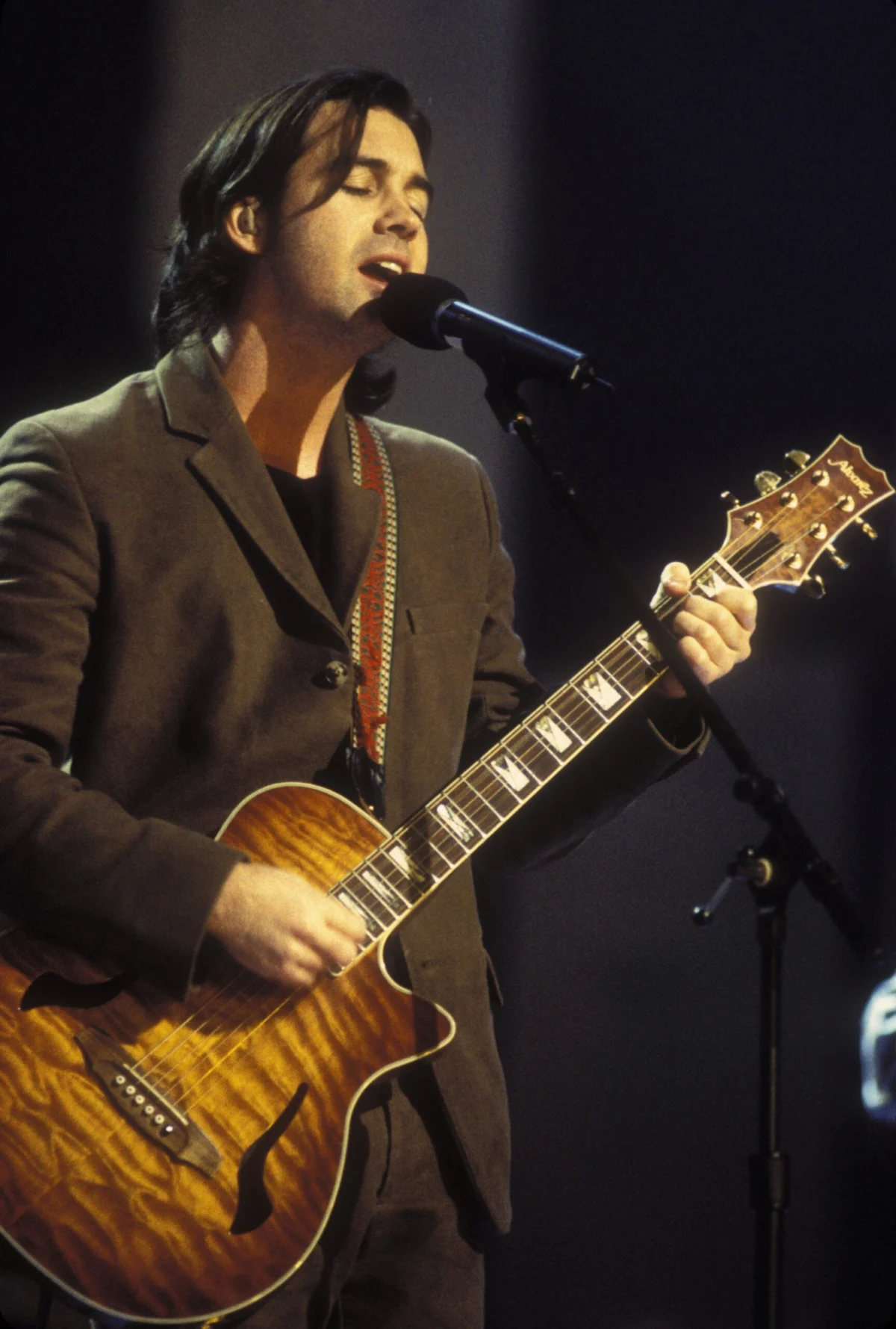
HangupsMusic.com – Manhattan, The global arts community is mourning the loss of Duncan Sheik, the visionary composer and singer-songwriter who successfully bridged the gap between the upper reaches of the Billboard charts and the prestigious stages of Broadway. Sheik passed away in Manhattan at the age of 56, as confirmed by reports from the New York Times. His mother disclosed that the cause of death was cardiac arrest. The news follows a period of uncertainty earlier this week when the musician was hospitalized in critical but stable condition due to an undisclosed medical emergency. His sudden departure marks the end of a prolific career that redefined the sound of modern musical theater and provided a soundtrack for the late 1990s alternative pop scene.
Born Duncan Scott Sheik on November 18, 1969, in Glen Ridge, New Jersey, he was raised in an environment that fostered both intellectual curiosity and artistic expression. He spent a significant portion of his youth in South Carolina, where he began to hone his musical sensibilities. Sheik’s journey into the professional music world was preceded by a solid academic foundation; he attended Brown University, where he studied semiotics. It was during his collegiate years that he began to refine the melodic, often melancholic songwriting style that would eventually make him a household name.
Sheik’s arrival on the national stage was nothing short of meteoric. In 1996, he released his self-titled debut album, an atmospheric collection of songs that stood out against the tail end of the grunge era and the rise of bubblegum pop. The lead single, "Barely Breathing," became an era-defining anthem. Characterized by its sophisticated chord progressions and Sheik’s earnest, breathy vocal delivery, the track resonated deeply with listeners. It peaked at No. 16 on the Billboard Hot 100, but its true achievement was its longevity; the song remained on the charts for a staggering 55 weeks, a record-breaking feat at the time. The industry took notice, and Sheik earned a Grammy Award nomination for Best Male Pop Vocal Performance, solidifying his status as a premiere talent in the adult alternative genre.
Despite the massive commercial success of his debut, Sheik was never content to remain a traditional pop star. His subsequent albums, such as Humming (1998) and Daylight (2002), showcased a deepening interest in complex arrangements and introspective lyrical themes. While these projects maintained a loyal following and received critical acclaim, Sheik was quietly laying the groundwork for a second act that would fundamentally alter the landscape of American theater.
The transition from pop singer to theatrical composer began through a fruitful collaboration with lyricist and playwright Steven Sater. Together, they spent nearly a decade developing a musical adaptation of Frank Wedekind’s controversial 1891 play, Spring Awakening. The project was a radical departure from traditional Broadway fare, blending a 19th-century German setting with a contemporary alternative rock score. When the production finally arrived on Broadway in late 2006, it was a cultural phenomenon.
Spring Awakening spoke to a new generation of theatergoers, capturing the angst, passion, and tragedy of adolescence with a raw intensity that had rarely been seen on stage. The production’s use of hand-held microphones and a rock-concert aesthetic broke the fourth wall in a way that felt both revolutionary and necessary. At the 2007 Tony Awards, the show was the evening’s big winner. Sheik himself took home two of the most coveted honors: Best Original Score and Best Orchestrations. The cast recording also earned a Grammy for Best Musical Show Album. The success of Spring Awakening did more than just win awards; it proved that rock music could be integrated into theater without losing its edge, paving the way for future hits like Next to Normal and Dear Evan Hansen.
Sheik’s theatrical output did not stop there. He continued to push boundaries with works like Whisper House, a ghost story set in a lighthouse during World War II, and a bold musical adaptation of Bret Easton Ellis’s American Psycho. The latter featured a heavy electronic, synth-pop influence that paid homage to the 1980s setting of the novel while maintaining Sheik’s signature melodic sensibility. He also collaborated on Alice by Heart, a poignant reimagining of Alice in Wonderland set in the London Underground during the Blitz. His ability to inhabit different historical periods and emotional landscapes through music made him one of the most sought-after composers in the industry.
While his theater career flourished, Sheik never abandoned his roots as a recording artist. He released several more studio albums, including the covers project Brighter/Later and the critically lauded White Limousine. His music often reflected his personal journey and spiritual interests, including his long-standing practice of Nichiren Buddhism, which he often cited as a grounding force in his life and creative process. In 2022, he released Claptrap, an album that saw him experimenting with 1980s-inspired textures and philosophical lyrics, proving that even three decades into his career, he remained an artist committed to evolution.
Those who worked with Sheik often described him as a "musician’s musician." He possessed a rare technical proficiency in orchestration and a deep understanding of harmony, yet he never let his technical skill overshadow the emotional core of a song. His arrangements were often described as "shimmering" or "cinematic," characterized by a meticulous attention to detail that rewarded repeated listens. Whether he was writing a three-minute pop song or a two-hour theatrical score, his work was imbued with a sense of grace and a touch of wistfulness.
The impact of Sheik’s passing is felt across multiple industries. In the world of pop music, he is remembered as a craftsman who brought a level of sophistication to the airwaves during a transitional period in the 90s. In the world of theater, he is hailed as a disruptor who helped modernize the Broadway sound, inviting younger audiences into the theater and challenging the conventions of the "book musical." His influence can be heard in the work of countless contemporary composers who now feel empowered to bring indie-rock and electronic influences to the stage.
Sheik’s legacy is preserved in a rich catalog of recordings and scores that continue to be performed worldwide. Spring Awakening has seen numerous high-profile revivals, including a celebrated production by Deaf West Theatre that emphasized the themes of communication and silence, further proving the universal resonance of Sheik’s music. His songs continue to find new life in film and television, and "Barely Breathing" remains a staple of radio playlists, a testament to its enduring craftsmanship.
As news of his death spread, tributes began to pour in from collaborators and fans alike. Many noted his kindness, his quiet intellect, and his unwavering commitment to his artistic vision. He was an artist who managed to navigate the pressures of fame without losing his integrity, moving seamlessly between the worlds of commercial pop and avant-garde theater.
Duncan Sheik is survived by his family and a vast community of artists who were inspired by his work. While his voice has been silenced, the melodies he crafted—from the soaring rock anthems of rebellious youth to the quiet, introspective ballads of his solo career—will continue to resonate. He leaves behind a body of work that serves as a bridge between genres, a reminder that great music knows no boundaries. In the history of American song, Duncan Sheik will be remembered as a composer who dared to be different, finding the beauty in the "barely breathing" moments of life and turning them into something eternal.
