
 By admin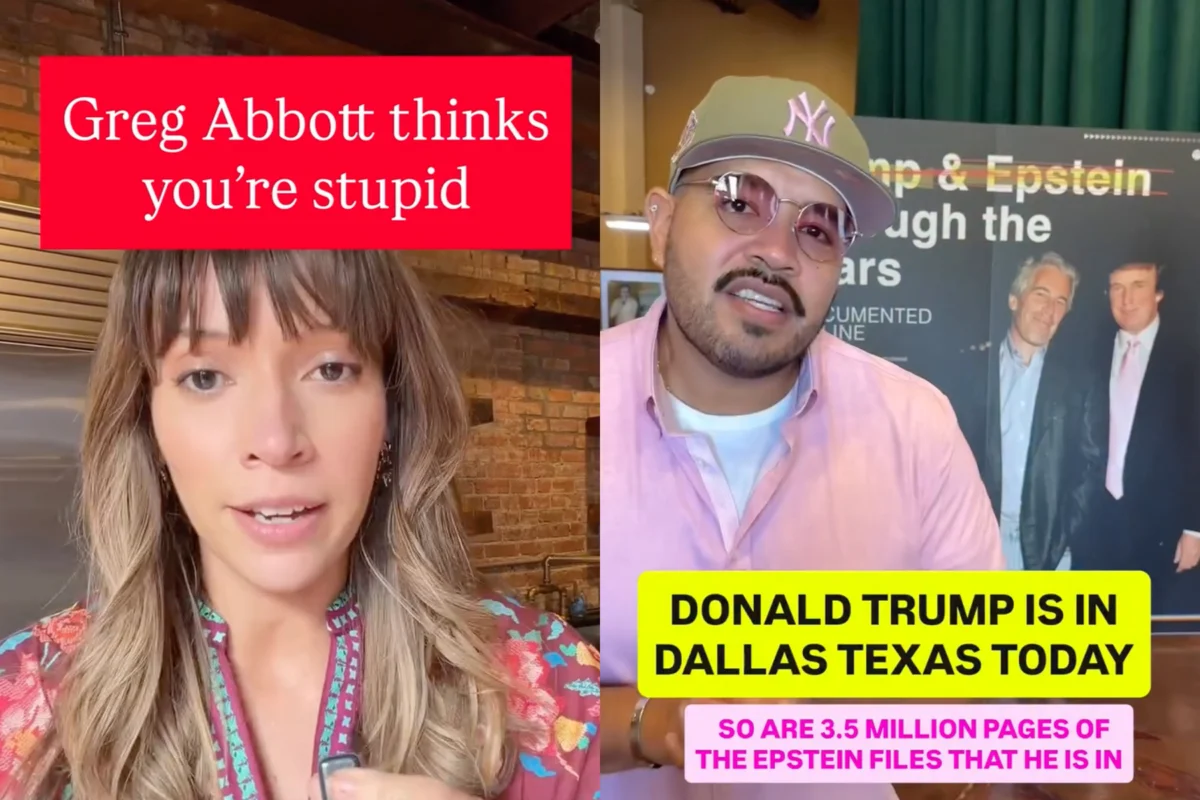
HangupsMusic.com – Dallas, Texas – In the vibrant, ever-evolving landscape of digital media, a new breed of content creator is emerging, leveraging platforms like Instagram and TikTok to shape public discourse and engage audiences on critical issues. Far from the traditional newsroom or political stump, a unique initiative unfolded in Dallas, Texas, where a cohort of progressive influencers converged, not for a concert, but to craft compelling narratives designed to resonate with a digitally-native generation. Their mission: to strategically counter prevailing narratives and amplify local voices in a pivotal election cycle, demonstrating the potent, often underestimated, power of grassroots digital engagement in today’s interconnected world.
The hub of this dynamic operation was a sprawling, industrially-styled loft in Dallas, an architectural canvas seemingly purpose-built for the demands of modern content creation. Here, tripods unfolded like metallic blossoms, wireless microphones clipped into place with practiced ease, and the soft glow of smartphone screens illuminated faces intently focused on framing the next viral moment. Among them was Erika Harrison, a Houston-based attorney and part-time blogger, capturing the whirlwind energy of Congressman Christian Menefee. Menefee, one of the youngest members of the Congressional Black Caucus, greeted his audience with an energetic, familiar tone, proclaiming his presence in "DEE-lus, Texas" directly into a smartphone camera. His appearance was a rapid-fire session, blitzing through half a dozen social videos in mere minutes before his departure, leaving behind a group of content creators satisfied with their swift capture of a prominent political voice.
This flurry of digital activity occurred just miles away from a high-stakes Republican midterm convention, an emergency gathering that served, in part, to reaffirm loyalty to former President Donald Trump and to project a unified front for the upcoming elections. While traditional media outlets covered the convention’s speeches and political machinations, the cohort of ten progressive creators, supported by the public advocacy organization MoveOn, pursued a different strategy. Over two days, these digital storytellers engaged in a packed schedule of meetings with Democratic lawmakers, attended counter-programming events, expanded their networks, collaborated on projects, and, crucially, generated a torrent of content for their diverse online followings.
The Dallas house represented a deliberate effort to establish a robust digital presence capable of challenging the well-oiled, highly funded machinery of right-wing content creation that frequently dominates social media conversations. Democrats have historically struggled to cultivate an equally effective digital network, a growing concern as the vertical video revolution continues to fundamentally reshape how audiences consume news, commentary, and even entertainment. By focusing on local talent, MoveOn aimed to flip this script.
Jordal Uhl, spearheading MoveOn’s creator program, articulated a strategy focused on foundational growth rather than immediate mass reach. "Our concern isn’t solely about raw audience numbers," Uhl explained, emphasizing that while securing national creators with vast followings might offer a quick numbers boost, the deeper objective was to nurture the burgeoning talent within Texas itself, fostering sustainable growth and impact for local digital storytellers. This approach underscored a recognition that authentic, community-rooted voices often resonate more profoundly than generalized national narratives.
The creators hailed from across Texas, representing a rich tapestry of its diverse demographics, from the Rio Grande Valley to the bustling metropolitan hubs of Dallas, Austin, San Antonio, and Houston. Reflecting the state’s significant Black and Hispanic populations, the group was predominantly minority, bringing a wealth of cultural perspectives to their content. Their individual followings varied dramatically, from approximately 9,000 to over 2.8 million, mirroring the wide spectrum of influence within the digital sphere. Their content was equally varied: some focused intensely on their specific cities or regions, blending local lifestyle content with accessible political explainers on policies affecting their communities. Others adopted a format akin to modern local news, contextualizing major national stories within the framework of Texas politics. Many had previously collaborated with or featured figures like James Talarico and Gina Hinojosa, Democratic candidates who have actively courted influencers as part of their digitally-native campaigns. Uhl reiterated that the core aim was to "leverage the voice and the audiences of Texas-based creators."
The rented house functioned as a daytime retreat, a dynamic content factory where ideas were sparked and videos swiftly produced. Beyond hosting figures like Rep. Menefee and Tarrant County Commissioner Alisa Simmons, the creators ventured out to engage with Illinois Governor JB Pritzker, who was in Texas to participate in Democratic counter-programming. They also toured the "Donald J. Trump and Jeffrey Epstein Memorial Reading Room," a traveling exhibition designed to highlight connections between Trump and Epstein through the publicly available "Epstein files." Attending Democratic press conferences and interviewing local officials further enriched their content. Over the two-day period, this intensive effort yielded an impressive 62 pieces of content, accumulating over 5.3 million views and more than 400,000 likes across various platforms.
"The RNC, in many ways, serves as a fertile ground for content," Uhl noted, highlighting the strategic advantage of reacting to and reframing the convention’s narrative. The objective was clear: to divert attention from the dominant presence of Trump and his allies in Dallas by offering alternative perspectives and analysis. The Republican convention itself drew a significant number of conservative digital figures, from podcasters like Benny Johnson to X personality Gunther Eagleman and "Conservative Barbie" Lydia Shaffer, many of whom received special credentials and VIP treatment, underscoring the right’s established digital infrastructure.
Democrats have been actively working to bridge this gap, with initiatives ranging from Double Tap Democracy to Brian Tyler Cohen’s Chorus Creator Incubator Program and the multi-million dollar "Speaking with American Men" project. Yet, as Kat Vargas, whose Instagram account HowdyPolitics boasts over 100,000 followers, observed, the party is still playing catch-up. "There’s been such an investment in digital from the right," Vargas explained. "It’s about building that community online and truly driving action. We’re significantly behind on our side, lacking that comparable investment, which makes scaling our efforts challenging."
Vargas pointed to the rapid ascent of Sara Gonzalez, a Houston native who, after being discovered by right-wing media conglomerate The Blaze, now commands nearly a million followers across her platforms. Such cases are numerous at the national level, where heavily funded conservative organizations like The Blaze, The Daily Wire, Veritas Creative Media, and Turning Point USA function as powerful incubators for emerging talent. Vargas, who began by covering the Texas legislature, represents the many local and state-level creators who are largely self-funding their efforts. "There’s virtually no established infrastructure for left-leaning creators to tap into, especially at the state level," she added. Many in the MoveOn house balance content creation as a part-time passion alongside their primary careers, often having to finance their own attendance at major political events. Vargas recounted how, despite the 2024 Democratic National Convention’s stated emphasis on independent creators, many who were accepted couldn’t afford to attend, leading to the absence of crucial voices.
The increasing access granted to these digital creators by political parties and candidates has introduced a new dynamic, occasionally sparking friction with traditional media, which operates under different cultural norms and journalistic standards. Creators have evolved into national figures, their influence palpable in electoral cycles. Figures like Twitch streamer Hasan Piker, known for his direct commentary, have become focal points in broader political discussions.
During an informal gathering over platters of tacos, the creators engaged in a spirited debate about their evolving role within the information ecosystem. A near-unanimous sentiment emerged: they do not perceive themselves as replacements for traditional journalism. Saadia Mirza, a Houston-based designer with 300,000 Instagram followers, explained her perspective: "We’re essentially offering a more direct, one-to-one news experience. I think there’s a misconception that we aim to supplant traditional media or even politicians, but that’s not our objective."
Later, the creators convened in the house’s common area, a scene reminiscent of friends gathering for a movie night. As primetime speeches from the Republican convention played on a large screen, phones emerged, recording snippets before creators would retreat to another room to film spontaneous reaction videos. Laptops displayed works-in-progress, editing software open (Capcut versus Adobe Premiere, a recurring playful debate). News articles were pulled up for quick screenshots and references, and reactions to clips from journalists present at the convention center just hours before were swiftly integrated.
Mirza’s video reacting to footage of Donald Trump’s contentious interaction with ABC News reporter Rachel Scott, where he raised his voice during his departure from Dallas, garnered over 100,000 likes and 14,000 reposts on Instagram, accumulating nearly three million views across Instagram and TikTok. "Less than two hours ago he had a room full of you fuckers with your hands up pledging allegiance to his orange ass," she quipped, referencing a widely circulated video of Trump leading RNC attendees in a cult-like pledge. Separately, JC Frias’s video reacting to the RNC’s decision to display a barely clothed image of Hasan Piker on the convention jumbotrons amassed over half a million views. Frias, laughing into the camera, commented, "I don’t know, if you ask me they’re not doing themselves any favors. I think more people are just going to become democratic socialists." Kat Vargas posted a video recapping and fact-checking Governor Greg Abbott’s speech at the RNC, which garnered over 50,000 views among her predominantly Texas-based following, emblazoned with the superimposed text: "Greg Abbott thinks you’re stupid."
Without such targeted digital content, many online users might have remained unaware of the RNC’s proceedings. Data from the Pew Research Center indicates that one in five Americans regularly receive news from social media influencers, a figure that surges to nearly 40 percent among young adults aged 18-29. A significant portion of these individuals encounter news incidentally in their feeds, and almost half of those surveyed reported that receiving news from influencers provided a greater sense of "authenticity" regarding the source.
Short reaction videos and concise explainers, by their very nature, offer an incredibly efficient channel for political messaging. "Many of us are active on the ground," Vargas noted, "but if I’ve got limited time, is it better spent giving four hours to knock doors where I might talk to seven voters, or during that same time can I make a really high-quality video and reach 100,000 voters?" This question encapsulates the evolving calculus of political outreach in the digital age.
The experience prompted the author to reflect on the efficacy of traditional journalism. The routine of checking into a Dallas hotel, navigating shuttles, and rushing to file 800-word dispatches from the nosebleed seats of the convention hall, punctuated by quick interviews, felt increasingly out of sync with the rapid-fire, high-impact content being generated by the influencers. The nagging question arose: Would a 45-second reel be more effective than a lengthy recap? Would more people encounter it on their "For You" page than by clicking through a link? Could content creation from the comfort of one’s own home truly rival on-the-ground reporting?
Ellae Mata, a San Antonio-based creator focusing on Latino-American history and education, also pondered the future of political influencing. Like many of her peers, content creation is a secondary pursuit. "In the future, I’d love to transition more fully into content creation as a primary income source," she admitted with a laugh. She posed fundamental questions that resonate across the entire creator economy: "What is the future of content creation, especially in the political space? Do people want political content creators they trust because these individuals are deeply knowledgeable, or do they prefer lifestyle creators who occasionally dabble in politics? How does one define themselves as a content creator, and how is that deep connection and trust built with an audience?"
These are questions that newsrooms themselves are grappling with, as audiences increasingly turn away from institutional information sources towards the dynamic, mixed-media world accessible in their pockets. While journalism is fundamentally geared towards reporting facts, the ultimate objective of influencers remains—in a wonderfully direct sense—to influence. Yet, an undeniable symbiosis exists between the two.
"Some of your colleagues operate under the assumption that criticizing creators will save the industry," Vargas stated, addressing the occasional tension between traditional journalists and new media figures. "I honestly don’t think most creators view ourselves as being in competition because most of us are acutely aware – I couldn’t do anything I do without the Texas Press Corps in particular. I’m getting the news, and then I’m helping people make sense of it and offering analysis."
Democrats are beginning to grasp the inherent value of relatable figures directly addressing the camera, guiding voters through an often convoluted news landscape. However, regardless of the funding behind a digital campaign, authenticity remains paramount; users retain the power to scroll away if they detect anything disingenuous. The progressive creators in Dallas are diligently working to capture and sustain viewer attention, not merely to accumulate followers or gain clout, but to catalyze tangible, real-world impact. With a razor-thin Texas Senate election looming, these creators are banking on their ability to contribute to ending decades of Republican dominance in their home state—one reel, story, carousel, and post at a time.
