 By Rose Miami
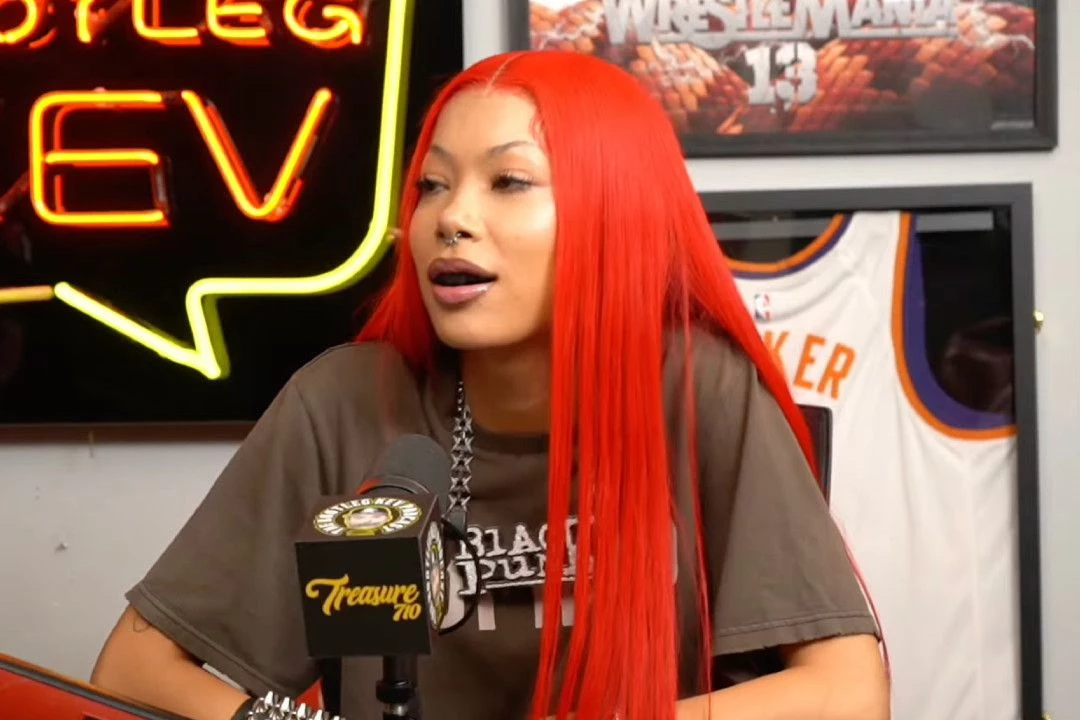
HangupsMusic.com – In a candid conversation that has sparked considerable discussion within the hip-hop community, rising artist Molly Santana has voiced a stark perspective on the prevailing sentiment towards female artists in the underground rap scene. Rather than embracing a coveted moniker like "Queen of the Underground," Santana has openly stated her reluctance, citing a perceived lack of genuine acceptance and a hostile environment for women within the genre’s more niche circles. Her remarks, made during an appearance on The Bootleg Kev Show, offer a critical lens through which to examine the evolving landscape of hip-hop and the challenges faced by artists who defy conventional expectations.
During the interview, which was published on November 19th, Santana addressed Bootleg Kev directly when he referred to her as the "Queen of the Underground." Her response was immediate and unequivocal: "I don’t want to be queen of the underground." When Kev, acknowledging the often fervent nature of underground rap fanbases, commented on their intensity, Santana elaborated on her reasoning. "They’re mean. It’s rough," she stated, her tone conveying a sense of weary experience. "The spot that I’m in is very rough and I feel like… Not to be so negative, but the underground doesn’t really like women. They don’t like women."
This assertion, delivered with a frankness that cuts through polite discourse, suggests a deeply ingrained issue within a segment of the hip-hop audience that often champions authenticity and raw artistry. The underground, in many respects, is a space that prides itself on its unfiltered expression and its departure from mainstream commercialism. However, Santana’s comments imply that this dedication to raw expression can, paradoxically, morph into a gatekeeping mentality that excludes or actively discourages female voices. Her perspective raises crucial questions about who defines "authenticity" in underground hip-hop and whether that definition has historically been skewed to favor male perspectives.
Santana’s trajectory in the music industry has been marked by a series of high-profile moments and strategic career moves. Her inclusion alongside rap titans Drake and Future on the track "Ran to Atlanta," featured on Drake’s recent project Iceman, served as a significant endorsement and introduced her to a broader audience. This collaboration, a testament to her burgeoning talent and appeal, positions her as an artist capable of transcending genre boundaries and achieving mainstream recognition. Yet, despite these successes, her commitment to the underground and her critique of its internal dynamics underscore a nuanced understanding of her artistic identity.

Looking ahead, Santana is preparing for the release of her forthcoming project, Black Punk, slated for a November 27th debut. The title itself hints at a fusion of diverse influences and a potentially rebellious artistic ethos, aligning with her willingness to challenge established norms. Furthermore, her recent announcement of a new partnership with Epic Records, establishing her own imprint, Black Punk Music, signifies a powerful assertion of creative control and entrepreneurial ambition. This move allows her to cultivate her vision and potentially provide a platform for other artists who may share similar experiences or face comparable obstacles.
The "underground" in hip-hop has historically been a breeding ground for innovation, a space where artists could experiment without the pressures of commercial viability. It has fostered a loyal fanbase that often prides itself on discovering and supporting emerging talent, championing lyrical prowess and unique sonic palettes. However, as Santana’s comments suggest, this dedication can sometimes be accompanied by a resistance to change or an implicit bias that hinders the progress of certain artists. The "roughness" she describes could stem from a variety of factors, including a vocal minority of fans who are resistant to seeing women occupy positions of prominence, or a broader cultural inertia that has historically relegated female artists to secondary roles within certain subgenres of hip-hop.
Santana’s unwillingness to accept the "Queen of the Underground" title is not merely a rejection of praise; it’s a statement of principle. It suggests that true recognition and respect should not be predicated on a hierarchical title, especially if the environment it represents is fundamentally unwelcoming. Instead, her focus appears to be on building a sustainable career on her own terms, leveraging her talent and business acumen to create opportunities for herself and potentially others. Her frank assessment challenges the romanticized narrative of the underground and forces a confrontation with its less palatable realities.
The conversation around female representation in hip-hop has been ongoing for years, with artists, critics, and fans debating the barriers to entry and the systemic issues that can impede progress. While significant strides have been made in recent times, with numerous women achieving critical and commercial success across various subgenres, Santana’s perspective from within the underground highlights that the journey towards equitable representation is far from over. Her experience suggests that even in spaces that claim to value authenticity above all else, ingrained biases can persist, creating an environment that is less inclusive than it might appear.
As Black Punk approaches its release, the anticipation is amplified by Santana’s outspokenness and her willingness to engage with uncomfortable truths. Her artistic output, coupled with her candid commentary, positions her as a compelling figure in contemporary hip-hop, one who is not only shaping her own career but also contributing to a broader dialogue about the future of the genre and the spaces within it. The music world will undoubtedly be watching to see how her bold stance translates into continued artistic growth and influence. Her interview, particularly the segment discussing the underground’s reception of women around the seven-minute mark, serves as a critical touchstone for understanding the complex dynamics at play within hip-hop’s diverse ecosystems.
