 By admin
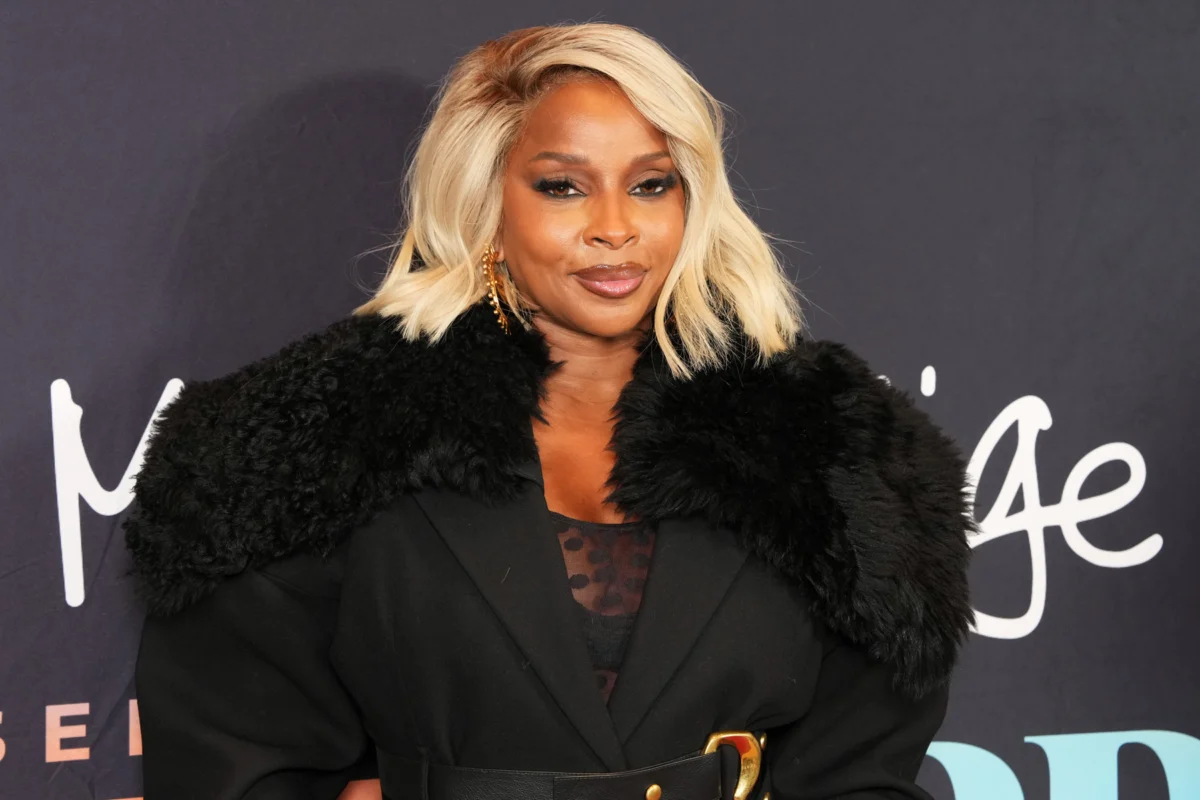
HangupsMusic.com – A significant decision from a federal appeals court has reaffirmed the legal distinction between musical works, ruling that Mary J. Blige’s iconic 1992 hip-hop soul track, "Real Love," does not infringe upon the copyright of The Honey Drippers’ 1973 funk classic, "Impeach the President." This Monday’s verdict by the Second Circuit Court of Appeals upholds a lower court’s dismissal of a 2024 lawsuit, sending ripples through the music industry and reigniting discussions about the evolving landscape of intellectual property rights in an era defined by musical interpolation and homage.
The case, which pitted independent record label Tuff City Records against Universal Music Publishing, centered on allegations that "Real Love" had illicitly sampled elements from "Impeach the President." However, in a detailed 10-page ruling, the three-judge panel decisively concluded that the two compositions "are not substantially similar as a matter of law." The court emphasized that "the works as a whole are distinct," pointing to fundamental differences across their lyrical content, melodic structures, genre classifications, thematic concerns, and overall auditory impressions. This finding not only clarifies a specific legal dispute but also contributes to the ongoing judicial discourse on what constitutes actionable infringement in the complex world of musical creation.
At the heart of the legal battle were two songs with vastly different origins and cultural impacts. "Impeach the President," released by The Honey Drippers in 1973, quickly transcended its musical origins to become a powerful protest anthem against the backdrop of the Nixon impeachment scandal. Its distinctive drum break and raw funk sensibility made it a favorite among early hip-hop producers, leading to its widespread sampling in countless tracks across decades by artists ranging from Janet Jackson and J. Cole to Doja Cat. Its enduring legacy is a testament to its percussive ingenuity and political resonance.
Conversely, Mary J. Blige’s "Real Love," co-produced by Cory Rooney and Mark Morales (Mark C. Rooney), emerged nearly two decades later as a foundational track in the nascent hip-hop soul genre. It propelled Blige, the "Queen of Hip-Hop Soul," to superstardom, cementing her reputation as an artist capable of blending gritty hip-hop beats with heartfelt R&B vocals. The song’s narrative of yearning and romantic pursuit connected deeply with audiences, becoming a defining anthem of the early 90s and a cornerstone of Blige’s illustrious career. Its infectious piano riff and driving beat are instantly recognizable, forming the backdrop for Blige’s soulful delivery.
Tuff City Records, which owns the rights to "Impeach the President," has a well-documented history of pursuing copyright litigation against major hip-hop artists over alleged unauthorized samples of the track. The label has been a vigilant, some might say aggressive, defender of its intellectual property, initiating lawsuits as early as 1991 against acts like LL Cool J and EPMD. Over the years, their legal net has expanded to include high-profile names such as Run DMC, Kanye West, and the Beastie Boys, underscoring their commitment to securing compensation for the use of what they consider a fundamental building block of hip-hop. This latest suit against Universal Music Publishing was thus not an isolated incident but rather the continuation of a long-standing legal strategy.
In its appeal, Tuff City had argued that the district court applied an incorrect legal standard when comparing "Real Love" to "Impeach the President." This argument highlights a recurring challenge in music copyright cases: defining the appropriate methodology for determining "substantial similarity." Courts often employ various tests, including an "extrinsic test" (objective analysis of specific elements) and an "intrinsic test" (subjective evaluation of the "total concept and overall feel" by an ordinary observer). Tuff City likely contended that the lower court’s analysis failed to adequately capture the nuances of the alleged sampling or used a standard that was too stringent or inappropriate for percussive elements.
However, the appellate court firmly rejected this assertion, aligning with the district court’s findings. The ruling meticulously detailed the differences, stating, "While ‘Impeach the President’ and ‘Real Love’ share certain percussive elements, other elements are notably different, such as open versus closed hi-hats and distinct snare and kick drum rhythms." This specific breakdown of percussive nuances is crucial, suggesting that merely sharing a rhythmic idea or a general "feel" is insufficient for infringement if the execution and specific sonic textures diverge significantly. The court further bolstered its conclusion by asserting that the "songs’ ‘total concept and overall feel’ reinforce the conclusion that the works at issue are not substantially similar." This holistic approach considers the entire artistic output, not just isolated components.
The judges elaborated on the stark thematic and structural contrasts: "Impeach the President" was characterized as a protest song squarely within the soul/funk genre, featuring a male group, call-and-response vocals, and prominent horns and guitars. In vivid contrast, "Real Love" was identified as a hip-hop soul track centered on heartbreak, driven by a female vocalist and anchored by piano and percussion. These differences in lyrical content, vocal arrangement, instrumentation, and overarching subject matter contributed significantly to the court’s finding of distinctness. The three-judge panel ultimately concluded, "Considering both the alleged percussive overlap and the works as a whole, we conclude that the district court properly dismissed [the] claim of copyright infringement of the musical composition."
Hillel I. Parness, the legal counsel representing Tuff City, expressed profound disappointment with Monday’s ruling, indicating that the company intends to pursue "further judicial review." This could entail petitioning for a rehearing by the full Second Circuit Court of Appeals (an en banc review) or, less likely, seeking certiorari from the U.S. Supreme Court. Parness underscored the historical significance of "Impeach the President" as one of the "most widely- and consistently-sampled songs from the classic hip-hop era," warning that the decision carries potentially "far-reaching implications for the genre."
In a strongly worded statement to Rolling Stone, Parness articulated his concern: "Allowing Universal Publishing’s refusal to pay for its undisputed sampling to stand would upend decades of law, and decades of industry practice, all designed around ensuring that creators and owners are paid for the use of samples, even if the samples themselves are then reconfigured." This statement highlights the core of Tuff City’s argument: that established industry norms and legal precedents mandate compensation for even recontextualized samples. The label’s position reflects a broader concern among rights holders that a ruling like this could embolden creators to sample more freely without proper licensing, thereby devaluing original works and undermining the financial interests of copyright owners.
The music industry has, over the past few decades, largely transitioned from an era of often unauthorized sampling to a more formalized system of sample clearance, driven by landmark legal decisions and evolving industry standards. Early hip-hop often operated in a legal gray area, but as the genre gained commercial prominence, copyright holders began to assert their rights more aggressively. This led to a complex ecosystem where sample clearance can be a costly and time-consuming process, sometimes involving multiple parties and significant financial negotiations. Parness’s warning suggests that this ruling could potentially disrupt this carefully constructed framework, leading to increased legal ambiguity and potentially fewer payouts for original creators.
Lawyers representing Universal Music Publishing did not immediately respond to requests for comment, a common practice in ongoing legal matters or after a favorable ruling. Their silence, however, does not diminish the potential impact of this decision. For Universal, the ruling is a victory, affirming their artists’ creative interpretations and potentially setting a precedent that could reduce the burden of proof for alleged infringements involving subtle percussive elements.
This case adds another chapter to the ongoing legal saga surrounding music sampling. It reinforces the notion that courts will meticulously scrutinize the specific elements of alleged infringement, taking into account the "total concept and overall feel" rather than just isolated similarities. While Tuff City’s pursuit of "further judicial review" indicates the battle may not be entirely over, the current ruling from the Second Circuit serves as a powerful reminder of the delicate balance between creative freedom, artistic homage, and the protection of intellectual property rights in the dynamic world of music. Its ultimate legacy will depend on how future courts interpret and apply its findings, but for now, the distinction between distinct works has been clearly affirmed.
