 By admin
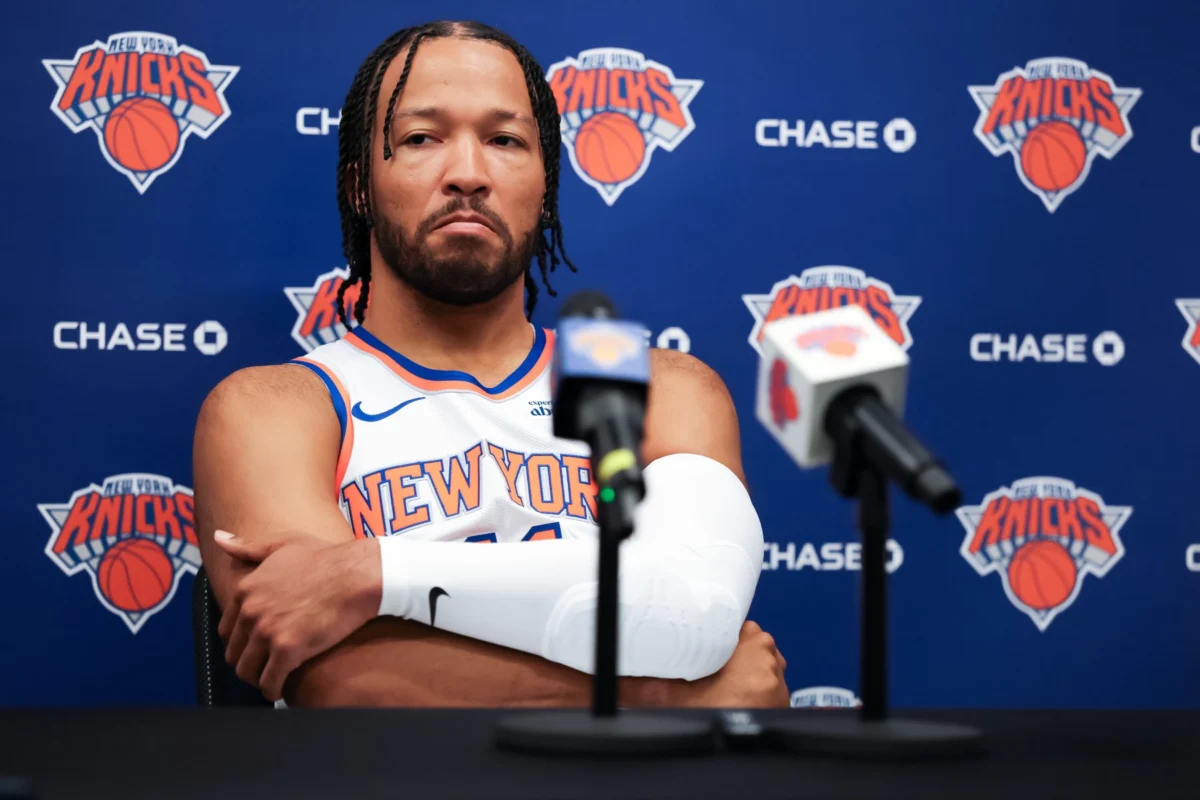
HangupsMusic.com – In an unexpected crossover moment illustrating the pervasive influence of celebrity and social media, New York Knicks standout Jalen Brunson has stepped forward to staunchly defend pop music icon Taylor Swift’s allegiance to the storied NBA franchise. Brunson, a pivotal figure on the Knicks roster, addressed recent remarks made by his teammate, Tyler Kolek, that questioned Swift’s authenticity as a fan, unequivocally stating, “I can’t believe I have to say this, but I didn’t say what was said. Being one of the leaders of the team — the captain of the team — I guess I now have to help somebody out. Yes, she’s a member of the Knicks fandom. Yes, she is.” His comments, reported by Us Weekly, signal a clear stance from the team’s locker room against the rising tide of skepticism surrounding high-profile celebrity sports endorsements.
Brunson’s declaration comes in the wake of a minor social media firestorm ignited by Kolek, a backup guard for the Knicks. During a lighthearted NBA 2K TikTok live stream earlier in November, Kolek, alongside teammate Miles “Deuce” McBride, was prompted to identify the "fakest" Knicks fan from their hypothetical 2026 championship run. Kolek’s response— “Maybe Taylor Swift”— set off a chain reaction across sports and entertainment news outlets, instantly drawing the ire of Swift’s notoriously loyal fanbase, often referred to as Swifties. Kolek elaborated on his initial sentiment, adding, "I don’t know if I’ve seen her at any other games. I’m gonna get some hate from the Swifties. I guess she’s got a lot going on, so she can’t come all the time. But it’s a little performative." McBride’s passive agreement only amplified the perception of a collective team sentiment, despite it originating from a casual, unscripted moment.
The concept of “performative fandom” has become a recurring debate in contemporary sports culture, particularly when global celebrities like Taylor Swift lend their visibility to teams. Critics often question whether these appearances are genuine displays of passion or strategic moves designed for public relations benefit. However, for a franchise like the Knicks, whose home court, Madison Square Garden, has long been a nexus of both athletic and entertainment excellence, the line between celebrity presence and genuine support can be particularly blurry. Swift’s long-standing connection to MSG, not just as a spectator but as a record-breaking performer who has graced its stage countless times, further complicates any simplistic categorization of her engagement.
Recognizing the potential for negative public perception and the undeniable power of the Swiftie contingent, the New York Knicks organization was swift to issue its own defense of the pop superstar. A team spokesperson confirmed to Billboard that “Taylor Swift has been a Knicks fan for many years, has a long history with Madison Square Garden, and we are incredibly appreciative of her support of the organization.” This official endorsement provided a crucial counter-narrative, emphasizing Swift’s historical ties to both the venue and the team, suggesting her fandom predates the recent surge in her sports-related headlines, particularly those linked to her relationship with NFL star Travis Kelce.
The backlash against Kolek was immediate and intense, a testament to the fervent dedication of Swift’s fans. Faced with this rapid public scrutiny, Kolek quickly sought to rectify his comments. His apology was facilitated through a somewhat unconventional channel: teammate Jordan Clarkson’s Instagram Story. Clarkson posted, “He apologizes… the kid is OK,” signaling Kolek’s regret. More tellingly, Clarkson later shared footage of Kolek in the locker room, post-Knicks victory, enthusiastically singing along to Swift’s 1989 smash hit, “Blank Space.” Clarkson playfully captioned the video, “He’s a Swiftie,” a clear attempt to mend fences and perhaps even endear Kolek to the very fanbase he had inadvertently offended.
The narrative of Kolek’s retraction gained further depth when The New York Times reported that his change of heart came after he received a crash course in Swift’s Knicks history. Kolek admitted, "Obviously, with everything, people have been going back and sending me all the stuff about her going to the games. And she was actually wearing a 13 jersey [in one picture]. Probably Joakim Noah back in the day with Carmelo [Anthony]. So, I wasn’t up to date on my Taylor Swift Knicks fandom, so that’s on me." This detail about the #13 jersey, famously worn by former Knicks like Joakim Noah and associated with Carmelo Anthony’s era, served as a crucial piece of evidence for Swift’s long-standing, if not always public, connection to the team. For many sports fans, possessing such specific knowledge or memorabilia signifies a deeper, more authentic level of support than mere casual attendance. Kolek’s candid admission of his oversight provided a humanizing element to the controversy, allowing for a path to redemption.
This isn’t the first time the loyalty of celebrity Knicks fans has been scrutinized, nor is it the first instance of Jalen Brunson acting as a peacemaker. Earlier, during Game 4 of the NBA Finals, Knicks radio analyst Monica McNutt publicly scoffed at Swift’s courtside appearance alongside the HAIM sisters and Law & Order: Special Victims Unit star Mariska Hargitay, all sporting homemade Knicks T-shirts. McNutt’s on-air comment, “She’s not a Knicks fan. Get out of here, girl,” reflected a sentiment among some purists that such displays, however well-intentioned, felt disingenuous. At that time, Brunson again stepped in, taking to social media to defend McNutt against the inevitable backlash from Swifties, saying, “I just want to say something to the Swifties: She’s a really good one. Cut her some slack. It’s all good, I promise.” This pattern of Brunson defending both teammates and team personnel highlights his role as a unifying presence, adept at navigating the often-treacherous waters where sports, celebrity, and social media intersect.
The ongoing saga underscores a fascinating cultural phenomenon: the blurring lines between dedicated sports fandom and the global reach of pop culture. For athletes, navigating these intersections requires a delicate balance. While the presence of a superstar like Taylor Swift undoubtedly brings immense publicity and new viewership to the NBA, it also opens the door to debates about authenticity and tradition. The rapid cycle of comment, controversy, apology, and redemption, largely fueled by social media, demonstrates the immediate and far-reaching impact of even off-hand remarks made by public figures. In this particular instance, Jalen Brunson’s leadership, combined with Tyler Kolek’s willingness to learn and apologize, appears to have successfully defused a situation that could have festered into a more significant public relations challenge for the Knicks, ultimately affirming Taylor Swift’s place in the broader, vibrant tapestry of New York sports culture.
