
 By Azzam Bilal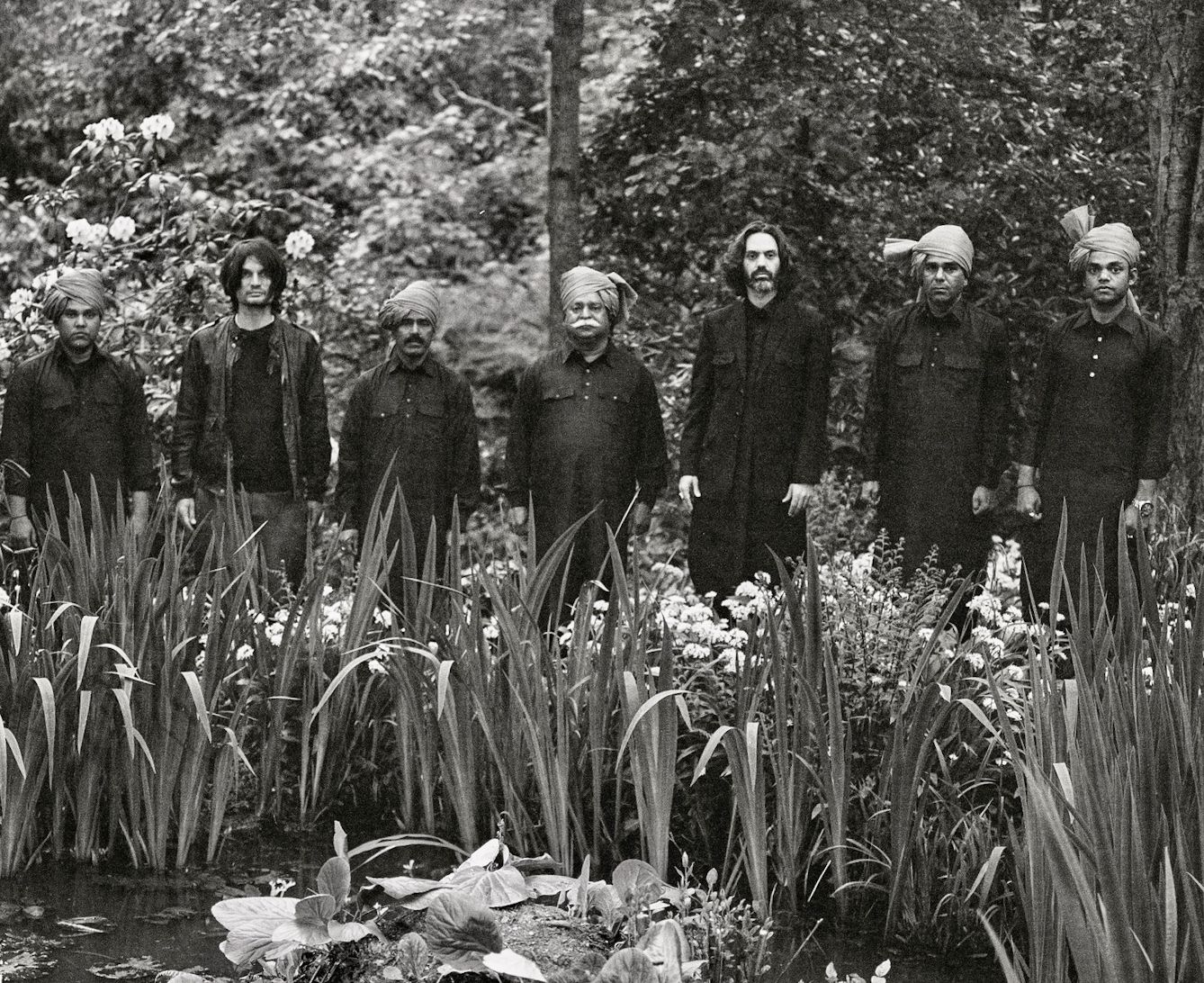
HangupsMusic.com – London, The landscape of contemporary experimental music is often defined by its ability to bridge disparate cultures and sonic traditions. In 2015, a project emerged that stood as a testament to this spirit of collaboration: Junun. Now, nearly a decade after that initial landmark recording, Radiohead’s multi-instrumentalist Jonny Greenwood, acclaimed Israeli composer Shye Ben Tzur, and the virtuosic Indian ensemble the Rajasthan Express have announced their highly anticipated reunion. Their new album, titled Ranjha, is scheduled for release on May 8 via the World Circuit label, marking a significant evolution in a partnership that has captivated listeners worldwide with its blend of Sufi devotional music, Hebrew poetry, and avant-garde Western textures.
To herald the announcement, the group has shared the title track, "Ranjha," accompanied by an expansive eight-minute music video. The single serves as a potent reminder of the group’s unique chemistry, offering a sprawling, meditative journey that showcases the intricate interplay between Greenwood’s atmospheric arrangements and Ben Tzur’s soulful vocal delivery. The video provides a visual window into the collaborative process, capturing the intensity and focus of the musicians as they navigate the complex rhythmic and melodic structures that have become their signature.
The origins of this collaboration date back to the mid-2010s, when Greenwood first encountered the work of Ben Tzur. Their initial meeting blossomed into the Junun project, which saw Greenwood travel to the heart of Rajasthan, India. Recording took place within the historic walls of the 15th-century Mehrangarh Fort in Jodhpur. That session was famously documented by filmmaker Paul Thomas Anderson, resulting in a film that highlighted the organic, often chaotic beauty of recording in a non-traditional space. The acoustics of the fort, combined with the raw energy of the Rajasthan Express—a group of musicians specializing in brass, percussion, and vocal traditions—created a sound that was both ancient and startlingly modern.
However, for their latest effort, Ranjha, the collective opted for a change of scenery that reflects a different creative philosophy. Rather than the open-air resonance of an Indian fortress, the group decamped to an Oxford studio. This location is particularly significant as it serves as the primary recording hub for The Smile, the trio consisting of Greenwood, his Radiohead bandmate Thom Yorke, and drummer Tom Skinner. Skinner’s involvement extends beyond the studio walls; he also contributes his percussion talents to Ranjha, further intertwining the worlds of contemporary British art-rock and traditional Middle Eastern and Indian music.
The move to a controlled studio environment was a deliberate choice. In a press statement accompanying the album announcement, Shye Ben Tzur articulated the shift in approach. He noted that the goal was to achieve a "clearer sound" and to utilize the specific technological features of a modern studio to push their creative boundaries. While the previous album captured the "spirit of the place" in Jodhpur, Ranjha appears to be an exercise in precision and focused experimentation. The controlled environment allowed the group to dissect their compositions with greater detail, layering instruments and textures in ways that might have been impossible in the echo-heavy chambers of Mehrangarh.
The personnel involved in Ranjha represent a fascinating intersection of musical pedigrees. Jonny Greenwood’s career has been defined by a refusal to stay static. From his groundbreaking work as Radiohead’s lead guitarist to his Oscar-nominated film scores for movies like There Will Be Blood and The Power of the Dog, Greenwood has consistently sought out new ways to manipulate sound. His interest in Indian music and Middle Eastern scales is not a superficial flirtation but a deep-seated exploration of different tuning systems and rhythmic cycles.
Shye Ben Tzur, meanwhile, occupies a unique space in world music. Born in Israel but having spent over a decade living in India, he has mastered the art of Qawwali—a form of Sufi devotional music—while maintaining his roots in Hebrew liturgy and poetry. His ability to compose in multiple languages and styles provides the spiritual and melodic backbone of the project. The Rajasthan Express brings the essential rhythmic drive, utilizing traditional instruments like the nagada, dholak, and harmonium to ground the music in a rich, centuries-old heritage.

The announcement of Ranjha also brings to light the personal and political contexts that often surround Greenwood’s work. The guitarist has long-standing ties to Israel through his marriage to artist Sharona Katan. His collaborative history in the region is extensive, including the 2023 album Jarak Qaribak, recorded with Israeli musician Dudu Tassa. That project focused on reimagining songs from across the Middle East, emphasizing a message of regional connectivity through art.
However, these connections have occasionally placed Greenwood at odds with the political stances of his long-time collaborators. In a 2023 interview with The Sunday Times, Thom Yorke expressed a firm position regarding the band’s presence in Israel, stating that Radiohead would not perform in the country as long as Benjamin Netanyahu remained prime minister. Greenwood, in the same interview, offered a contrasting perspective. He argued that cultural boycotts could potentially be counterproductive, suggesting that they might embolden hardline government stances by reinforcing a sense of international isolation. Greenwood’s view prioritizes artistic engagement as a means of maintaining dialogue, a philosophy that seems to underpin his continued work with musicians like Ben Tzur and Tassa.
This tension between art and politics is a recurring theme in the careers of high-profile musicians, yet for Greenwood and Ben Tzur, the music itself often serves as the ultimate statement. Ranjha promises to be an album that transcends political boundaries, focusing instead on the universal language of rhythm and melody. The tracklist for the upcoming release suggests a structured yet expansive listening experience:
01 Shiqwa
02 Marbolot
03 Ranjha
04 Shemesh
05 Shiqwa (Reprise)
06 Ishq-E-Majnun
07 Saqi
08 Marbolot (Reprise)
The inclusion of reprises for "Shiqwa" and "Marbolot" suggests a thematic cohesion, perhaps indicating that the album functions as a continuous suite of music rather than a collection of isolated songs. Titles like "Shemesh" (Hebrew for "Sun") and "Ishq-E-Majnun" (referencing the legendary Arabic and Persian love story of Layla and Majnun) highlight the multilingual and multicultural tapestry the group continues to weave.
For fans of Junun, the return of the Rajasthan Express is particularly exciting. Their contribution provides a "wall of sound" that is distinctly different from the electronic-heavy production often found in modern Western music. The interplay between the brass section and the intricate percussion patterns creates a sense of momentum that is both celebratory and deeply emotional. In the new studio setting, these elements are likely to be heard with a new level of clarity, allowing listeners to appreciate the nuance of each individual performer.
As the May 8 release date approaches, the anticipation for Ranjha continues to grow. It stands as a significant moment for World Circuit, a label renowned for bringing international sounds to a global audience, most notably through the Buena Vista Social Club and the works of Ali Farka Touré. By hosting this reunion, the label continues its tradition of fostering projects that challenge the "world music" label, instead presenting music that is contemporary, sophisticated, and deeply rooted in human connection.
In an era where digital production often homogenizes sound, the collaboration between Greenwood, Ben Tzur, and the Rajasthan Express remains a breath of fresh air. It is a project built on mutual respect, years of shared history, and a relentless desire to find beauty in the synthesis of different worlds. Whether recorded in a 15th-century fort or a high-tech studio in Oxford, the core of their music remains the same: a search for transcendence through sound. With Ranjha, that search continues, offering a new set of meditations for a world in need of harmony.