
 By admin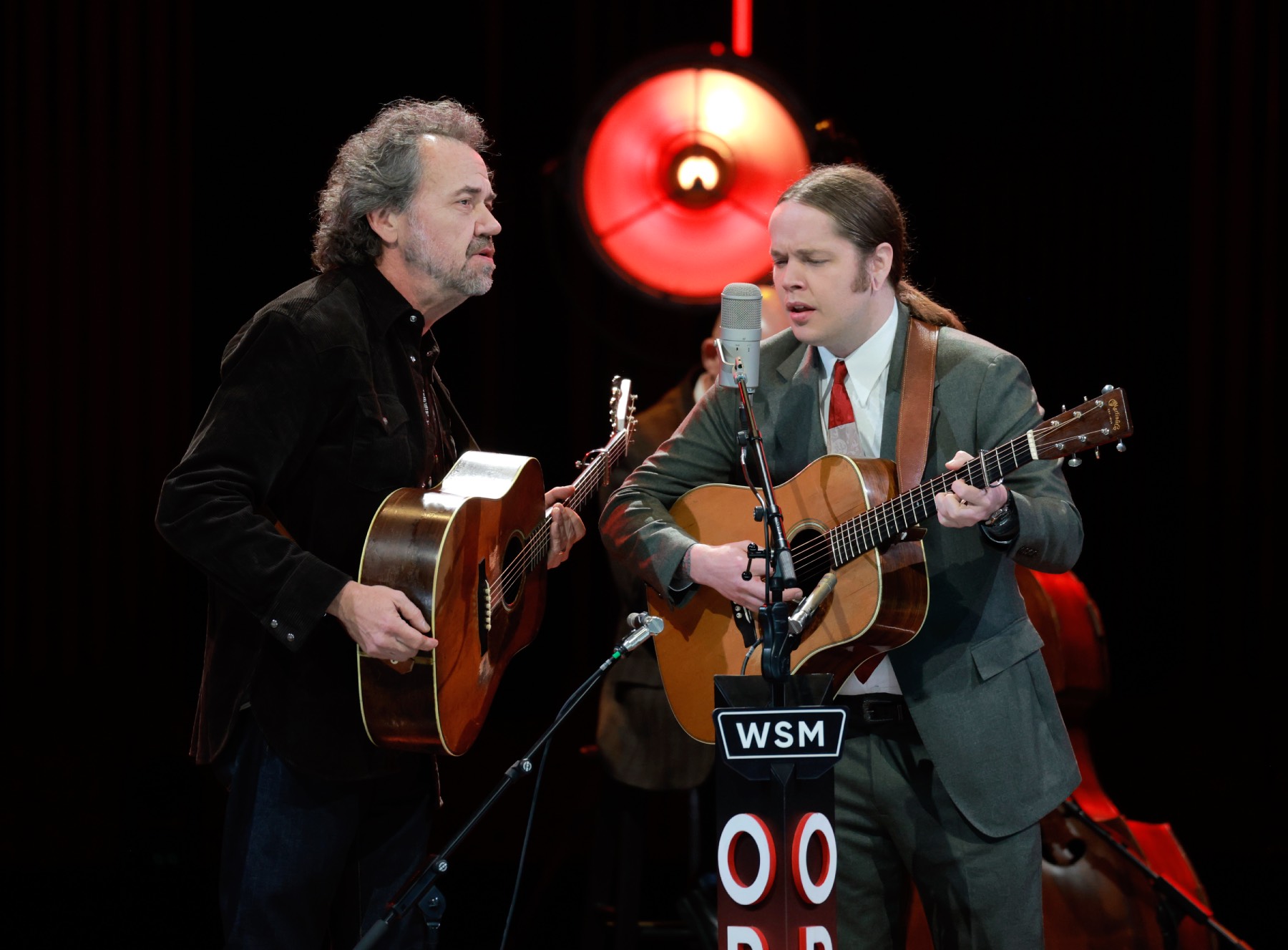
HangupsMusic.com – Nashville, The hallowed halls of the Grand Ole Opry recently resonated with a profound celebration, marking 25 years since the release of O Brother, Where Art Thou? – a soundtrack that didn’t just accompany a film, but ignited a seismic shift in American music. Far from the dusty roads of Depression-era Mississippi that inspired its cinematic counterpart, the iconic Nashville venue, nestled near the banks of the Cumberland River, hosted an unforgettable evening that served as both a tribute and a living testament to the project’s enduring power. A sold-out crowd gathered to witness a monumental gathering of roots music royalty, demonstrating that the album’s influence, a quarter-century on, continues to ripple across generations.
This was no ordinary Saturday night at the Opry. From the moment the live broadcast commenced, featuring the ethereal harmonies of Alison Krauss alongside the majestic Fairfield Four, it was clear this would be a deep dive into one of the most transformative cultural artifacts of the modern era. Born from the Coen Brothers’ whimsical yet poignant tale of three escaped convicts on a treasure hunt through the rural South, starring George Clooney, the O Brother, Where Art Thou? soundtrack is now widely credited with spearheading a dramatic resurgence of traditional American music, paving the way for the very genre now known as "Americana."
Opry announcer Mike Terry encapsulated the sentiment, introducing the 5,226th Saturday night performance by declaring the soundtrack, originally released on the recently re-launched Lost Highway label, had "sparked a renaissance of roots music, bringing bluegrass, gospel, blues, country, and folk all back into the spotlight." He continued, highlighting the Opry’s shared mission: "And like the Opry has done now for over 100 years, tonight we’re going to be honoring the music, the legacy, and the timeless sounds of the American South."
The soundtrack, meticulously produced by the visionary T Bone Burnett, achieved phenomenal success. Accompanying the Oscar-winning 2000 film, it sold over 8 million copies and famously spent an astonishing 683 weeks on the Billboard 200 chart, reaching the coveted Number One spot for multiple months. Its critical acclaim was equally robust, culminating in the 2002 Grammy Award for Album of the Year, and earning the 13th position on Rolling Stone‘s authoritative list of the 101 Greatest Soundtracks of All Time. Much of this groundbreaking success is rightfully attributed to Burnett’s unparalleled artistic direction.
Burnett, drawing from an almost encyclopedic knowledge of early American musical forms, curated a collection that felt both ancient and refreshingly new. He delved into the deep wellspring of the nation’s sonic heritage, unearthing songs of struggle, salvation, and everyday life that formed the bedrock of what would eventually evolve into country, rhythm & blues, and rock & roll. From the spiritual fervor of gospel hymns and African American spirituals to the rhythmic cadence of work songs, the storytelling of folk ballads, and the raw emotion of Appalachian soul, Burnett’s vision for the soundtrack was an unvarnished tapestry of the human experience – gritty, tragic, and profoundly beautiful, mirroring the very people whose stories it amplified.
The Grand Ole Opry House stage transformed into a sacred space where the artists, often gathering intimately around a single microphone, didn’t merely replicate the album; they breathed fresh life into its beloved melodies. Supported by an all-star backing band featuring the virtuosity of Stuart Duncan on fiddle, Mike Compton on mandolin, Jerry Douglas on dobro, and Dennis Crouch on bass, each performance felt like a masterclass. By the final curtain, it was evident that Burnett had once again orchestrated a masterpiece, this time in a live setting.
The evening unfolded with a dynamic array of performances. Old Crow Medicine Show ignited the crowd with an exuberant rendition of the upbeat "Big Rock Candy Mountain," painting vivid sonic pictures of a hobo’s utopian dreamland where hardship melts away. Sarah Jarosz then led the night’s first collective singalong with her bittersweet interpretation of "You Are My Sunshine," its familiar melody resonating deeply. The Whites followed with "Keep On the Sunny Side," delivering a performance that felt less like a simple reminder and more like a heartfelt, earnest plea for optimism in challenging times.
A truly transcendent moment arrived when the dozen voices of the Fisk Jubilee Singers joined Alison Krauss, elevating "Down to the River to Pray" into a swirling vortex of sound that earned one of many standing ovations. Later, Krauss was joined by Emmylou Harris and Molly Tuttle for an exquisite a cappella rendition of the evocative folk hymn "Didn’t Leave Nobody But the Baby," their interwoven voices creating a hauntingly beautiful tapestry.
Following a brief intermission, bluegrass phenom Billy Strings commanded the stage, ripping through the troubled narrative of "Wild Bill Jones," a vivid tale of frontier gunfights and profound regret. Strings then remained to join Dan Tyminski, the voice famously behind George Clooney’s character in the film’s musical standout, "Man of Constant Sorrow." Together, they delivered a spine-tingling, harmonically rich performance of "O Death," originally immortalized by the late Ralph Stanley. Tyminski then brought the audience to its feet with "Man of Constant Sorrow" itself. His signature gravel-and-velvet baritone infused the tribute to hard living with every bit of the "swampy" authenticity and impassioned delivery that made it an unlikely international hit.
During a post-show Q&A, Tyminski humorously reflected on his pivotal role. "I was the biggest afterthought of any part of this movie," he quipped. "George Clooney can sing. But because he said, ‘I’ll act and you sing,’ I got to pay off my house and put my kids in college and raise a family." His words underscored the unexpected, life-altering impact the soundtrack had on many involved.
Living legend Del McCoury captivated the audience with his impossibly high-lonesome vocal delivery, a hallmark of traditional bluegrass. The evening also featured a poignant return for two actors from the film, reprising their career-defining musical roles. Tim Blake Nelson, who portrayed the endearing Delmar O’Donnell on screen, charmed the audience with his affable, down-home charisma and a yodeling lead on "In the Jailhouse Now." Chris Thomas King stepped back into the persona of bluesman Tommy Johnson, delivering a slinky, raw, and deeply felt "Hard Time Killing Floor Blues." With a resonant voice steeped in the legacy of his family’s Louisiana juke joint, King expressed his awe at the soundtrack’s meteoric rise.
"T Bone was connected to something very special because these songs have been around forever, and I have been singing some of these songs for a long time," King shared during the Q&A. "But you don’t expect them to become arena material and to compete with Britney Spears like we did with the Down From the Mountain Tour. I was in awe."
While some debate the exact catalyst – a "chicken or egg" scenario regarding whether a roots revival was already simmering before O Brother‘s arrival – there is no denying the profound cultural ripple effect that followed. A new wave of traditionally influenced artists coalesced, solidifying into the distinct genre known as "Americana." Mainstream acts like Mumford & Sons achieved chart-topping success, while beloved icons such as John Prine and Guy Clark experienced a powerful resurgence in appreciation. Even artists from the soundtrack itself made significant commercial strides; Krauss collaborated with Robert Plant on the Grammy-winning Raising Sand, and Tyminski famously scored an EDM smash with the late DJ Avicii. Across the entire bluegrass landscape and beyond, concert attendance swelled, and opportunities for artists expanded exponentially.
Tyminski articulated this widespread impact succinctly: "We had a diverse crowd of people that we just weren’t used to seeing, and everyone with the same question: ‘Where can we find more music like this?’ This music owes a huge debt to O Brother, Where Art Thou?" The fervent demand for tickets to the sold-out Opry show, with prices soaring to nearly $500 on the secondary market, offered perhaps the most tangible evidence of the soundtrack’s enduring, fervent appeal.
At the show’s conclusion, T Bone Burnett finally appeared onstage, met by a thunderous chorus of cheers. He underscored the film’s core message: it was a narrative woven from the rich tapestry of American folk music, a story that resonates universally. "I hear bad things about our country, but if you want to know what’s good about the United States, listen to our music, because the music in the United States is the best music in the world," Burnett declared. "People have come from all over the world in different languages, different religions, different politics, different all of it. But the musicians have all listened to each other and we’ve made harmony."
The Opry program culminated in precisely that spirit of harmony, as every performer joined voices in the uplifting refrain of "I’ll Fly Away," with the entire audience clapping along, on their feet. In that shared, joyful moment, any lingering echoes of "constant sorrow" seemed to dissipate, replaced by the profound sense of unity and enduring beauty that defines America’s musical soul.