
 By admin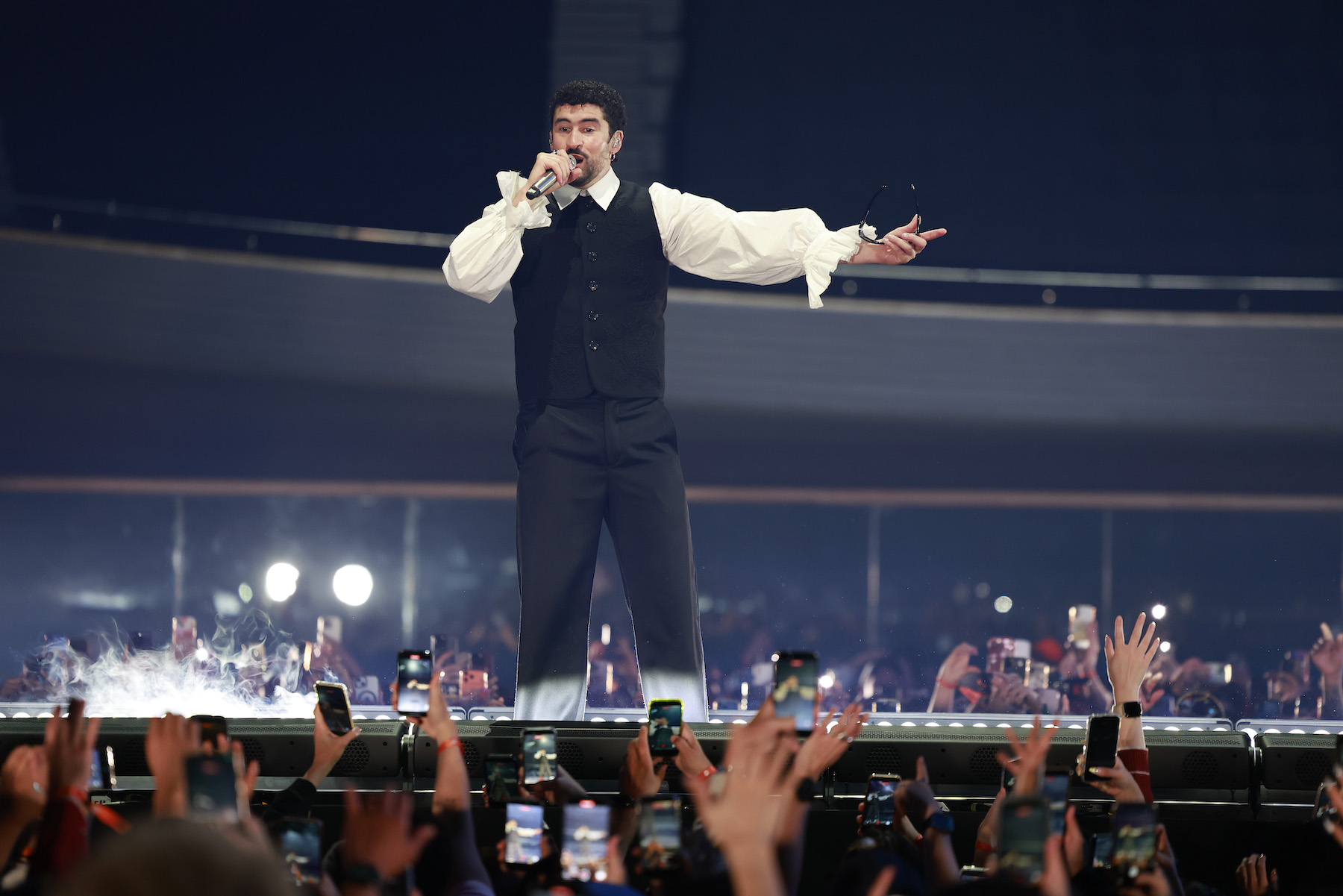
HangupsMusic.com – Chiba, Japan – In a testament to his unparalleled global ascendancy, Benito Antonio Martínez Ocasio, known universally as Bad Bunny, recently descended upon Japan for the fourth exclusive live installment of Spotify’s prestigious ‘Billions Club.’ This momentous event underscored the Puerto Rican superstar’s extraordinary reach, demonstrating how his infectious blend of reggaeton, Latin trap, and other genres has transcended linguistic and geographical barriers to captivate an international audience. The intimate gathering, held over 8,300 miles from his historic 31-show residency in San Juan, Puerto Rico, served as a vibrant celebration of his streaming milestones and the deep connections he has forged with fans worldwide.
The ‘Billions Club’ is Spotify’s exclusive recognition of artists whose songs have individually surpassed one billion streams on the platform. For an artist to have multiple tracks achieve this benchmark is a remarkable feat; for Bad Bunny to boast a staggering 29 songs with over a billion streams is nothing short of revolutionary, especially for an artist predominantly performing in Spanish. This achievement solidifies his position as a true global icon, dismantling preconceptions about language as a barrier to mainstream success. During the event, Bad Bunny articulated his philosophy regarding these impressive figures, emphasizing that for him, the immense streaming numbers were not mere statistics but rather a profound representation of the countless individuals with whom he has connected through his music over the years. This sentiment resonated deeply with the diverse crowd, highlighting the personal touch he brings to his monumental success.
The chosen venue, Tipstar Dome Chiba, an hour east of Tokyo’s bustling Shibuya crossing, offered a unique and intimate setting for such a global phenomenon. Far removed from the colossal stadiums he typically fills, this invite-only showcase hosted fewer than 2,000 of his most devoted fans, alongside a select group of VIPs. Among the distinguished guests were K-pop sensation Lisa from Blackpink, who was seen enthusiastically dancing to hits like "Dákiti," and contemporary Japanese artist Takashi Murakami, whose animated presence throughout the performance further illuminated the widespread cultural impact of Bad Bunny’s artistry. The curated intimacy of the event allowed for a more personal experience, fostering a powerful bond between the artist and his dedicated followers.
As the lights dimmed and the distinctive instrumental for "Eao" pulsed through the speakers, a palpable energy erupted across the venue’s floor. The stage itself was transformed into a visually stunning spectacle, moving away from the familiar "La Casita"—a traditional Puerto Rican house motif often featured in his recent tours. Instead, two towering cherry blossom trees, rendered in a vibrant pink, flanked the main stage, creating a breathtaking fusion of Puerto Rican vibrancy and Japanese aesthetic. The symbolism of the cherry blossoms, deeply ingrained in Japanese culture, added a layer of profound respect and cultural dialogue to the performance, signifying beauty, transience, and new beginnings. This thoughtful stage design underscored Bad Bunny’s commitment to acknowledging and embracing the local culture while retaining his distinctive artistic identity.
For a blistering 90 minutes, Bad Bunny delivered a relentless barrage of his most beloved tracks, each one igniting fresh waves of euphoria. The crowd, a colorful tapestry of cultures, mirrored his energy. Traditional Puerto Rican pavas (woven straw hats) dotted the audience, alongside numerous Puerto Rican flags draped proudly over shoulders, creating a miniature San Juan within the Japanese dome. Spontaneous dance circles erupted in every corner of the arena, a testament to the infectious rhythm and unifying power of his music. During a particularly electrifying rendition of "Baile Inolvidable," a standout salsa track from his album Debí Tirar Más Fotos, a man in a striking aquamarine jumpsuit and a woman in a sleek black suit spontaneously began to dance together, executing graceful twirls before sharing a warm embrace and rejoining their respective groups. This impromptu moment of connection beautifully encapsulated the communal and boundary-breaking spirit that defines Bad Bunny’s performances.
Throughout the show, Benito engaged with his audience, playfully teasing them with questions like "quieres más?" (Do you want more?) and commendations for their unwavering energy. The crowd’s excitement reached a fever pitch when the opening chords of his mega-hit "Tití Me Preguntó" began, only to be abruptly cut short, prompting a collective roar of anticipation. When the song finally launched into full swing, purple lights enveloped the cherry blossom trees, while a dynamic interplay of orange and blue lights danced over the fervent crowd, creating a mesmerizing visual backdrop to the sonic landscape. Bad Bunny, clad initially in a stylish white shirt with wide cuffs reminiscent of a poet’s blouse, a vest, and matching pants, moved with fluid grace across the stage’s short catwalk. Later, he swapped his vest for a jacket emblazoned with the Japanese characters for "Tokyo" (東京) on the back, a clear nod of appreciation to his host city and a further bridging of cultural worlds.
Bad Bunny’s profound connection to salsa music, particularly evident in Debí Tirar Más Fotos, has been well-documented. He previously shared with Rolling Stone how "Baile Inolvidable" had been a long-held dream, envisioning it as a salsa track even during the production of his 2022 album, Un Verano Sin Ti. In a truly groundbreaking moment at the Tipstar Dome Chiba, Bad Bunny further showcased this influence by performing his 2018 hit, "MIA," originally a collaboration with Drake, with an unprecedented salsa twist. This innovative rendition marked a historic first, demonstrating his artistic fearlessness and his continued evolution while honoring his musical roots.
Just weeks prior, Bad Bunny had commanded an even larger global stage, performing his hits at Super Bowl LX across the Pacific. Yet, his messages delivered in Tokyo echoed the sentiments of unity, togetherness, and self-love he had shared in Santa Clara, California. Addressing the audience with heartfelt sincerity, Benito urged them to shun negativity and disregard the opinions of those who do not truly know them, encouraging them to embrace their authentic selves. His words served as a powerful reminder of his role not just as an entertainer, but as a voice for self-acceptance and positivity in a world often fraught with criticism.
The night culminated with a beautiful and poignant rendition of "DtMF," a powerful closing statement to an evening that celebrated an artist’s extraordinary global reach—a journey that symbolically spanned from one Caribbean island to another in the North Pacific. The gravity of the moment was palpable, even for Bad Bunny himself, who frequently paused to absorb the electrifying energy of the crowd, the significance of the evening, and the immense accomplishments that have propelled 29 of his songs past the billion-stream mark. He passionately declared that the show was a celebration of the union between Puerto Rico and Tokyo, and indeed, all the Latinos present, before exhorting the crowd to "Baila sin miedo, Tokio" (Dance without fear, Tokyo).
As fans departed the Tipstar Dome Chiba, many paused to admire the physical manifestations of Bad Bunny’s success: dozens of Spotify billion-stream plaques proudly displayed. They captured countless photos with loved ones, each snapshot a testament to the indelible memories made and the sheer joy experienced. The evening was more than just a concert; it was a vibrant cross-cultural exchange, a testament to music’s power to connect people across vast distances, and a powerful affirmation of Bad Bunny’s enduring legacy as a truly global phenomenon.