
 By Azzam Bilal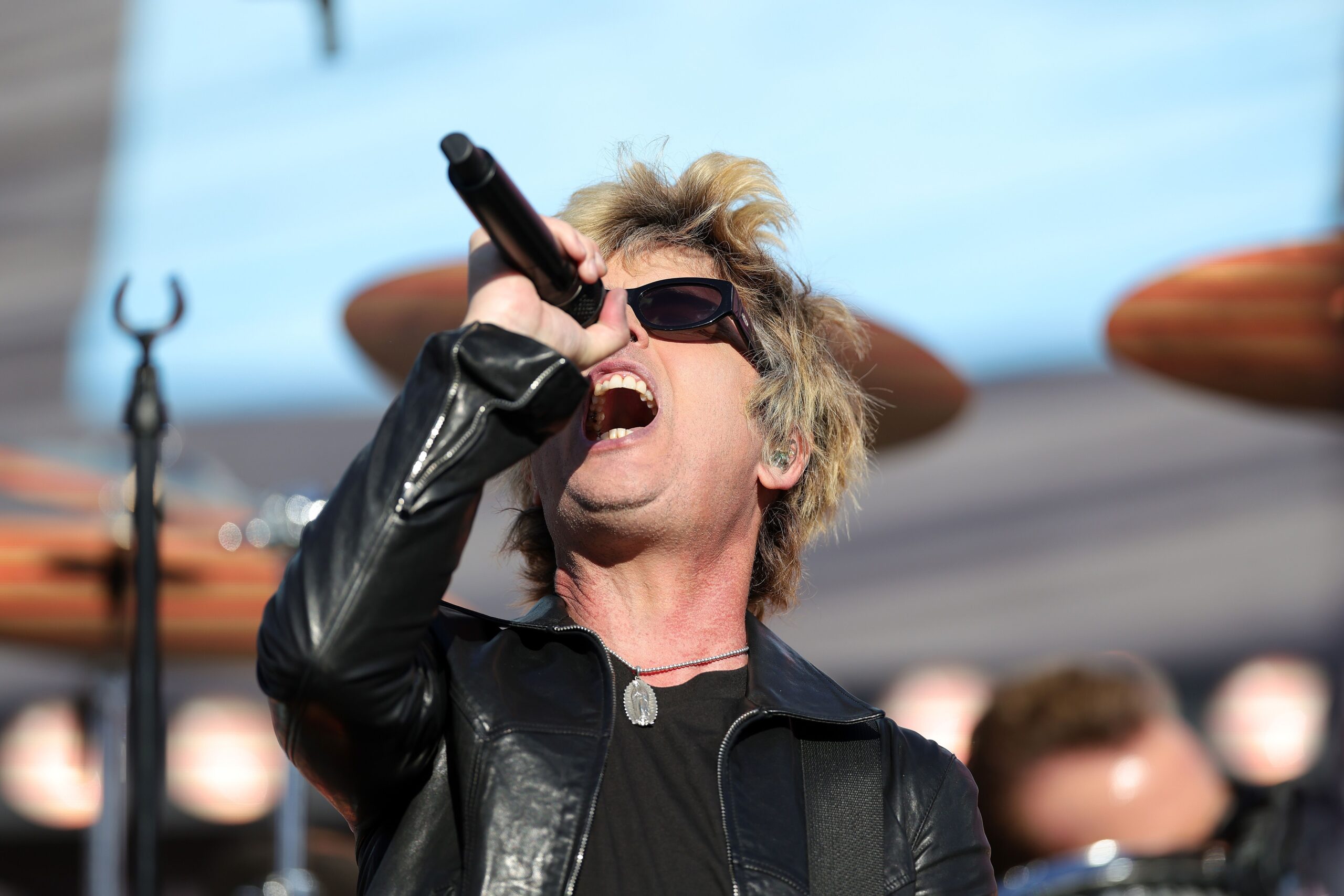
HangupsMusic.com – Santa Clara, The electric atmosphere of Super Bowl LX reached a fever pitch early on February 8, as the legendary punk rock trio Green Day took to the stage at Levi’s Stadium. For the band, composed of Billie Joe Armstrong, Mike Dirnt, and Tré Cool, the performance was more than just a high-profile gig; it was a triumphant homecoming. Hailing from the East Bay, the Rock and Roll Hall of Famers were selected to anchor the pregame festivities in Santa Clara, bringing a gritty, high-energy counterpoint to the polished spectacle of the NFL’s championship Sunday. The set served as both a celebration of their enduring career and a focused tribute to their 2004 magnum opus, American Idiot, which continues to resonate as a cultural touchstone two decades after its initial release.
The transition from sports ceremony to rock concert was handled with a touch of cinematic nostalgia. Before the band even struck a chord, the NFL leaned into the sentimental side of the Green Day catalog. A string quartet took center stage to perform a haunting, instrumental rendition of "Good Riddance (Time of Your Life)." As the familiar, bittersweet melody wafted through the stadium, a procession of football royalty made their way onto the field. The crowd erupted as icons such as Tom Brady, Peyton Manning, Eli Manning, and Jalen Hurts—all former MVPs who have defined different eras of the sport—walked out to acknowledge the fans. The juxtaposition of the orchestral strings with the presence of these athletic titans created a moment of reflection before the sonic assault began.
As the last notes of the quartet faded, the cameras swung toward a secondary stage where the members of Green Day stood ready. Clad in their signature aesthetic—a sharp, all-black ensemble that has become their uniform over the last twenty years—the band wasted no time. They launched immediately into "Holiday," the propulsive, anti-war anthem that served as the third single from American Idiot. The stadium floor was a sea of movement, with fans waving flags and hoisting foam hands shaped like the iconic "grenade heart" artwork from the album’s cover. The energy was palpable, with Billie Joe Armstrong commanding the massive space with the ease of a seasoned stadium veteran, his voice cutting through the crisp California air.
The band’s lineup was bolstered by their longtime collaborators, ensuring the sound was as lush and powerful as the studio recordings. Most notably, Jason White, the guitarist who has been an integral part of Green Day’s touring and recording life for decades—and a fellow member of the punk project Pinhead Gunpowder—joined the trio. His presence allowed Armstrong to focus on his role as the ultimate showman, roaming the stage and engaging the thousands in attendance. The setlist moved seamlessly into "Boulevard of Broken Dreams," a mid-tempo track that remains one of the most successful rock songs of the 21st century. The crowd took over the vocal duties for the "ah-ah" refrains, creating a massive, stadium-wide singalong that highlighted the band’s cross-generational appeal.
However, the climax of the set was undoubtedly the title track of their 2004 rock opera, "American Idiot." Given the band’s reputation for outspoken political commentary, all eyes—and ears—were on Armstrong. In recent years, the frontman has frequently altered the lyrics of the song during live performances to reflect the modern political landscape. Most notably, he has replaced the line "I’m not a part of a redneck agenda" with "I’m not a part of the MAGA agenda," a move that has drawn both praise and criticism from different segments of the public.
For the Super Bowl LX broadcast, however, Green Day opted for a more streamlined, less confrontational version of the hit. Armstrong skipped the second verse entirely, bypassing the controversial "MAGA" reference, and also omitted the "faux-representative" spoken-word introduction that usually precedes "Holiday." This decision suggested a strategic choice to focus on the music and the celebratory nature of the event, perhaps in deference to the broad, non-partisan audience that tunes in for the Super Bowl. While some fans might have expected a moment of televised rebellion, the band instead delivered a polished, high-octane performance that focused on the sheer power of their discography.
Despite the perceived restraint during the televised game, Armstrong had made his feelings quite clear just forty-eight hours prior. During a high-profile pre-Super Bowl party sponsored by Spotify, the singer did not hold back. In the middle of an intimate but raucous set, Armstrong took a moment to address the political climate, specifically targeting Immigration and Customs Enforcement (ICE). He urged agents to leave the agency, suggesting that the political figures they serve would eventually abandon them. These comments served as a reminder that while the band may navigate the constraints of a massive corporate broadcast like the NFL pregame show, their underlying punk-rock ethos remains unchanged.
The Green Day performance was the centerpiece of an expansive musical program for Super Bowl LX. The pregame lineup reflected a diverse array of genres and styles, showcasing the NFL’s effort to appeal to a wide demographic. Charlie Puth, known for his impeccable pitch and pop sensibilities, was tasked with the daunting responsibility of performing "The Star-Spangled Banner." Puth delivered a technically proficient and emotionally resonant version of the National Anthem. Meanwhile, the folk-rock powerhouse Brandi Carlile offered a soulful, acoustic rendition of "America the Beautiful," her signature raspy vocals bringing a grounded, Americana feel to the stadium. Adding to the vocal prestige of the afternoon was Coco Jones, who performed "Lift Every Voice and Sing," often referred to as the Black National Anthem, with a powerful grace that earned a standing ovation from the early arrivals.
The musical narrative of the evening continued to evolve as the game progressed, eventually leading to the highly anticipated halftime show featuring Bad Bunny. The inclusion of the Puerto Rican superstar represented the shifting tide of the global music industry, marking a contrast with the classic rock and punk roots displayed by Green Day earlier in the day. Together, these performances painted a picture of a modern Super Bowl: a massive cultural intersection where local legends, pop virtuosos, and global icons share the same stage.
For Green Day, the Super Bowl LX appearance adds another significant chapter to their storied history. It is a testament to the longevity of American Idiot that the album’s themes and melodies can still anchor a major sporting event twenty years after its release. Originally conceived as a response to the socio-political climate of the early 2000s, the album transformed Green Day from a fading pop-punk act into global superstars and Broadway-adjacent auteurs. Seeing them perform those songs in Santa Clara, just miles from where they got their start in the underground clubs of Berkeley and Oakland, felt like a full-circle moment for the trio.
As the sun began to set over Levi’s Stadium and the focus shifted from the stage to the gridiron, the impact of Green Day’s set remained. They proved that even in the highly controlled environment of a professional sports broadcast, the raw energy of three chords and a drum kit can still captivate a crowd of millions. Whether they were playing the role of the hometown heroes or the seasoned rock veterans, Green Day reminded the world why they remain one of the most vital acts in the history of the genre. Their ability to balance their rebellious roots with the demands of a massive global platform is a skill few bands possess, and their performance at Super Bowl LX was a masterclass in stadium rock. For those looking to dive deeper into the band’s extensive history, their classic 1994 hit "Basket Case" was recently honored by critics, landing at No. 129 on the definitive list of the 250 best songs of the 1990s, further cementing their place in the pantheon of music history.