 By admin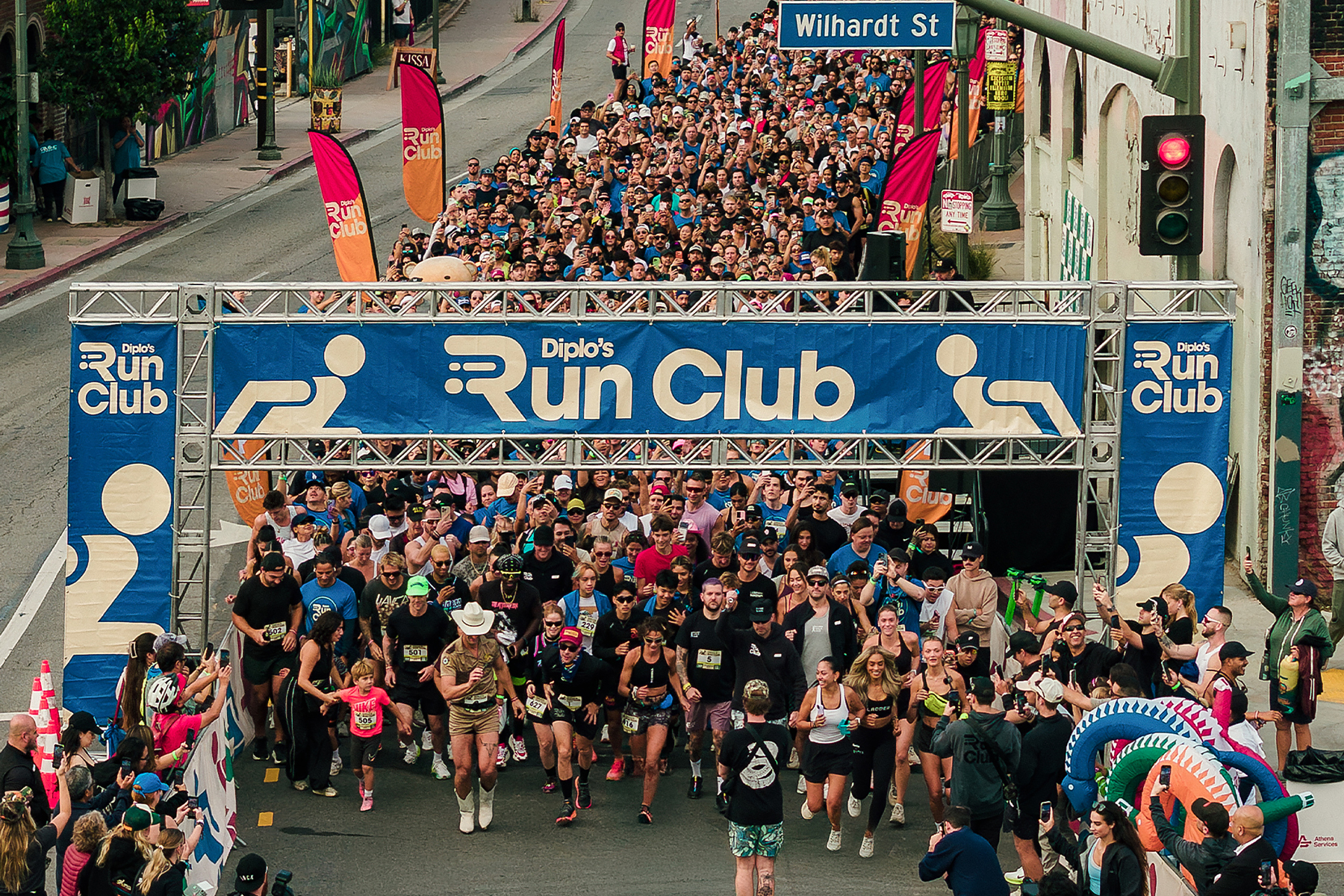
HangupsMusic.com – What began as a personal journey for mental and physical well-being has blossomed into a groundbreaking phenomenon across the music industry. A growing cadre of high-profile artists, from hip-hop trailblazers to rock legends and electronic music maestros, are transforming their personal fitness routines into vibrant, community-driven run clubs. These initiatives are not merely celebrity endorsements of a healthy lifestyle; they represent an authentic connection with fans, a new avenue for artistic expression, and an innovative business model blending music, movement, and philanthropy. The trend signals a powerful shift, demonstrating how personal transformation can ignite widespread inspiration, forging unique bonds between artists and their audiences beyond the traditional concert stage.
For Grammy-nominated artist Gunna, the genesis of his running advocacy stems from a deeply personal crucible. Three years prior, emerging from a challenging seven-month incarceration after pleading guilty to a racketeering conspiracy charge, his physical capacity was limited. He recalls struggling to complete even a half-mile run without needing to pause for breath. During this period, his primary focus was on mental restoration, actively disengaging from the public scrutiny and personal challenges that had enveloped his life. Yet, those initial, arduous half-miles proved pivotal. The consistent effort gradually fostered a profound appreciation for running, a passion that, he notes, yielded tangible benefits beyond physical stamina. "The results became undeniable," he reflects. "I felt an improvement in my overall well-being, my cognitive clarity sharpened, and even my professional trajectory seemed to gain momentum."
This personal renaissance culminated in the autumn of 2025 with the establishment of Gunna’s Wunna Run Club. This traveling 5K series quickly gained traction, hosting events in nine diverse cities, including major hubs like New York and Toronto, and extending its reach to Johannesburg, South Africa, where thousands enthusiastically joined the rapper for a collective run in early January. Gunna articulates a philosophy that transcends typical fan engagement: "My supporters aren’t just engaging with my music; they’re connecting with my life’s journey. It felt imperative to impart this newfound wisdom, this personal breakthrough, to them. They deserve this insight."
While many musicians naturally possess the endurance cultivated by long hours in the studio or demanding tour schedules, Gunna is at the forefront of a movement that elevates personal fitness into a public platform. He’s joined by several other influential figures who have leveraged their commitment to running into organized run clubs, each with a unique flair and mission.
Travis Barker, the iconic drummer for blink-182, initiated his "Run Travis Run" series in late 2025, orchestrating 5K events across locales such as Chicago, Las Vegas, Los Angeles, and Palm Desert, California. For Barker, running is more than just exercise; it’s a foundational pillar of his sobriety, a journey he embarked upon in 2008. He describes running as an accessible, self-sufficient activity: "Lacking a background in traditional athletics, I sought an activity I could pursue independently. No specialized gear, no excuses — just pure, unadulterated movement." Today, Barker showcases remarkable endurance, frequently completing a 5K in a blistering 19 minutes, and admits to the exhilarating pre-race jitters that often disturb his sleep. "It’s profoundly therapeutic," Barker affirms, expressing a spiritual connection to the act: "It’s as if running itself is a divine gift."
Meanwhile, electronic music titan Diplo, whose "Diplo’s Run Club" launched in the fall of 2024, has already seen staggering success, selling over 100,000 tickets across ten events. His recent "run-and-raves" in Miami and Phoenix in mid-January captivated thousands. Diplo’s affinity for running dates back to his high school wrestling days in Florida. He found it not only boosted his mood but perfectly complemented his globe-trotting lifestyle as a superstar DJ and producer. "No matter the city, no matter where I find myself, there’s always a stretch of road or trail to run," he explains. "I’ve pounded pavements in Guatemala and even trekked through Antarctica. You don’t even truly require shoes." Diplo champions running as a daily antidote to mental health challenges: "It’s the one constant you can rely on to mitigate anxiety and depression, even incrementally. In a world filled with uncontrollable variables, the state of your own body remains largely within your command."
The high-energy spectacle of Diplo’s events is palpable. At precisely 9 AM on a recent sunny Saturday in Phoenix, Diplo led a surging wave of approximately 10,000 enthusiastic participants, many of whom had traveled from distant cities like Seattle and Denver, while others simply lived nearby. Twenty-one minutes later, Diplo crossed the finish line, only to be found on stage two hours later, spinning an electrifying EDM set for a capacity crowd. His performance even included a spontaneous gender reveal for an audience member, exclaiming "It’s a boy!" before dropping popular tracks like Disco Lines and Tinashe’s "No Broke Boys."

Country-rap sensation Jelly Roll also contributes to this burgeoning movement with his "Losers Run Club," primarily an online collective. Its official mission statement emphasizes supporting "those traditionally marginalized within the running community, fostering mutual accountability with the ultimate goal of life transformation through diligent effort and physical activity." Participants undoubtedly draw inspiration from Jelly Roll’s own well-documented and remarkable 275-pound weight loss journey, showcasing a powerful example of self-improvement.
These artist-led run clubs are more than just fitness events; they are multifaceted platforms merging artistic expression with commercial enterprise. Travis Barker envisions his events as "mini-music festivals combined with a 5K," often featuring local acts performing near the finish line or coinciding with his own concert dates. Gunna’s Wunna Run Club stages its runs in the mornings, setting the stage for his evening performances. Diplo’s run-and-raves, featuring a rotating lineup of opening DJs, offer a unique atmosphere. "They possess a euphoria distinct from a conventional festival, where crowds are often densely packed and attendees might be over-indulging," Diplo jests, adding that dedicated ravers often exhibit impressive fitness levels due to their constant dancing.
Despite the positive vibes, the operational realities are complex. Securing street closures for race routes involves navigating intricate bureaucratic and political processes, and the profit margins for such large-scale events can be surprisingly thin. So, what truly motivates these artists to embark on such ambitious ventures?
Echoing Barker and Diplo, Gunna consistently highlights the primary objective of Wunna Run Club: to disseminate a practice that has profoundly improved his life to his fan base. "It was crucial to share this knowledge, to cultivate this sense of community," he asserts. "As humans, we constantly contend with health challenges, and I see this as offering them a foundational toolkit for wellness." He recounts a poignant instance where a fan shared before-and-after photos illustrating her 100-pound weight loss, attributing her motivation to his club. "That moment affirmed I was making a meaningful difference," Gunna states.
Similarly, Barker stresses that Run Travis Run is designed to be inclusive, not intimidating. "The intention is never to discourage anyone or imply they must be a superstar athlete to participate," he explains. "Many attendees are attempting their first 5K walk or run." Diplo reinforces this sentiment, often circling back after completing his race to offer high-fives and encouragement to those still on the course. "Their decision to try, and then to achieve it, represents a significant personal victory for those individuals," he observes.
Diplo’s agent at Wasserman Music, Sam Hunt, points out that the run club format also effectively introduces dance music to demographics who might not frequent traditional clubs or who have outgrown the late-night scene. "Clubbing is largely a pursuit for the younger generation," Hunt remarks. "Experiencing Miami’s Space nightclub at three in the morning confirms that. Providing an environment where you can enjoy drinks, dance, socialize with friends – but at nine or ten in the morning, with a built-in fitness element – unlocks a world of possibilities for thousands." These events often attract a dual audience of dedicated runners and music enthusiasts, expanding each artist’s reach. Diplo is even developing new music specifically tailored for running, viewing his run club as "an exceptional platform for album releases."
The production of Diplo’s Run Club events is managed independently by his team, including Hunt and co-manager Renee Brodeur, rather than traditional concert promoters like AEG or Live Nation. They partner with Oakland, California-based run producer Mascot Sports, experts in logistics like road closures and staffing, a company also collaborating with Run Travis Run and Wunna Run Club. Barker candidly shares his initial underestimation of the logistical complexities: "Initially, I imagined I could simply tweet or post on Instagram and people would flock. I soon learned about the myriad liabilities, insurance requirements, and critical road closures necessary for events involving substantial crowds."
Diplo’s events, which host between 10,000 and 15,000 participants, present a challenging profit-and-loss scenario, as Hunt explains. "Renting a park space, securing it with fencing, arranging power, staging, restrooms, and vendors – the cumulative cost often outweighs potential revenue." To mitigate this, his team devised a clever cost-saving strategy: sharing event venues, often city parks with picturesque backdrops, with another event scheduled for the preceding or following day. For an October run club event in Los Angeles, they coordinated with Goldenvoice, who were hosting electronic producer Mau P at Los Angeles State Historic Park the night before. "Typically, Goldenvoice would dismantle their setup by midnight," Hunt elaborates. "We struck a deal for them to maintain everything until 1 PM the next day, allowing us to utilize the infrastructure for our morning event before they took it down." In Phoenix, Mascot Sports demonstrated impressive efficiency, restoring traffic flow on the run route almost immediately after the last participant crossed the finish line.

While direct profitability can be elusive—Barker admits his run club events often incur losses—these ventures unlock unique commercial opportunities. "The ‘runner’s high’ is undeniably real," Hunt observes. "You engage a highly energized, enthusiastic audience. They consume a significant amount of food and beverages, and they buy a lot of merchandise." At the inaugural run club in San Francisco’s Golden Gate Park in September 2024, the primary challenge was understaffed bars. "Even though the post-race event is only about two hours long, we generated as much food and beverage revenue as a typical five- or six-hour event," Hunt reports.
Sponsorships also play a crucial role in offsetting costs while simultaneously exposing artists to new demographics and vice versa. "There’s substantial demand from sponsors and brands eager to participate," Hunt notes, "particularly from health and wellness companies interested in reaching these active audiences." Wunna Run Club participants, for instance, receive products from Under Armour, Flerish hydration drinks, PATH water, the STRAVA running app (where both Diplo and Gunna log their runs), and Cymbiotika supplements. At Diplo’s events, Hunt says, "the queues to interact with sponsor booths are just as long as the lines at the bar."
Diplo’s integration into the running community has also yielded significant benefits. He now serves as an ambassador for Whoop, a biometric monitoring device, even appearing in a Whoop campaign alongside soccer icon Cristiano Ronaldo. "Such an opportunity would likely not have materialized without the platform of these run clubs," co-manager Brodeur comments. For Diplo, the long-term vision extends beyond immediate brand partnerships to building a scalable event model that could eventually "operate without my constant presence. I don’t necessarily need to be at every run club." (He has, to date, personally participated in and performed at every event.)
Each of these run clubs is also deeply committed to charitable endeavors. A portion of the participation fees – Wunna Run Club charges $75 per person, Run Travis Run starts at $85, and Diplo’s Run Club begins at $100, with higher tiers offering perks like running alongside the artists or VIP sections with massages and ice baths – directly supports various causes. Diplo’s Run Club dedicates a portion of each ticket sale to Good Sports, a nonprofit dedicated to ensuring equitable access to youth sports, with each event benefiting local youth sports projects. Gunna and his team allocate funds to Gunna’s Great Giveaway, supporting communities in his hometown of South Fulton, Georgia. Funds raised through Run Travis Run benefit Community Organized Relief Effort (CORE), which aids communities facing crises worldwide.
The future for these artist-led fitness movements appears bright and dynamic. Gunna has expressed a significant aspiration: to host his own full marathon, an event he anticipates launching in September. Travis Barker’s team is preparing to announce the next series of Run Travis Run 5Ks in the coming weeks. Diplo and his management are actively working to expand his run clubs into new territories, with Chicago, Denver, Toronto, and Mexico City on the near-term horizon, and Europe envisioned for longer-term expansion. Diplo even playfully fantasizes about a collaborative race featuring himself, Barker, Gunna, and Jelly Roll, with a substantial $100,000 prize designated for the winner’s chosen charity.
Regardless of whether such an all-star race materializes, the profound positive impact of these initiatives is already undeniable. Beyond the measurable physiological benefits like enhanced heart rate variability, these artists are significantly enriching their legacies. Diplo eloquently sums up the sentiment: "I desired to create something that would evoke pride from a broad public perspective. I’ve genuinely never received so many expressions of gratitude for initiating a project." These innovative run clubs are proving that the beat goes on, not just in the studio, but out on the open road, fostering health, connection, and goodwill one stride at a time.