
 By admin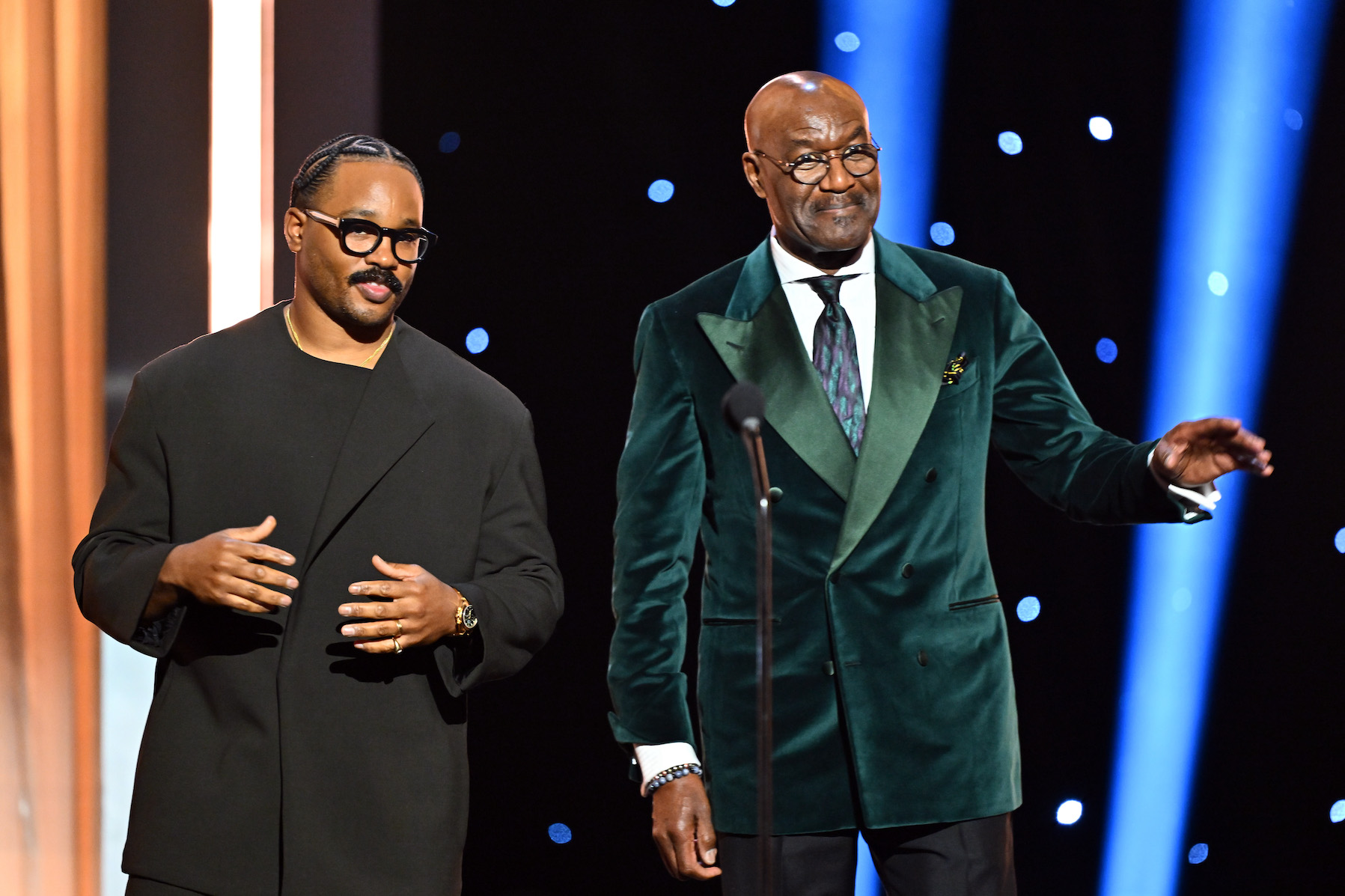
HangupsMusic.com – Los Angeles, The esteemed British Academy Film Awards (BAFTAs), a hallmark event in the global cinematic calendar, found itself embroiled in an unforeseen controversy recently, overshadowing the usual glitz and celebration of artistic achievement. What began as a routine awards presentation by acclaimed actor Delroy Lindo and his Sinners co-star Michael B. Jordan swiftly morphed into a moment of profound discomfort, broadcast live to millions. The incident, involving an involuntary utterance of a racial slur during the ceremony, quickly ignited a firestorm of discussion across media platforms and social discourse. Days later, at the venerable NAACP Image Awards, Lindo, accompanied by Sinners director Ryan Coogler, offered his first comprehensive public statement on the matter, transforming a potentially divisive event into a powerful testament to community solidarity and resilience. His remarks, imbued with a spirit of grace and an unwavering focus on unity, resonated deeply within the room, demonstrating how collective support can transmute negativity into a catalyst for positive change.
The incident unfolded during the 2026 BAFTAs, an evening typically dedicated to recognizing cinematic excellence. Delroy Lindo, a veteran actor known for his compelling performances, and Michael B. Jordan, a prominent figure in contemporary cinema, were on stage, poised to present an award. Their presence represented a significant moment for Black artistry on such a prestigious international platform. However, the atmosphere shifted dramatically when John Davidson, a vocal advocate for Tourette’s syndrome awareness and the subject of the film I Swear, experienced an involuntary outburst. Davidson, present at the ceremony, unintentionally hurled the N-word, a deeply offensive racial epithet, in the direction of the stage where Lindo and Jordan stood. The unexpected and jarring nature of the outburst sent shockwaves through the auditorium, creating an palpable tension that was exacerbated by the fact that the BBC, the event’s broadcaster, failed to censor the moment, allowing the offensive language to reach a vast global audience.
Tourette’s syndrome, a neurological disorder characterized by involuntary, repetitive movements and vocalizations called tics, often manifests in complex and unpredictable ways. For some individuals, these tics can include coprolalia, the involuntary utterance of obscene or socially inappropriate words or phrases. Davidson, whose life and struggles with Tourette’s are documented in I Swear, has dedicated himself to raising public understanding of the condition. His involuntary tic, while a symptom of his disorder, nonetheless inflicted immediate and profound distress upon those who heard it, particularly Lindo and Jordan, and indeed, anyone for whom the word carries its immense historical weight of oppression and dehumanization. The BBC’s subsequent admission of error for not censoring the broadcast highlighted a critical lapse in their editorial judgment, prompting widespread criticism regarding their responsibility to protect viewers from harmful content, especially during a live broadcast of such magnitude.
In the immediate aftermath, both the BBC and John Davidson issued public apologies. Davidson’s statement, released shortly after the BAFTAs, conveyed his deep mortification and distress. He clarified that his tics are entirely involuntary and carry no intentional meaning, expressing profound regret if his actions caused offense or distress. He further disclosed that he had chosen to leave the auditorium early in the ceremony, acutely aware of the potential for his tics to cause discomfort. His apology sought to balance the reality of his condition with an acknowledgement of the impact of his words, a complex ethical tightrope walk that underscored the multifaceted nature of the incident. The BBC’s apology, while acknowledging their broadcast error, was initially perceived by some as insufficient, particularly for its failure to fully grasp the depth of offense caused.
The NAACP Image Awards, an annual celebration of the achievements of people of color in film, television, music, and literature, provided the fitting backdrop for Lindo’s much-anticipated address. The atmosphere was one of camaraderie, solidarity, and empowerment, a stark contrast to the unexpected tension of the BAFTA incident. As Lindo took the stage alongside Ryan Coogler, the director of their film Sinners, a palpable sense of anticipation filled the room. The audience, composed of peers, allies, and community leaders, understood the significance of his presence and the weight of the experience he was about to share.
Lindo began his remarks by expressing profound gratitude for the outpouring of support he and Jordan had received. His voice, steady and resonant, conveyed a calm strength. "Before we start, I’d just like to officially say, we appreciate – I appreciate – we appreciate all the support and the love that we have been shown in the aftermath of what happened last weekend. It means a lot to us," he stated, his words underscoring the vital role of community in navigating adversity. He spoke of the honor of being among "our people this evening," acknowledging the collective strength and unwavering support that had enveloped them. It was in this moment that Lindo delivered the powerful message that would resonate widely: "And it’s a classic case of something that could be very negative becoming very positive."
This sentiment, articulated with such poise, encapsulated a profound philosophy of resilience. Lindo’s perspective suggested that while the incident was undeniably painful and jarring, the subsequent wave of support, dialogue, and heightened awareness could ultimately yield constructive outcomes. It was a call to harness the collective energy of empathy and understanding, transforming an act of unintentional harm into an opportunity for greater unity and education. His words transcended the immediate event, offering a broader lesson on how communities, particularly those historically marginalized, can convert challenges into catalysts for growth and deeper connection.
Adding another crucial layer to the unfolding narrative was Hannah Beachler, the celebrated production designer for Sinners, who was also present at the BAFTAs. Beachler’s account provided a more intimate and visceral perspective on the incident, underscoring its personal impact beyond the televised spectacle. She recounted hearing the N-word uttered not once, but three times, explicitly stating that on one occasion, the slur was directed at her, and another time at a different Black woman in the vicinity. Her testimony underscored the pervasive and targeted nature of the offense, even if unintentional. Beachler described the situation as "almost impossible," acknowledging the complexities surrounding Davidson’s Tourette’s while simultaneously asserting the undeniable pain and offense caused by the words.
Beachler’s critique extended to the nature of the BBC’s apology. She found fault with the "throw away apology of ‘if you were offended’ at the end of the show." For Beachler, such phrasing diminished the gravity of the incident, suggesting that offense was merely an optional reaction rather than an inevitable and deeply felt response to such a potent racial slur. Her words highlighted a common point of contention in public apologies: the importance of acknowledging direct harm rather than framing it as a subjective experience. "Of course we were offended," she affirmed, articulating a sentiment shared by many who witnessed or learned of the event.
Yet, even in her righteous indignation, Beachler echoed Lindo’s sentiment of rising above the negativity. She declared, "But our frequency, our spiritual vibration is tuned to a higher level than what happened. I am not [steel], this did not bounce off of me, but I exist above it. It can’t take away from who I am as an artist." This powerful statement served as a declaration of self-worth and spiritual fortitude. It recognized the pain inflicted, the sting of the word, but simultaneously asserted an unyielding resolve to not allow it to diminish her identity, her spirit, or her artistic integrity. Her words offered a profound insight into the mechanisms of resilience, demonstrating how individuals can acknowledge and process trauma without allowing it to define or defeat them.
The BAFTA incident, while initially a source of distress and controversy, has, through the thoughtful responses of Delroy Lindo, Ryan Coogler, and Hannah Beachler, indeed begun to transform into a moment of reflection and collective strength. It has sparked important conversations about the intersection of disability and offensive language, the responsibilities of broadcasters in live events, and the enduring power of community support in the face of racial insensitivity. Lindo’s ability to frame the event as a potential catalyst for positivity, coupled with Beachler’s unwavering assertion of spiritual resilience, offers a compelling roadmap for navigating complex challenges with grace, dignity, and an unwavering commitment to upliftment. The echoes of discomfort from the BAFTAs are now being met with a symphony of strength, demonstrating the profound capacity for human connection to heal and to foster a path forward.