
 By Azzam Bilal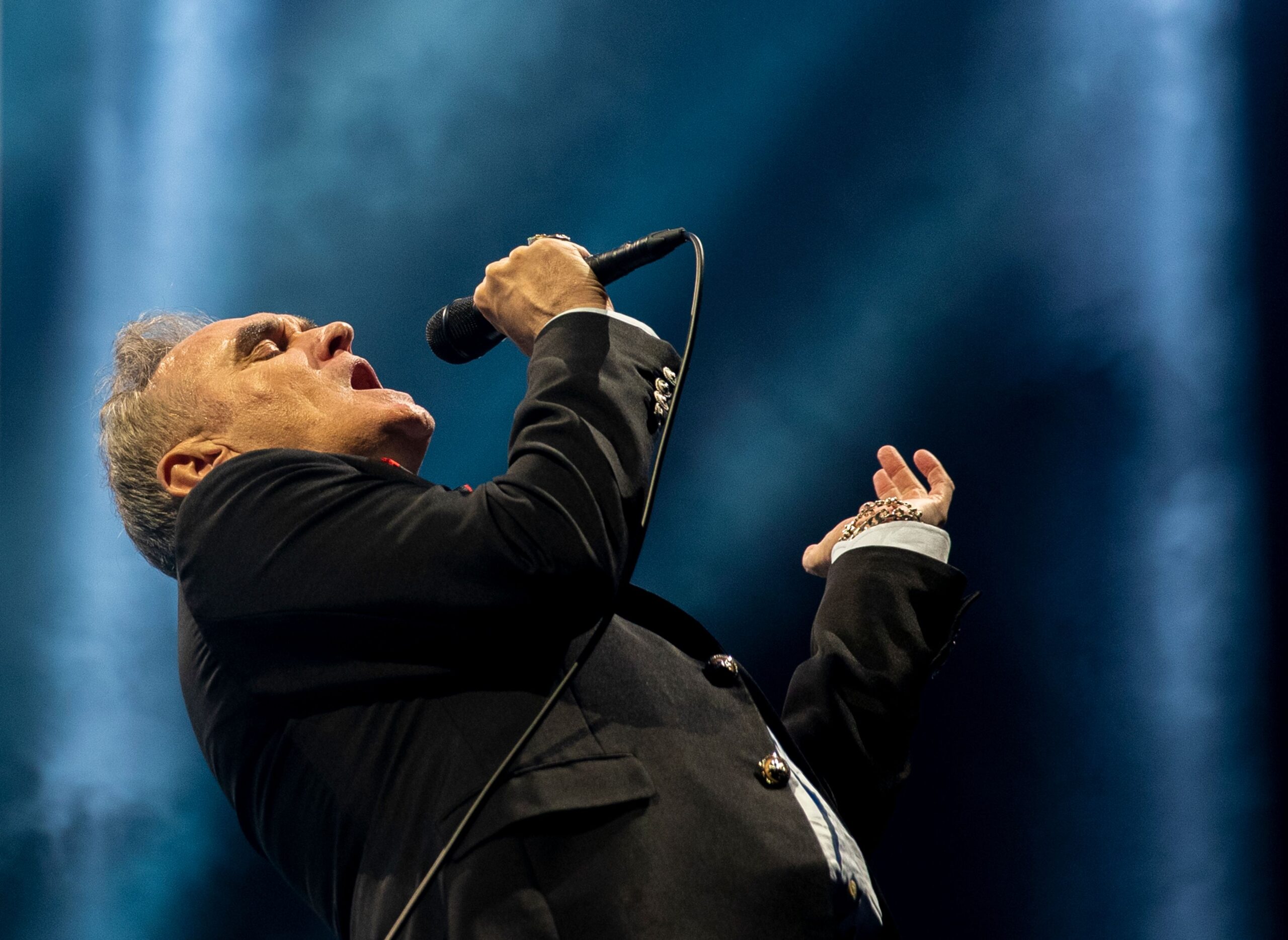
HangupsMusic.com – VALENCIA, Spain, has become the latest backdrop for the ongoing saga of Steven Patrick Morrissey’s fraught relationship with the live stage. In an incident that has left ticket holders at the Palau de les Arts confused and frustrated, the former Smiths frontman abruptly scrapped his scheduled performance, citing an inability to perform due to extreme exhaustion. While concert cancellations are a recurring theme in the singer’s late-career narrative, the specific circumstances surrounding the Valencia exit have sparked a new wave of scrutiny regarding his reliability and the logistical challenges of his current international tour.
The official explanation, disseminated through a series of increasingly frantic updates on the singer’s official website, Morrissey Central, painted a picture of a journey plagued by environmental stressors. According to the first of three dispatches, Morrissey had arrived in the Spanish city following a grueling two-day journey "by road." The decision to travel overland rather than by air apparently backfired upon his arrival at his hotel. The singer’s representatives claimed that any hope of recuperation was shattered by an unrelenting cacophony of "festival noise," "loud techno singing," and "megaphone announcements" that persisted throughout the night. By the morning of the show, the artist was described as being in a "catatonic state," rendering him physically and mentally unfit to take the stage.
What followed was a masterclass in semantic maneuvering. In a second post, the narrative shifted from a simple health-related withdrawal to a philosophical debate over the definition of a "cancellation." Bolded text on the website emphasized that the Valencia show had not been "canceled" in the traditional sense; instead, it argued that "circumstances render the show impossible." This distinction did little to appease the fans gathered outside the Palau de les Arts, many of whom had traveled from across Europe to catch a glimpse of the "Make-Up Is a Lie" singer. The distinction between a cancellation and an "impossibility" is a fine one, especially for those who have already paid for hotels, flights, and tickets.
The third and final update on the matter saw Morrissey adopting a more characteristic tone of hyperbolic despair. Describing the Valencia hotel as an "indescribable hell," he claimed that the experience of the noise-polluted night would require a full year of recovery—an assertion he insisted was "an understatement." This flair for the dramatic has long been a hallmark of Morrissey’s public persona, yet as the years progress, the line between his artistic "miserabilist" brand and the practical realities of a touring professional has become dangerously blurred.
To understand the frustration of the Valencia crowd, one must look at the broader statistical context of Morrissey’s touring history. Industry analysts and disgruntled fans have long tracked his attendance record with clinical precision. Currently, Morrissey maintains a staggering 24% cancellation rate over the course of his solo career. This figure is so significant that it has birthed a dedicated subculture of digital archivists who maintain websites solely to track every date the singer has bailed on. For the modern Morrissey fan, purchasing a ticket is less a guaranteed transaction for entertainment and more a high-stakes gamble.
.jpg)
The Valencia incident marks the seventh time this year alone that the singer has pulled the plug on a performance. The 2024 itinerary has been particularly volatile, with fans in San Diego, St. Louis, and Atlanta, among other cities, left holding worthless paper. In many of these previous instances, the reasons cited ranged from "physical exhaustion" to vague "logistical issues." However, the "sleep deprivation" defense used in Spain has added a new layer of eccentricity to his track record. While sleep is undeniably vital for a vocal performer, the decision to blame local festival noise in a country famous for its vibrant nightlife and late-evening celebrations has struck some as a lack of foresight on the part of his tour management.
This latest setback comes as Morrissey is supposedly touring in support of his latest musical output, Make-Up Is a Lie. The album has been received with the usual mix of critical acclaim for his lyrical wit and weariness over his public controversies. However, the music is increasingly being overshadowed by the "will-he-won’t-he" drama of the live circuit. When an artist’s off-stage behavior becomes more predictable than their on-stage presence, the brand inevitably suffers. For a singer who once stood as the voice of the disaffected and the marginalized, the frequent abandonment of his most loyal supporters—many of whom save for months to afford the premium prices his shows command—presents a difficult irony.
The legacy of Morrissey is deeply rooted in the Britpop explosion and the post-punk era. His 1994 masterpiece, Vauxhall and I, is frequently cited as one of the definitive albums of the 1990s, securing a high ranking on lists of the best Britpop-adjacent records. His influence on indie rock is immeasurable, and his ability to craft melodies that balance melancholy with soaring romanticism remains intact. Yet, the goodwill generated by his back catalog is being tested by a perceived lack of professional discipline. The "catatonic state" cited in Valencia is a far cry from the energetic, gladiolus-waving frontman who redefined British masculinity in the 1980s.
The logistical fallout of a Morrissey cancellation extends far beyond the artist himself. Local promoters are left to manage the chaos of refunds and venue staffing, while the local economy loses the projected influx of concert-goers. In Valencia, the Palau de les Arts is a prestigious venue, and a last-minute vacancy of this magnitude is a significant blow to the season’s programming. Furthermore, the "road travel" excuse has raised questions about the efficiency of his touring operation. If a two-day car journey renders the artist unable to handle hotel noise, critics argue that the tour’s routing and transport methods are fundamentally flawed.
Social media reactions to the Valencia news were a predictable mix of humor and heartbreak. Memes featuring Morrissey in various states of repose circulated quickly, with some fans joking that "The More You Ignore Me, The Closer I Get" had become "The More You Pay Me, The Further I Stay Away." Others, however, expressed genuine concern for his health, wondering if the 65-year-old singer is truly capable of maintaining the rigors of international travel. There is a growing sentiment that perhaps the era of the traditional "world tour" is over for Morrissey, and that a residency model—similar to those adopted by aging icons like Adele or U2—might be the only way to ensure he actually makes it to the microphone.
As it stands, the remainder of the Make-Up Is a Lie tour remains shrouded in uncertainty. Those holding tickets for upcoming dates are doing so with a sense of trepidation. The advice often whispered in fan forums—"buy tickets at your own risk"—has transitioned from a cynical joke to a practical necessity. Whether Morrissey can truly recover from his "indescribable hell" in Valencia in less than the promised year remains to be seen. For now, the lights at the Palau de les Arts have dimmed without a note being sung, adding yet another entry to the most infamous ledger in rock and roll history. The silence in Valencia is not just the absence of music; it is the sound of a legacy being stretched to its breaking point.