
 By Rose Miami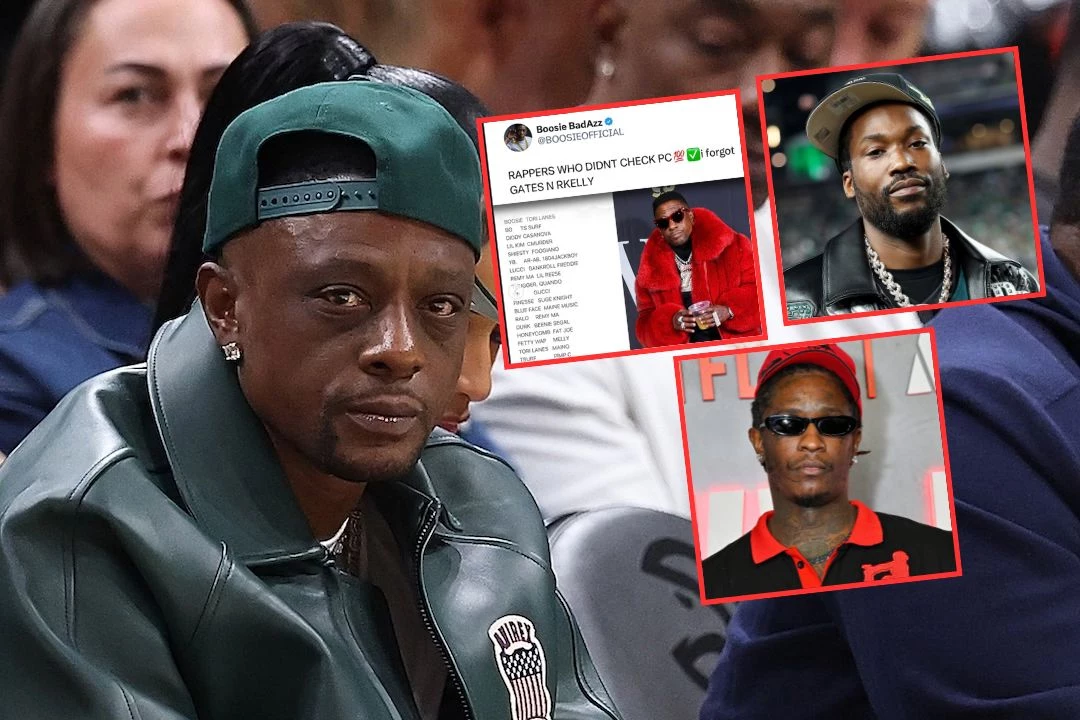
HangupsMusic.com – Baton Rouge, LA – A recent social media flurry ignited by rapper Boosie BadAzz has brought the complex realities of prison life and incarceration strategies into the public spotlight. The controversy centers around Boosie’s assertion of a list of rappers who, according to him, did not opt for protective custody during their respective prison sentences. This declaration, shared via Instagram Live and subsequently amplified on X (formerly Twitter), has drawn sharp responses from prominent figures in the hip-hop community, notably Meek Mill and Young Thug, who have offered their perspectives on the matter.
The catalyst for Boosie’s pronouncements appears to stem from a specific observation he made regarding fellow rapper Kodak Black’s incarceration. Boosie publicly questioned Kodak Black’s decision to be in protective custody, which then broadened into a more general commentary on how various artists navigate the prison system. This led to the compilation and dissemination of his list, which included names such as T.I., YoungBoy Never Broke Again, Diddy, and Pooh Shiesty, among others, who Boosie claims remained in general population. The list quickly became a trending topic, sparking widespread discussion and debate among fans and industry insiders alike.
Meek Mill, a rapper known for his own candid discussions about his experiences with the justice system, was notably absent from Boosie’s initial roster of those who purportedly avoided protective custody. Responding via X, Meek Mill emphatically asserted his resilience within correctional facilities. "I’m skinny, I walked every yard in every jail I was in and held weight in every jail I was in," he posted, a clear statement of his refusal to seek special protection and his ability to manage within the general population. Boosie later issued an apology to Meek Mill for the oversight, acknowledging his presence on the list of those who reportedly didn’t require protective custody, while simultaneously reiterating his stance on Kodak Black’s situation.

The conversation took a more nuanced turn with the involvement of Young Thug. The Atlanta artist offered a different perspective, suggesting that protective custody might, in certain circumstances, be a strategically sound choice. His rationale, as interpreted from his remarks, posits that opting for protective custody can sometimes be a means to circumvent further legal entanglements or potential complications that might arise from interactions within the general prison population. This viewpoint suggests a pragmatic approach to personal safety and legal management within the confines of incarceration.
However, Boosie BadAzz remained firm in his conviction, emphasizing a traditionalist view of masculinity and "gangster" identity within the context of prison. He directly addressed Young Thug, articulating that true adherence to a gangster persona necessitates remaining in general population and avoiding protective custody. Boosie’s stance appears rooted in the belief that protective measures compromise one’s image and standing within a system that often values toughness and self-reliance.
Young Thug, while seemingly acknowledging the validity of Boosie’s perspective on principle, elaborated on his own specific circumstances. He indicated that in his case, protective custody was a necessary measure due to what he described as efforts by law enforcement to implicate him in further charges while he was incarcerated. This statement strongly alludes to his involvement in the high-profile YSL RICO case. In October 2024, Young Thug entered into a blind plea deal, admitting guilt to multiple racketeering, drug, and gun charges. He received a five-year prison sentence, which was ultimately commuted to time served, and was subsequently placed on 15 years of probation. His comments suggest that his decision to enter protective custody was a calculated move to safeguard himself against potential legal machinations rather than a reflection of his adherence to any particular code of conduct.
The exchange between these prominent artists highlights the diverse and often challenging considerations individuals face when incarcerated. Boosie’s call for unwavering adherence to a particular image of toughness clashes with the pragmatic and sometimes legally motivated decisions that others, like Young Thug, have had to make. Meek Mill’s response underscores a personal testament to enduring the standard prison environment, further diversifying the range of experiences and perspectives within this sensitive topic. The discussion, initiated by Boosie’s outspoken commentary, serves as a potent reminder of the multifaceted realities of prison life and the various strategies employed by individuals to navigate its inherent dangers and complexities. The debate touches upon themes of honor, survival, and the intersection of personal identity with the stringent rules and pressures of the correctional system.