
 By Azzam Bilal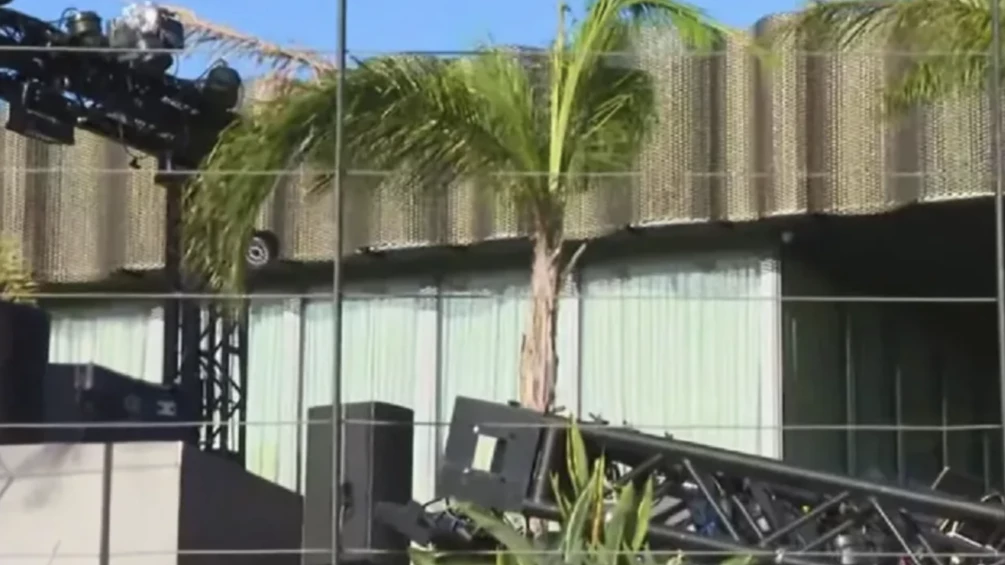
HangupsMusic.com – Buenos Aires, the vibrant heart of Argentina’s nightlife scene, was the site of a harrowing incident earlier this month when a night of celebration turned into a scene of panic and medical emergency. During the early morning hours of Sunday, March 1st, a structural failure at the Archi Club resulted in a large-scale lighting rig collapsing directly onto a crowd of revelers. The incident occurred during a highly anticipated set by the rising British house music star Max Dean, casting a somber shadow over what was meant to be a highlight of the city’s summer clubbing season.
The event, held at the popular open-air venue, was in full swing at approximately 5:00 AM when the catastrophe struck. According to local reports and eyewitness accounts, the club was hosting roughly 700 attendees, many of whom were gathered near the stage and the exclusive VIP section located directly behind the DJ booth. As Max Dean performed, a massive overhead lighting truss—a heavy metal framework used to support various spotlights and visual equipment—suddenly lost its structural integrity. The rig gave way, plummeting toward the floor and striking several people in its path.
Social media quickly became a repository for the chaos that followed. Video footage captured by stunned onlookers showed the moment the truss buckled and fell. The footage illustrates a terrifying transition from a rhythmic, high-energy dance floor to a site of wreckage and confusion. In the immediate aftermath, the music was cut, and the ambient sounds of the club were replaced by shouts for help and the urgent instructions of security personnel attempting to manage the situation.
The response from Buenos Aires emergency services was swift and comprehensive. Within minutes of the collapse, units from the local fire department, the city police, and the Emergency Medical Care System (SAME) arrived at the scene. The venue was promptly evacuated to allow first responders to navigate the debris and reach those trapped or pinned by the heavy metal structure. Paramedics established a triage area outside the club to assess the severity of the injuries.
Initial reports from the scene confirmed that 15 individuals sustained injuries of varying degrees. Of those affected, six people were transported by ambulance to nearby municipal hospitals for urgent care. Two additional victims, both women, reportedly sought medical attention independently, arriving at the hospital shortly after the evacuation. The injured parties ranged in age from 25 to 49, representing a broad cross-section of the local and international electronic music community that frequents the Palermo district’s nightlife.
Medical professionals later disclosed that the nature of the injuries was significant. While many suffered from contusions and minor fractures typical of a structural fall, at least two individuals were treated for traumatic brain injuries. The potential for long-term complications from such injuries remained a point of concern for several days; however, in a positive turn of events, health officials have since confirmed that all 15 patients have been stabilized and successfully discharged from the hospital to continue their recoveries at home.
The Archi Club, known for its open-air atmosphere and high-profile bookings, has remained shuttered since the morning of the accident. Local authorities have cordoned off the premises as a formal investigation into the cause of the collapse is conducted. Structural engineers and safety inspectors are currently examining the mounting points and the load-bearing capacity of the rig to determine if the failure was a result of mechanical fatigue, improper installation, or environmental factors such as wind or temperature shifts common in outdoor venues.
As of this writing, the management of Archi Club has not issued a formal public statement regarding the incident. This silence has led to increased scrutiny from both the public and local regulatory bodies. In Argentina, particularly in Buenos Aires, the safety of nightlife venues is a subject of intense public sensitivity. The city’s history is marked by past tragedies that have led to the implementation of some of the strictest venue safety codes in South America. The investigation into the Archi Club incident will likely focus on whether the venue was in full compliance with these rigorous standards and whether the temporary structures used for the Max Dean gig had undergone the necessary safety certifications.
The incident also highlights the inherent risks associated with the increasingly complex production values of modern electronic music events. As fans demand more immersive visual experiences, the use of heavy, overhead lighting and LED arrays has become standard. This trend necessitates a higher level of technical oversight and frequent inspections. Industry experts suggest that the "open-air" nature of the Archi Club may have played a role, as temporary outdoor rigs are often more susceptible to the elements than those permanently fixed in indoor, climate-controlled environments.
For Max Dean, the British DJ whose career has been on a sharp upward trajectory, the event was a distressing interruption to his international tour. Dean, who has garnered acclaim for his infectious house grooves and high-energy performances, found himself at the center of a situation far beyond the control of any artist. While the DJ was not injured in the collapse, the psychological impact of seeing a crowd harmed during a performance is often profound. The incident serves as a stark reminder for touring artists and their management teams about the importance of vetting venue safety protocols before taking the stage.
The fallout from the Archi Club collapse is expected to reverberate through the Buenos Aires clubbing circuit for months to come. It is anticipated that the city government may launch a new round of inspections for all open-air venues and nightclubs to prevent a recurrence of such a failure. For the 700 people who attended the gig on March 1st, the night will be remembered not for the music, but for the harrowing moments of a structural failure that could have easily resulted in a much higher toll.
In the broader context of the global music industry, this event joins a list of recent "near-misses" and tragedies that have prompted calls for a universal standard in stage and lighting safety. From high-profile festival stage collapses to club-level equipment failures, the physical infrastructure of the party is under the microscope. Safety advocates argue that while the music and the atmosphere are the primary draws for attendees, the invisible engineering that supports the spectacle must be the highest priority for promoters and venue owners alike.
As the legal and technical investigations continue, the community remains focused on the recovery of the victims. The fact that all 15 individuals have been discharged from the hospital is being hailed as a miracle, given the weight and size of the equipment involved. However, the path to reopening for Archi Club—if it happens at all—will be fraught with legal challenges and the need to regain the trust of a shaken public.
For now, the site remains quiet, a stark contrast to the thumping basslines and flashing lights that usually define the early hours of a Sunday morning in Buenos Aires. The collapse at the Max Dean gig stands as a sobering lesson in the fragility of the environments we build for our celebrations, and a call to action for more rigorous oversight in the name of attendee safety. The electronic music world watches closely as Argentina’s capital seeks answers and accountability for a night that ended in a way no one could have predicted.