 By admin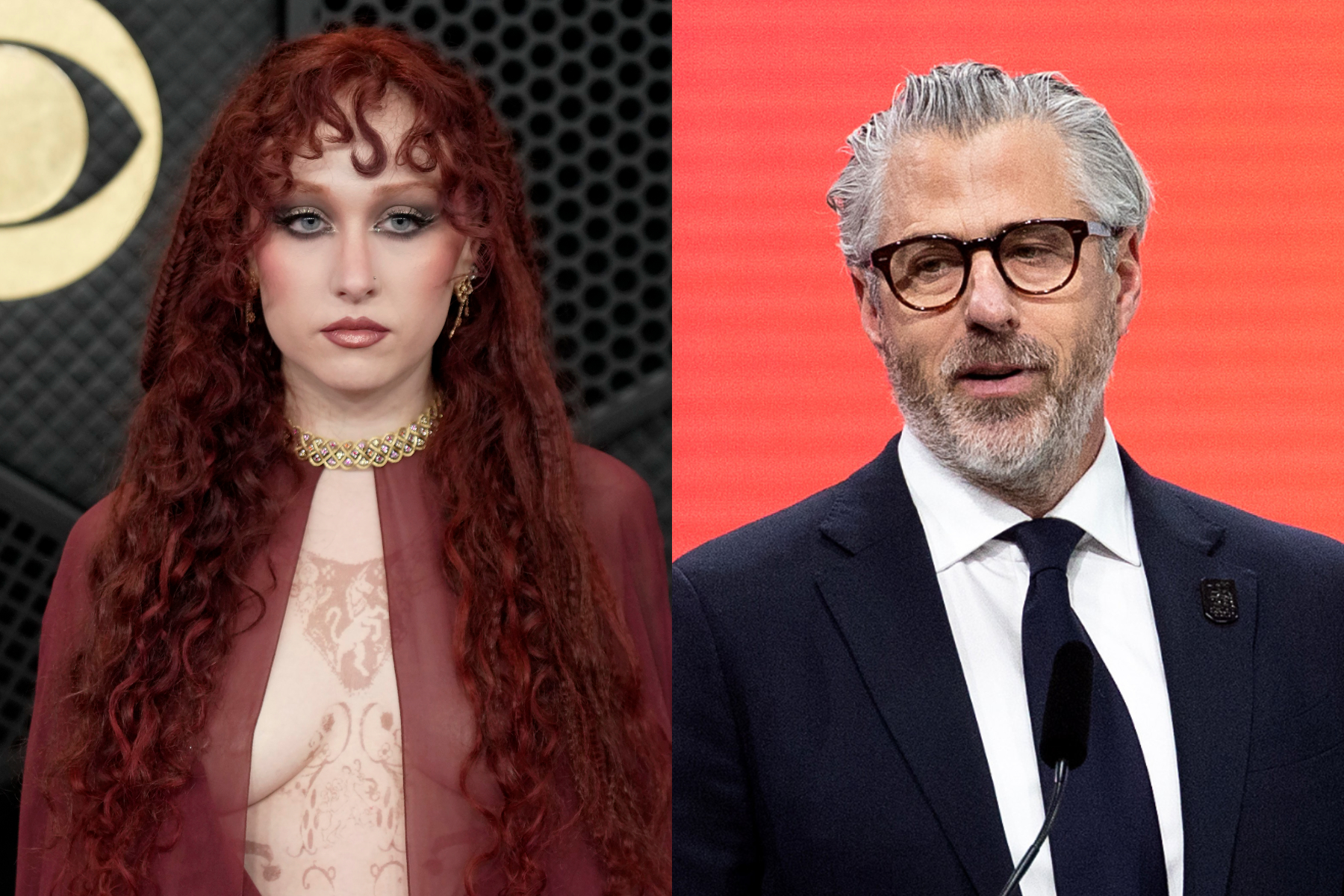
HangupsMusic.com – Los Angeles, The reverberations of recently unsealed legal documents have sent shockwaves through the entertainment industry, culminating in pop sensation Chappell Roan’s decisive split from the Wasserman Group. The move follows revelations of email exchanges between agency founder Casey Wasserman and convicted sex trafficker Ghislaine Maxwell, detailed within the latest tranche of Jeffrey Epstein-related files released by the Justice Department. Roan’s public departure, announced early this week, underscores a growing demand for ethical accountability at the highest levels of talent representation.
Roan, known for her vibrant stage presence and outspoken advocacy, took to Instagram Stories on Monday, February 9, to declare her immediate separation from Wasserman Group. Her statement resonated deeply within an industry grappling with issues of power and integrity. “Effective today, I am no longer affiliated with Wasserman, the talent agency spearheaded by Casey Wasserman,” she wrote, emphasizing her commitment to upholding the highest standards for her team and her duty to safeguard their well-being. Roan asserted that no artist, agent, or employee should ever be compelled to condone or overlook actions that fundamentally clash with their moral principles. While expressing profound respect and gratitude for the dedicated agents and staff who tirelessly champion their artists, she made it clear she would not remain a passive observer.
The artist, who famously used her 2025 Grammy Awards speech to advocate for improved healthcare and fairer treatment for musicians, further articulated her stance. She stressed that performers deserve representation that aligns seamlessly with their values, ensuring their safety and dignity are paramount. Roan concluded her powerful message by stating that her decision reflected a deeply held conviction: that meaningful progress within the industry necessitates accountability and leadership that genuinely earns trust. Her actions have swiftly become a touchstone for other artists re-evaluating their own associations.
The fallout from the revelations has not been limited to Chappell Roan. Over the past week, a growing chorus of artists has publicly distanced themselves from Casey Wasserman and, by extension, the agency. Bethany Cosentino of Best Coast, along with indie darlings Wednesday, Water From Your Eyes, and Beach Bunny, have all voiced their condemnation, with some artists openly contemplating or threatening to sever ties with the prominent music group entirely. The immediate impact on Wasserman Group’s public image was starkly evident when the agency’s official website conspicuously removed its artist roster by Sunday night, February 8, signaling a rapid attempt to manage a burgeoning crisis.
In an earlier public statement, Casey Wasserman himself addressed the controversy, expressing profound regret over his past association with Maxwell. He stated, “I deeply lament my correspondence with Ghislaine Maxwell, which occurred more than two decades ago, long before the horrifying nature of her crimes came to light.” Wasserman was keen to clarify that he never maintained a personal or professional relationship with Jeffrey Epstein. He confirmed having participated in a humanitarian mission as part of a Clinton Foundation delegation in 2002, which utilized Epstein’s private aircraft. He concluded his statement by conveying immense sorrow for any association with either individual, attempting to frame his involvement as incidental and predating the public understanding of their criminal activities.
A representative for Chappell Roan did not respond immediately to inquiries from HangupsMusic.com seeking further comment. Similarly, a Wasserman Group spokesperson declined to comment on Monday. In his previous public remarks to various media outlets over the weekend, Wasserman maintained that he had no further communication with Epstein following the humanitarian trip and asserted that he did not witness "anything inappropriate" during his brief interactions. Despite the severe public backlash and ethical scrutiny, it is important to note that Wasserman, the grandson of legendary Hollywood agent Lew Wasserman, has not been formally charged with or accused of any legal wrongdoing by the Justice Department.
Beyond the entertainment sector, the controversy has spilled into the public service arena. Los Angeles officials have initiated calls for Wasserman to step down from his influential position as chairman of the organizing committee for the 2028 Los Angeles Olympic Games. L.A. County Supervisor Janice Hahn issued a pointed statement, arguing, “I believe Casey Wasserman needs to resign. His continued representation of Los Angeles on the global stage risks diverting attention from our athletes and the monumental efforts required to prepare for the 2028 Games.” The dual roles held by Wasserman highlight the intricate web of influence and public trust that powerful figures in the city often navigate.
Sources within Wasserman Group reveal that internal tensions have been escalating for days, predating the latest release of the Epstein files. Reports suggest that Casey Wasserman had already faced inquiries from executive leadership as early as 2024 concerning the nature of his relationship with Epstein. During these earlier confrontations, Wasserman reportedly assured his senior staff that “nothing else” pertaining to his involvement or association with the Epstein-Maxwell legal proceedings would emerge. The subsequent release of the damning emails, therefore, left many of his closest associates feeling profoundly betrayed, according to one individual privy to these confidential discussions. This internal betrayal has only amplified the current crisis, threatening to destabilize the agency from within.
The evolution of Wasserman Group into one of Hollywood’s premier talent agencies, boasting diverse branches spanning music, film, television, sports, and brand representation, has been a dramatic narrative in itself. A pivotal moment occurred in 2021 when Wasserman acquired the music business clients from Paradigm Talent Agency, leaving Paradigm’s film, television, and literary agents to operate independently. This strategic acquisition significantly bolstered Wasserman’s live-music touring division, bringing high-profile artists like Coldplay and Ed Sheeran into its fold and instantly positioning it as a major player in the global music industry. Just a year later, the agency further expanded its reach by integrating Paradigm’s U.K. music clients, along with influential booking agencies such as AM Only, CODA, and Windish, solidifying its international presence. Chappell Roan herself was originally signed out of England, underscoring the global nature of Wasserman’s reach.
However, the rapid expansion and the breakup of Paradigm were not without their difficulties. Many agents, having collaborated for years under the Paradigm banner, entered the Wasserman era with a mix of sadness and trepidation. An industry insider noted that Wasserman was initially perceived as a “white knight” who arrived to rescue them, and in many respects, they succeeded in stabilizing the business. Yet, artists are notoriously discerning when it comes to their representation, and it is not uncommon for them to transition between agencies. Billie Eilish, for example, made a high-profile move to WME in 2024, a decision driven by her desire to consolidate all her diverse projects under a single agency, which had already represented her in film and television since 2023. Upon her departure, Eilish and her brother Finneas issued a statement through their representative expressing gratitude to their former live booking agents at Wasserman, acknowledging the professionalism despite the change.
The agency insider further described Wasserman Group as a “Frankenstein company,” characterized by its amalgamation of disparate units and internal silos. Compared to established titans like WME and CAA, and even UTA in recent years, Wasserman’s perceived weakness in the film and television sectors has somewhat limited its overall influence in Hollywood, despite its impressive roster of music giants such as Dave Matthews Band and Phish. The current scandal introduces a period of profound uncertainty, prompting speculation about the agency’s future. Several scenarios are now considered plausible: top music agents, including prominent figures like Marty Diamond, Sam Hunt, Jonathan Levine, Jackie Nalpant, and Lee Anderson, could potentially splinter off to establish a new independent agency; artists might seize the opportunity to migrate to rival agencies; Casey Wasserman could step down from his leadership role, paving the way for a rebranding and a fresh start; or the founder might opt to sell the entire agency. As the insider succinctly put it, “It’s all up in the air.” The unfolding crisis at Wasserman Group serves as a potent reminder of the complex interplay between personal conduct, corporate ethics, and public perception in the high-stakes world of entertainment.