
 By admin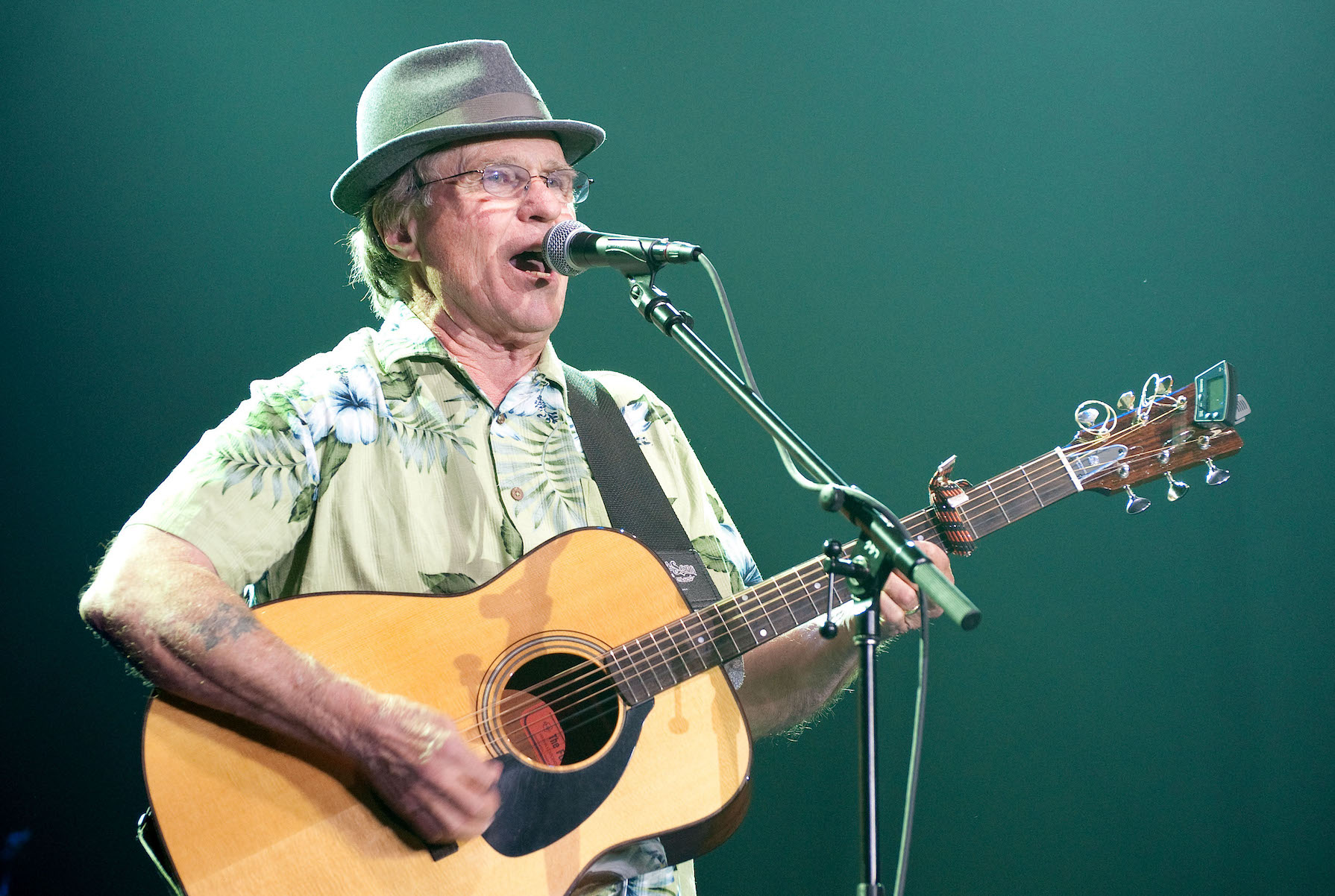
HangupsMusic.com – The recent passing of counterculture icon Country Joe McDonald at the age of 84 has brought to light a previously unpublished 2019 interview with Rolling Stone. This poignant conversation, recorded for the Rolling Stone Music Now podcast, offers a final, intimate glimpse into the mind of the legendary musician as he reflected on the 50th anniversary of his career-defining performance at the Woodstock Music & Art Fair. McDonald, known for his electrifying stage presence and the unforgettable "Fuck Cheer," provided profound insights into the festival’s seismic impact, the accidental genesis of his solo career, and the lasting reverberations of a moment that etched itself into the annals of popular culture.
For McDonald, Woodstock was far from just another gig. He immersed himself fully in the experience, arriving on Thursday and departing only on Monday, bearing witness to the entire unfolding spectacle, including Jimi Hendrix’s iconic rendition of "The Star-Spangled Banner." He recalled the pervasive sense of wonder, describing the three days as a "wonderful experience" spent observing performances from the stage itself. While he admitted to not fully grasping its historical magnitude at the time, McDonald firmly believed that "the Woodstock Festival, film and album changed everything in America." He articulated a vision of an ongoing cultural struggle, a perpetual "challenge between the mores and the tastes of the World War II generation and the Woodstock generation." Beyond this generational divide, he asserted that the festival’s influence became deeply ingrained in the fabric of society, shaping everything from "colors, sound, fashion, music," and laying "the basis for modern rock n’ roll as we know it."
Interestingly, McDonald confessed that a lifelong career in music wasn’t his initial trajectory. Despite a robust musical background—serving as president and student conductor of his high school concert band and writing his first rock and roll songs at 15—he saw his pre-Woodstock career with Country Joe and the Fish as a busy, but perhaps not permanent, path. By 1969, the band had already been touring for years, played Monterey, released two LPs, and was a recognized entity in the music union. However, the impending dissolution of Country Joe and the Fish left his future uncertain. It was the spontaneous, unscripted moment at Woodstock that unexpectedly launched "the birth for me of a solo career as Country Joe McDonald." This impromptu performance of the notorious cheer, which even decades later remained unbroadcastable on conventional radio and television, irrevocably altered his professional trajectory, cementing his individual identity beyond the band.
The origins of the infamous "Fuck Cheer" are rooted in a prior performance that underscored its anti-establishment and anti-war sentiment. McDonald recounted that the cheer wasn’t a spontaneous invention for Woodstock but had been introduced a year earlier at the Schaefer Beer Festival in Central Park. It was there that the original "Fish Cheer" underwent a radical transformation into the "Fuck Cheer," a defiant act that led to Country Joe and the Fish being banned from the Schaefer Beer Festival and The Ed Sullivan Show indefinitely. At the time, with the Vietnam War raging and young men being conscripted, a New York radio station was regularly playing their protest anthem, "Fixin’-to-Die Rag." The cheer, therefore, resonated deeply as a direct, visceral statement against the conflict, a sentiment that the audience at Woodstock intuitively understood.
The Woodstock performance itself was born out of necessity. As Country Joe McDonald detailed, he was merely asked to "fill in some time for the Santana band to set up and get ready to go because they were running behind time." Stepping onto the massive stage solo with just an acoustic guitar, he performed a few songs, now available on a commemorative box set. He had initially reserved the "Fuck Cheer" and "Fixin’-to-Die Rag" for the full Country Joe and the Fish electric set scheduled for later that evening. However, a casual comment from his manager—"What difference does it make? Nobody’s paying attention to you"—prompted a change of heart. Stepping back out, he bellowed, "Gimme an F!" The immediate silence that fell over the vast crowd, followed by their resounding response, caught him by surprise. From the stage, he couldn’t discern their participation clearly, hence his repeated exhortations for them to "sing louder." It was only later, when producer Michael Wadleigh showed him the film footage in Los Angeles, that he witnessed the sheer scale of the crowd mouthing the words in unison. A further revelation came from the box set, where he discovered that the crowd’s vocalization of "fuck" had been overdubbed in the studio to enhance its audibility, a testament to the sound engineering challenges of such a massive outdoor event.
Despite the technical adjustments, McDonald expressed immense pride in the enduring power of that moment. "I love it," he declared, emphasizing how it "cuts through the bullshit of politics and everything." The cheer, while propelling him to international fame, also brought significant challenges. He recalled being "banned from all the municipal auditoriums in America over that cheer," and lamented that his "most famous song couldn’t be played on the radio," even costing some broadcasters their jobs. Yet, the adversity only fortified his conviction. He found profound satisfaction in its impact, stating, "I’m happy and proud that I could represent the Vietnam War and Vietnam veterans in that moment." He acknowledged the pivotal role of Michael Wadleigh, not only for filming the segment but also for making the courageous executive decision to include it in the iconic Woodstock film and album. McDonald mused on the radical nature of that choice, noting that Wadleigh even wanted to display a giant "FUCK" graphic on screen, a proposal deemed "too radical" at the time. The very inclusion of the cheer in the 1969 film and album was, for McDonald, "just unbelievable."
Beyond his own electrifying set, McDonald’s memories of Woodstock were rich with other musical and anecdotal highlights. He lauded the "incredible" performance of the Santana band, whose film footage he found "unbelievable." Sly and the Family Stone’s set also stood out. He recounted, with amusement, witnessing the infamous incident where activist Abbie Hoffman was struck by Pete Townshend’s guitar. The overall atmosphere, he emphasized, was one of "peace and love," a truly "entertaining and really wonderful" experience. Revisiting documentaries years later, he remained "astounded at the size and the volume," marveling at how "all that music was brand new" and performed with such exhilarating prowess.
McDonald also touched upon the ill-fated Woodstock 50 event, which was planned for the festival’s half-century mark but ultimately canceled. He maintained that he "never backed out" and, like the public, followed its tumultuous development through news reports. His primary concern, he revealed, was protecting his 50% deposit, fearing that if he canceled, the promoter might shift blame. He "waited for it to fall apart," and upon its inevitable collapse, he simply "cashed the check."
In a poignant closing note to the interview, McDonald reflected on his decision to retire. After a final series of performances, he stated, "I’m done. I’m finished. I’m completely retired." His post-music life, he explained, involved the simple pleasures of "watching the grandkids, staying home and getting to know my neighbors." This final interview now stands as a powerful posthumous testament to a musician who not only lived through a pivotal moment in cultural history but actively shaped its rebellious and enduring spirit. His words offer an invaluable firsthand account, a final, resonant echo from the heart of the Woodstock generation.