
 By admin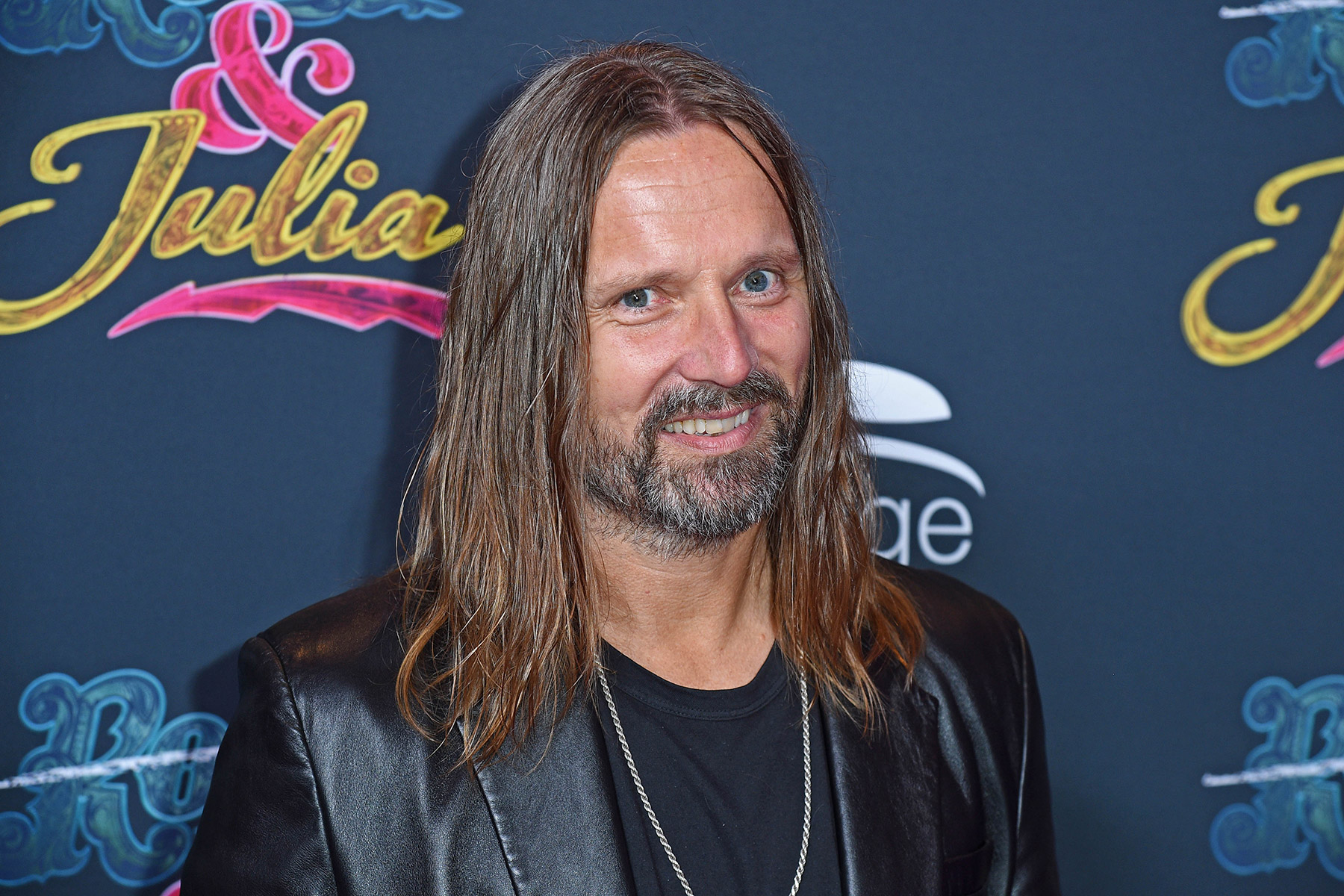
HangupsMusic.com – For over three decades, Max Martin has not merely participated in the global music industry; he has profoundly shaped its very soundscape. His enduring genius for crafting chart-topping anthems continues to set unprecedented benchmarks, a testament to his unparalleled understanding of popular music’s intricate dynamics. The recent triumph of Taylor Swift’s "Opalite," a track co-written and co-produced with Swift and Shellback, reaching the coveted No. 1 position on the Billboard Hot 100, further solidified Martin’s monumental career achievements. This latest success marks his astonishing 27th chart-topper as a producer and his 29th as a songwriter, placing him in an elite echelon, second only to the legendary Paul McCartney’s 32.
Martin’s journey to the pinnacle of pop began in January 1999, when he first commanded the Hot 100 in both capacities with Britney Spears’ groundbreaking hit, "…Baby One More Time." This pivotal moment heralded an era of relentless chart domination, a consistency that earned him the distinguished titles of Billboard’s Top Songwriter and Top Producer of the 21st Century. His legacy is not merely one of numbers but of an indelible influence on the sound and structure of modern pop music.
To fully comprehend the depth of Martin’s craft, industry analysts at Hit Songs Deconstructed (HSD) have delved into his extensive discography. David Penn, co-founder of HSD, recently hosted a series of master classes, guiding music professionals and enthusiasts through an intricate analysis of Martin’s songwriting and production evolution, spanning from the mid-1990s to the present day. This deep dive, building upon a similar examination five years prior, explored how Martin’s musical approach has continuously adapted, what fundamental principles have remained constant, and his unique stylistic standing amidst both historical and contemporary peers.

Penn’s analysis reveals six distinct overarching eras in Martin’s songwriting and production, each characterized by commonalities across his Hot 100 top 10 hits. These stylistic shifts mirror broader trends in the pop mainstream, reflecting Martin’s innate ability to innovate while working with a diverse roster of artists.
The first era, spanning the mid-to-late 1990s, saw Martin flourish at Stockholm’s legendary Cheiron Studios under the tutelage of Denniz PoP. Here, he and his collaborators forged a signature sound blending infectious Swedish pop, Euro-pop, and elements of teen pop, dance, and R&B. His early hits, crafted for artists like the Backstreet Boys, Britney Spears, Céline Dion, *NSYNC, and Robyn, were characterized by vibrant, catchy melodies and lyrics often exploring themes of youthful romance and melodrama. This period established the foundational "Max Martin sound" – meticulously structured, hook-laden, and instantly memorable pop.
Following the passing of Denniz PoP and the closure of Cheiron, Martin co-founded Maratone Studios, ushering in his second era in the 2000s. This period witnessed a fascinating fusion of his polished pop sensibility with a more energized, gritty rock dynamic. While love and relationships remained central lyrical themes, the subject matter broadened to include anthems of rebellion and empowerment, exemplified by Kelly Clarkson’s "Since U Been Gone" and P!nk’s "So What." He also explored more provocative, hookup-centric narratives, as heard in Katy Perry’s "I Kissed a Girl" and Spears’ "3," demonstrating a willingness to push lyrical boundaries within a pop framework.
The early 2010s marked Martin’s third era, where his top 10 hits transitioned from edgy pop-rock toward a more sophisticated, higher-gloss electropop aesthetic. Synthesizers took center stage, driving tracks with a sleek, futuristic sheen. This sonic shift was evident in hits such as Britney Spears’ "Hold It Against Me," Katy Perry’s "E.T.," and Kesha’s "Blow," showcasing a refined production style that embraced the burgeoning electronic dance music influences permeating mainstream pop.

By the mid-2010s, Martin entered his fourth era, characterized by a streamlined, groove-driven approach with noticeably sleeker arrangements. This period saw a refinement of his production, emphasizing rhythmic precision and a more minimalist yet impactful sound. Major No. 1 hits like Katy Perry’s "Dark Horse" and The Weeknd’s "Can’t Feel My Face" epitomized this evolution, showcasing a sophisticated balance between infectious melodies and compelling rhythmic foundations.
Between 2018 and 2024, Martin’s fifth era leaned heavily into retro-influenced, rhythmic, and groove-based tracks, often drawing from 1980s synth-pop and R&B. This phase was largely defined by his incredibly successful collaborations with Ariana Grande and The Weeknd, who together accounted for eight of his ten Hot 100 top 10s during this prolific span. Chart-toppers included Grande’s "We Can’t Be Friends (Wait for Your Love)" and "Yes, And?," their joint hit "Save Your Tears," and The Weeknd’s historic "Blinding Lights," a track that masterfully captured an ’80s nostalgic vibe while sounding utterly contemporary.
Most recently, in 2026, the release of Taylor Swift’s The Life of a Showgirl heralded Martin’s sixth era, a triumphant reunion with Swift and Shellback. This album made an unprecedented impact, with its tracks claiming the top 12 positions on the Hot 100 in its first week, led by the No. 1 hits "The Fate of Ophelia" and, most recently, "Opalite." This period underscores Martin’s enduring relevance and his ability to consistently innovate alongside the biggest artists in the world, maintaining his unparalleled chart success.
Despite these shifts across eras, certain constants underpin Martin’s extraordinary songcraft. The most significant throughline is the deliberate and purposeful construction of his songs. Every sonic element, every beat, every melodic phrase serves a precise function, ensuring there are no superfluous moments. This meticulous approach is designed to maximize the listener’s sonic and emotional engagement, embedding the melodies and hooks deeply into their minds long after the music fades.

Central to this deliberate design is Martin’s melody-first philosophy. His toplines are typically rooted in simple, easily singable melodies that listeners can instantly grasp and recall. However, this accessibility is often masterfully balanced with strategic deviations – moments of higher vocal range or pronounced melodic leaps. These intentional shifts are not arbitrary; they are meticulously deployed to spotlight key hooks and lyrical phrases, heighten emotional resonance, prevent genericism, and accentuate the unique vocal characteristics of the performing artist.
Another unwavering principle is Martin’s sophisticated hook strategy. Hooks are introduced methodically, often one at a time, across and within song sections. This ensures that each hook fully registers with the listener without creating a cluttered or distracting mix. Furthermore, Martin frequently employs techniques of hook foreshadowing and creative reinforcement, presenting familiar melodic or lyrical motifs in fresh contexts throughout a song. This ingenious method ingrains the hooks into the listener’s subconscious without ever feeling repetitive or redundant.
The importance of the intro in a Max Martin song cannot be overstated. Reflecting a rule learned from his mentor Denniz PoP, Martin believes a song must be immediately recognizable within its first few seconds. His Hot 100 top 10 hits feature intros averaging just ten seconds, functioning as the song’s unmistakable identity. Britney Spears’ "…Baby One More Time" famously exemplifies this, its opening notes instantly iconic. Beyond merely grabbing attention, Martin’s intros serve multiple critical purposes: establishing the song’s emotional temperature, setting its sonic palette, and planting a signature motif or hook that will become central later in the track, compelling listeners to stay tuned.
Martin is a virtuoso at achieving these objectives, whether through minimalist or expansive intros. Katy Perry’s "Teenage Dream" opens with a mere three-second solo guitar riff that perfectly sets its tone. Conversely, The Weeknd’s "Blinding Lights" boasts a 28-second, multi-segment introduction. This extended opening masterfully establishes the track’s retro, 1980s synth-pop vibe, its emotional undercurrent, core groove, and signature synth hook. Crucially, it cleverly foreshadows elements of the chorus, melodically hinting at the second and fourth vocal lines and rhythmically foreshadowing the first and third lines. By the time the chorus arrives, it feels inherently familiar, a testament to Martin’s subtle architectural brilliance.

This concept of hook foreshadowing extends into what Penn terms the "grand finale hook fest," a technique frequently employed in Martin’s most successful songs. Like the seemingly unrelated storylines that coalesce into a cohesive, satisfying conclusion in classic Seinfeld episodes, Martin’s songs weave disparate melodic and lyrical threads into a memorable climax.
In "Opalite," for instance, a simple, unassuming melody repeated in the first verse and pre-chorus subtly becomes central to the chorus, forming both the titular hook "but now the sky is opalite" and the catchy "oh" hook. Martin’s expertise ensures that these familiar melodies are presented in unique contexts, keeping the song engaging and preventing any sense of redundancy.
A more overt example can be found in P!nk’s "So What." Across its intro and verse sections, a distinctive and infectious melodic idea is presented in a myriad of ways: instrumentally through guitar and bass, and vocally via the playful "na, na" and the lyric "I just want to start a fight." These ideas, alongside the chorus and bridge hooks, are then masterfully recycled and recontextualized in the outro. This "grand finale hook fest" reprises the song’s key hooks in one unique and memorable context, culminating in an infectious and unforgettable conclusion.
Historically, Martin’s songwriting and production are not revolutionary in inventing entirely new musical fundamentals but are profoundly evolutionary in their impact. He meticulously builds upon the rich craft traditions of legends like The Beatles, the Brill Building composers, Motown, and Stax Records. Martin’s genius lies in his ability to recombine and refine these established techniques in unequivocally modern ways, consistently raising the bar for the delivery of high-level pop craftsmanship across diverse decades, styles, and artists. He is a modern-day architect, perfecting the blueprint for mainstream success.

Comparing Martin’s style to contemporary songwriters and producers reveals that his signature isn’t a fixed sound, but rather a methodology. His approach consistently reflects the stylistic intent of the song and the unique identity of the artist he’s collaborating with. What defines the "Max" touch is the seamless and reliable manner in which he guides listeners through a song. His compositions are engineered with precision: the main hook remains front-and-center, supporting elements never compete for attention, and the energy is meticulously shaped to constantly pull the listener forward.
This meticulous construction ensures that the payoff, particularly the chorus, feels perfectly set up, landing with the exact impact the listener subconsciously desired. This is the cumulative effect of countless subtle decisions that prevent listener drift, sharpen contrast, and build momentum toward an inevitable, satisfying climax. Many contemporary writers and producers, whether consciously or not, now operate within this underlying framework, a testament to how profoundly Max Martin has shaped the architecture of modern mainstream pop. His unparalleled legacy is not just in the hits he’s created, but in the enduring template he’s provided for an entire generation of music makers.