
 By Azzam Bilal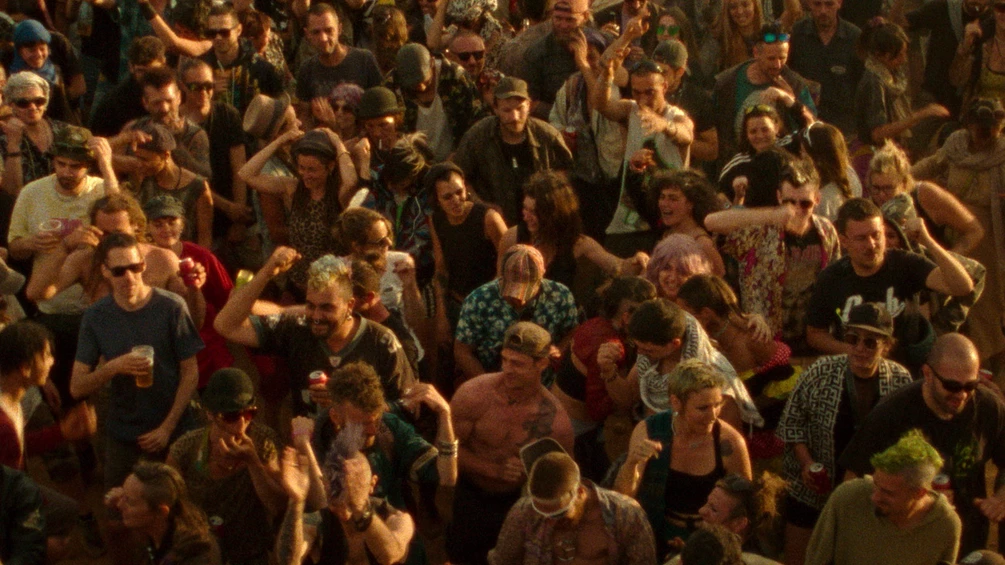
HangupsMusic.com – London, The intersection of underground electronic music and prestige cinema has rarely been navigated with the level of uncompromising realism found in Oliver Laxe’s latest masterpiece, Sirāt. As the film prepares for its highly anticipated UK theatrical debut on February 27th, it arrives carrying the heavy momentum of an Academy Award nomination for Best International Feature, alongside four other prestigious nods. Yet, beyond the accolades and the red carpets of Hollywood, Sirāt is making waves for a different reason: its radical commitment to capturing the raw, unvarnished essence of the free party movement. By eschewing traditional casting and staged performances in favor of a living, breathing three-day desert marathon, Laxe has created what many are calling the most authentic depiction of rave culture ever committed to celluloid.
The narrative engine of Sirāt is a poignant, grounded human drama. It follows the journey of a father and his son as they traverse difficult terrain in search of a missing daughter, Mar. While the plot functions as a traditional search-and-rescue thriller on the surface, the "Sirāt"—a term derived from Islamic eschatology referring to the bridge across the abyss—serves as a metaphor for the precarious path the characters must walk between grief, hope, and the sensory overload of the world they inhabit. The backdrop for this spiritual and physical journey is the sprawling, lawless world of the free party scene, a subculture that Laxe treats not as a gimmick, but as a vital, character-driven landscape.
To achieve a level of authenticity that would satisfy the most discerning veterans of the electronic underground, Laxe took the extraordinary step of casting "lifelong ravers" rather than professional extras. These were individuals whose lives have been defined by the DIY ethos of the 1990s free party movement and the contemporary nomadic techno scenes. Speaking on the production process, Laxe noted that the intention was never to "act" out a party, but to document one. This led to the organization of a genuine rave in the Moroccan desert, an environment where the boundaries between a film set and a counter-cultural gathering became permanently blurred.
The logistical undertaking was immense. Laxe revealed in interviews that the participants were clear about the requirements for realism: the music could not stop. For three consecutive days, the desert air was filled with the unrelenting pulse of electronic beats. The director and his crew operated within this chaos, capturing footage as the participants moved through various stages of euphoria, exhaustion, and transcendence. "Everyone knew they were being filmed," Laxe explained, "but the music didn’t stop for days. At some point, I felt we had enough images." This method allowed the film to capture the physical toll of the rave—the dust-caked skin, the dilated pupils, and the specific, rhythmic sway of a crowd that has lost track of time—elements that are almost impossible to replicate with actors on a standard union-regulated set.
Central to the film’s musical integrity was the involvement of Sebastian Vaughan, better known to the global techno community as 69db. As a founding member of the legendary Spiral Tribe sound system, Vaughan is a titan of the free party movement. Spiral Tribe was instrumental in the definitive "Castlemorton Common" era of the early 90s, pushing a philosophy of "free music for free people" that eventually saw them flee the UK’s restrictive Criminal Justice Act to bring their sound to Europe and beyond. By bringing a figure like 69db into the fold, Laxe ensured that the "sound" of the film wasn’t just generic electronic music, but a direct descendant of the radical, anti-commercial spirit that birthed the scene. Vaughan’s presence on set and on the decks provided the sonic foundation for the three-day desert shoot, grounding the fictional narrative in a very real historical lineage.
Complementing the diegetic sounds of the desert rave is a formal score composed by the Berlin-based visionary Kangding Ray. Known for his work on labels like Raster-Noton and Stroboscopic Artefacts, Kangding Ray (David Letellier) is a master of architectural soundscapes. His contribution to Sirāt bridges the gap between the chaotic energy of the free party and the somber, emotional weight of the father-son search. The score utilizes industrial textures, granular synthesis, and rhythmic pulses that mirror the psychological state of the protagonists as they venture deeper into the Moroccan wilderness. The choice of Kangding Ray underscores Laxe’s desire to move away from the "neon-and-glowstick" clichés of Hollywood raves, opting instead for a cold, immersive, and intellectual sonic palette.
The film’s title, Sirāt, provides a crucial clue to Laxe’s thematic ambitions. In many ways, the rave itself serves as the bridge. For the characters, the party is a place of potential loss but also potential discovery. The "free party" is presented as a liminal space—a zone where societal rules are suspended and where one can either find themselves or disappear entirely. This duality is reflected in the cinematography, which fluctuates between the vast, sun-drenched silence of the desert and the strobe-lit, claustrophobic intensity of the dance floor.
Laxe is no stranger to the desert or to themes of spiritual endurance. His previous works, such as Mimosas and Fire Will Come, established him as a filmmaker obsessed with the relationship between man and the elements. With Sirāt, he applies this lens to a subculture that is often misunderstood by the mainstream. While many films portray raves as scenes of mindless hedonism or moral decay, Laxe views the gathering as a modern ritual. By casting people who have dedicated their lives to this lifestyle, he captures the "gravity" of the dance—the sense of community and the search for something higher through the repetition of sound.
The timing of the film’s release and its subsequent awards recognition comes at a pivotal moment for rave culture. Following the global lockdowns of the early 2020s, the "free party" scene has seen a massive resurgence across Europe and the UK, as a new generation seeks out non-commercial spaces away from the surveillance and high costs of traditional clubbing. Sirāt acts as both a document of this enduring spirit and a bridge between the "old school" pioneers like Spiral Tribe and the modern experimentalists like Kangding Ray.
As the film moves toward its UK release, it stands as a testament to the power of authentic collaboration. By listening to the "lifelong ravers" who told him that the music must never stop, Oliver Laxe avoided the pitfalls of cultural tourism. He didn’t just make a movie about a rave; he allowed a rave to happen and built a movie inside of it. The result is a cinematic experience that feels as much like a transmission as it does a narrative—a haunting, beautiful, and loud exploration of what it means to be lost and found in the desert.
For fans of electronic music, Sirāt offers a rare opportunity to see their world treated with the dignity and complexity it deserves. For cinema-goers, it is a chance to experience a master director at the height of his powers, using the language of sound and rhythm to tell a story of universal human longing. When the lights go down in UK cinemas this February, audiences won’t just be watching a search for a missing girl; they will be invited to cross the Sirāt themselves, guided by the unrelenting beat of the desert wind.