
 By admin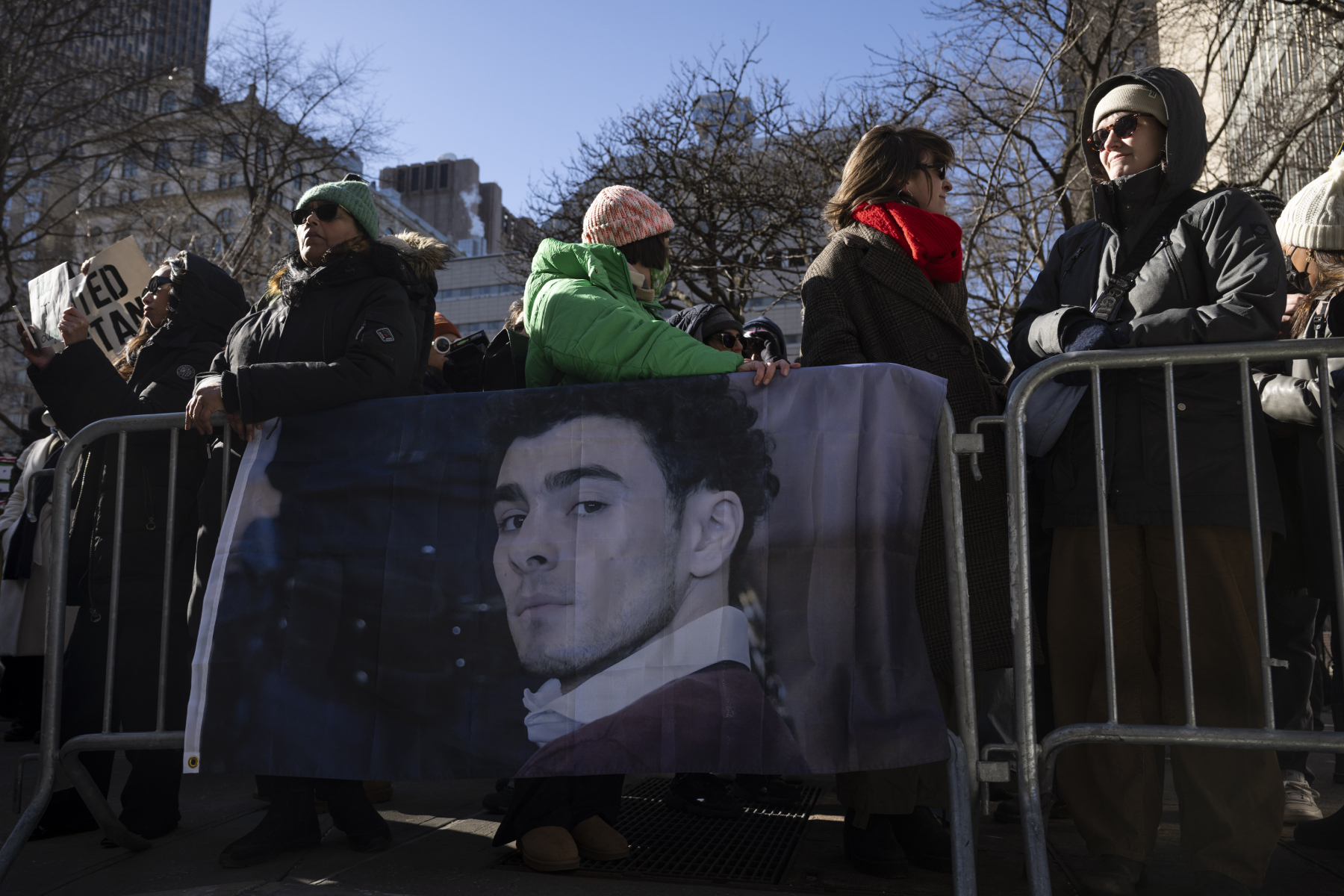
HangupsMusic.com – In an era where digital currents can transform obscure figures into viral sensations, director Liza Mandelup’s latest short documentary, Luigi, offers a compelling exploration into the intricate ecosystem of online devotion, celebrity, and political fervor. The film dissects the perplexing phenomenon surrounding Luigi Mangione, the 27-year-old accused of the high-profile murder of UnitedHealth CEO Brian Thompson, who, despite his serious legal entanglements and public silence, has paradoxically ascended to the status of an internet folk hero and object of intense public fascination. Mandelup, a filmmaker known for her incisive examinations of digital culture, navigates the tangled web of factors—from appearance and perceived grievance to algorithmic amplification—that have cemented Mangione’s unlikely place in the collective consciousness.
The genesis of Luigi stemmed from an almost subconscious infiltration of Mandelup’s digital life. As she was initially casting for a separate project exploring the dynamics of fan culture, images and narratives related to Mangione began to permeate her social media feeds and, strikingly, even her dreams. This personal experience served as a potent catalyst, crystallizing for Mandelup the very essence of the phenomenon she wished to document: how individuals forge profound, often emotionally charged, connections with a complete stranger, particularly one facing such grave accusations. Mangione, who has entered a plea of not guilty to the charges, became a canvas upon which a fragmented and frustrated public projected its myriad desires and grievances.
Mandelup articulated to Rolling Stone how the relentless circulation of Mangione’s image and any associated information played a pivotal role in his meteoric rise. “You’re fed his image all the time, any information about it,” she remarked, emphasizing how this constant digital presence created a “perfect storm” where a sensational news story intersected with the pervasive power of visual media, catapulting Mangione into an unexpected realm of pop culture prominence. This observation underscores a crucial aspect of contemporary digital fame: visibility, irrespective of context, can be a potent accelerant for public interest and, subsequently, devotion.
Premiering to critical acclaim at the Sundance Film Festival, Luigi delves deep into the lives of some of Mangione’s most ardent supporters. The documentary features intimate interviews that lay bare the diverse motivations behind their fervent admiration. Viewers are introduced to Boo Patterson, an artist whose striking portrait of Mangione, titled “The People’s Husband,” transcended mere art to become a viral sensation and a symbol of the burgeoning movement, spawning a wave of merchandise. Musician Princess Nostalgia provides insight into the creative process behind her evocative outlaw ballad, “Baby I’ll Be Ur Mario,” a track that fittingly accompanies the film’s closing credits, encapsulating the romanticized rebellion central to the fandom.
The film also captures the raw emotional confessions of a young man grappling with what he perceives as love for Mangione, articulating, “How can you not fall in love with someone who wants to be a voice for the people?” His sentiment speaks volumes about the yearning for advocacy and representation that Mangione, despite his silence, seems to embody for many. Another poignant segment features a middle-aged woman sharing a deeply personal letter penned to Mangione, a missive that intertwines personal yearnings with a fervent desire to address the systemic injustices of the world.
What distinguishes Mandelup’s approach is her commitment to presenting these individuals not as subjects of ridicule or shock, but as sincere, thoughtful, and articulate figures. She noted that every interviewee possessed a distinct character, unafraid to voice their convictions and passionate about their support, often for profoundly personal and varied reasons. This non-judgmental lens allows the audience to engage with the complexity of their emotions and motivations, fostering an understanding rather than merely observing.
Mandelup’s prior directorial endeavors have consistently explored the multifaceted landscape of digital youth culture, including projects on fan phenomena, the mechanics of internet celebrity, and evolving perceptions of beauty and attraction in a hyper-connected world. Her extensive background made the Mangione phenomenon a natural progression, particularly given the unique circumstances: a public figure who, despite being at the center of a national controversy, has largely remained silent. This void, Mandelup posits, has allowed his followers to project their own narratives, ideals, and frustrations onto him, transforming him into a vessel for collective sentiment. “People have really projected their ideas onto him, and they feel like they have a lot to say to him,” Mandelup explained, likening many of the interviews to “diary entries” that reveal the deeply personal significance Mangione holds for his devotees.

While parasocial relationships—one-sided connections often fostered by media consumption—are hardly a novel concept in the age of influencers and podcasters, the Mangione phenomenon presents a distinct departure. Unlike celebrities who cultivate intimacy through constant dialogue and shared experiences, Mangione’s connection with his burgeoning fanbase appears to be rooted in the very nature of the alleged crime itself. The widely recognized failings and frustrations associated with the American healthcare system provided a fertile ground for public empathy and identification. Many have experienced, or witnessed firsthand, the systemic inequities and perceived injustices that fuel widespread discontent.
Mandelup aptly characterizes this confluence as a “perfect storm.” In a society increasingly beleaguered by complex problems and a pervasive sense of helplessness, Mangione, however inadvertently, became a focal point for collective frustration. “People are very frustrated, they don’t know where to turn, and they don’t know what to do with their frustration,” she observed. His story offered a potent, albeit controversial, vehicle for people to channel and express their grievances, transcending the typical celebrity-fan dynamic to become a conduit for broader societal angst.
A critical dimension explored in Luigi is the fascinating and often uncomfortable tension between political outrage and sexual attraction that defines this particular fandom. Mandelup suggests that this blend is highly specific to the current cultural moment, where the desire to share in another’s frustration eclipses the conventional pop star fantasy of shared joy. Crucially, Mangione’s physical appearance also played a significant role in amplifying the spectacle. “We live in an image obsessed world and having his face be part of the story became such a big deal,” she noted. The film meticulously examines how fans grapple with the cognitive dissonance of being drawn to someone accused of a grave crime, acknowledging the profound complexity of such feelings.
The documentary makes no attempt to provide definitive answers or resolve these inherent contradictions. Instead, it embraces the ambiguity, allowing the viewer to sit with the discomfort and reflect on the present moment. This approach aligns with Mandelup’s broader creative and logistical impulses. Eager to break free from the protracted production cycles common in long-form documentary filmmaking, Mandelup and her core team—producer Lauren Cioffi, field producer Peter Heres, and director of photography Benjamin Whatley—sought a more immediate mode of storytelling. The burgeoning Mangione fandom proved ideal, offering a rapidly growing community that was readily accessible for online casting and eager to share their perspectives.
This sense of immediacy is integral to the film’s thematic potency. By releasing the short documentary before Mangione’s trial commences and before he has extensively spoken publicly, Luigi captures its subjects in a unique “What if?” zone. “People are able to live more in the ‘What if?’ zone,” Mandelup articulated, highlighting how this temporal window allows for a deeper exploration of speculation, projection, and the fluid nature of public perception before facts are fully established.
Mandelup concludes by emphasizing the profound, often contradictory, ways individuals express their connection to Mangione. The film reveals a struggle within the fanbase, where supporters acknowledge the severity of the accusations while simultaneously feeling compelled to offer their backing. This internal conflict, Mandelup suggests, extends beyond the individual, reflecting a larger societal introspection: “As a country, what are we about? What are we supporting?” Luigi thus transcends the personal narratives of its subjects to offer a powerful, albeit unsettling, mirror to contemporary American values, anxieties, and the complex interplay of justice, media, and public sentiment in the digital age.
Luigi credits:
Director & Producer: Liza Mandelup
Producer: Lauren Cioffi
Executive Producers: Ryan Mazie, Alexandra Dale
Director of Photography: Benjamin Whatley
Field Producer: Peter Heres
Made in Association with Rolling Stone Films