
 By Azzam Bilal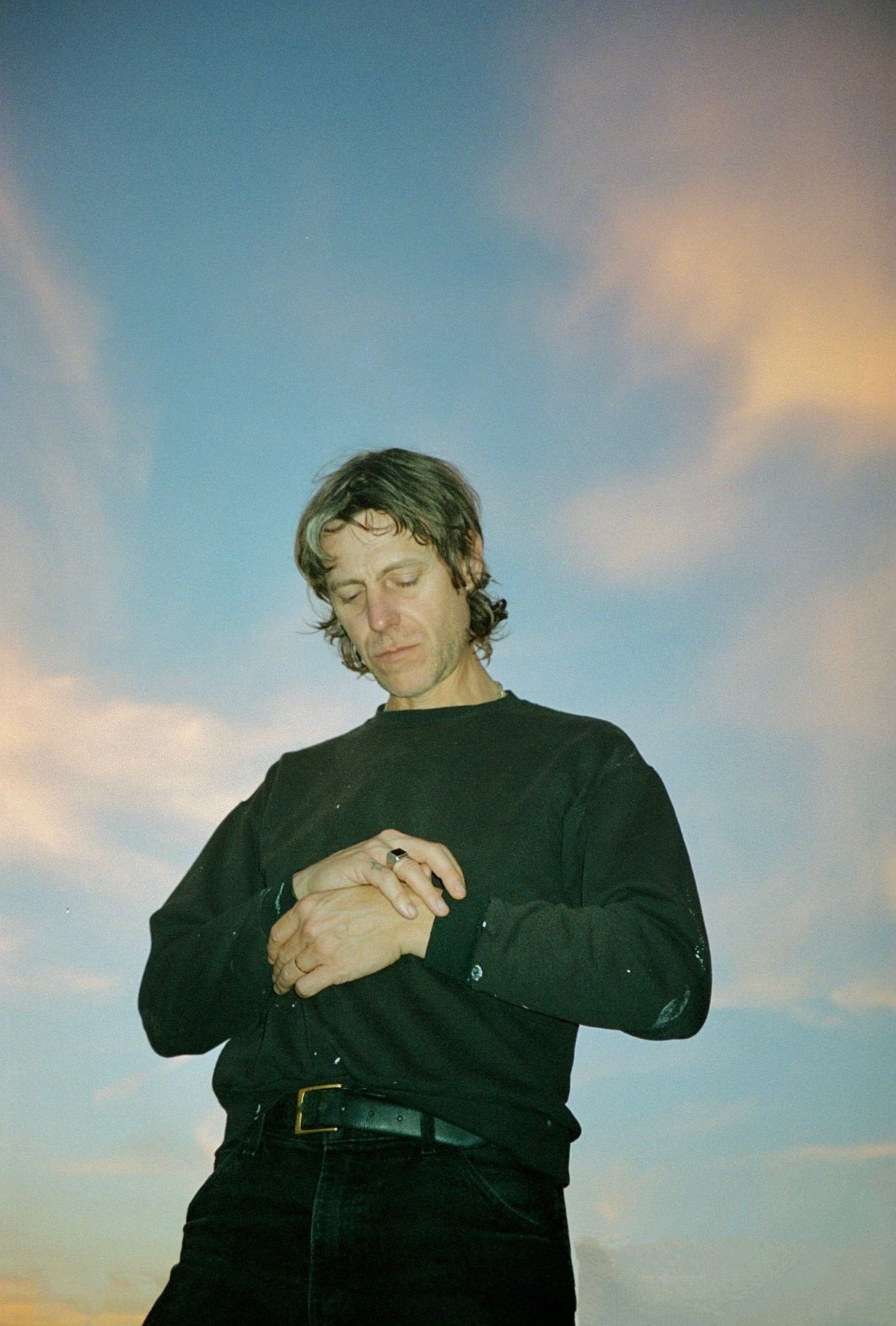
HangupsMusic.com – Los Angeles, The landscape of contemporary psychedelic rock is often characterized by its fluidity, a genre where the boundaries between the past and the present blur into a kaleidoscopic haze. Few artists have navigated this territory with as much idiosyncratic grace as Tim Presley. Known for his work under the moniker White Fence, Presley has spent over a decade crafting a discography that feels both like a lost relic of the 1960s and a sharp, modern commentary on the isolation of the digital age. After a prolonged period of relative silence, the announcement of a new White Fence record is not merely news for the indie faithful; it is a significant cultural marker for the West Coast underground. Presley has officially pulled back the curtain on his latest studio endeavor, a full-length album titled Orange, marking his first release under the White Fence name since 2019’s critically acclaimed I Have to Feed Larry’s Hawk.
Set to arrive on April 24 via the venerable Drag City label, Orange represents a homecoming of sorts. For this project, Presley has once again enlisted the production talents of his longtime friend and frequent collaborator, Ty Segall. The partnership between Presley and Segall is one of the most fruitful in modern rock, a creative marriage that has yielded some of the most visceral and inventive music of the last fifteen years. Their history is storied; Segall previously sat in the producer’s chair for White Fence’s 2014 standout For the Recently Found Innocent, and the duo famously joined forces for the collaborative LPs Hair in 2012 and Joy in 2018. Segall’s involvement suggests a return to a more robust, perhaps more abrasive sonic palette, contrasting the often delicate and pensive arrangements found on Presley’s more recent solo-leaning efforts.
The unveiling of the album is accompanied by the lead single, "Your Eyes," a track that serves as a poignant re-introduction to Presley’s songwriting. To bring the visual component of the single to life, Presley turned to Agathe Rousselle, who directed the accompanying music video. Rousselle, an acclaimed actress known for her transformative, Palme d’Or-winning performance in Julia Ducournau’s Titane, is also Presley’s wife, adding a layer of intimate, personal collaboration to the project. The synergy between the two artists is palpable, with Rousselle’s directorial lens capturing the nuanced, often surreal atmosphere that Presley’s music evokes.
In statements provided alongside the announcement, Presley offered a rare glimpse into the emotional and philosophical scaffolding of "Your Eyes." He described the song as a meditation on the duality of the human experience, touching on "love/loss, addiction/rehabilitation, and a good long look in the mirror." He specifically noted that this self-reflection was inspired by a moment of seeing his own image in a shop window on Polk Street in San Francisco—a city that has long served as a backdrop for his artistic evolution. Beyond the weight of these themes, Presley emphasized a desire for raw expression, stating his intent to "sing my little heart out" and to "sing life" in all its inherent absurdity. This vulnerability marks a shift from the more detached, cryptic personas Presley has sometimes adopted in the past, suggesting that Orange may be his most transparent and soul-bearing work to date.
The five-year gap between I Have to Feed Larry’s Hawk and Orange has not been a period of total dormancy for Presley. A true polymath, he has spent much of the intervening time immersed in the visual arts and literature. In 2020, he released Under the Banner of Concern, a comprehensive book of original drawings and poetry. His visual style—characterized by spindly lines, surrealist figures, and a sense of frantic movement—mirrors the jittery, nervous energy of his music. For Presley, the different mediums are often indistinguishable parts of a single creative output. The tactile nature of his artwork, often created with simple tools like ink and paper, informs the "mid-fi" aesthetic of his recordings, where the hiss of the tape and the imperfections of the performance are treated as essential textures rather than flaws.
The tracklist for Orange hints at a narrative that is both deeply local and cosmically broad. Songs like "Reflection in a Shop Window on Polk" ground the album in the physical geography of Northern California, while titles such as "That’s Where the Money Goes (Seen From the Celestial Realm)" suggest a broader, perhaps more spiritual inquiry into the mundane struggles of capitalism and survival. The inclusion of tracks like "I Wanted a Rolex" and "Given Up My Heart" point toward a fascination with the collision of material desires and emotional exhaustion. Throughout his career, Presley has excelled at capturing the feeling of being an outsider looking in, and Orange appears to continue this exploration of the "celestial realm" as it intersects with the gritty reality of the street.
The choice of the title Orange is also evocative. In the context of Presley’s work, color often carries heavy symbolic weight. Orange is the color of the California sunset, of hazard signs, of vintage guitar amplifiers, and, as the second track "I Came Close, Orange for Luck" suggests, a charm against the darkness. It is a warm color that can nonetheless feel overwhelming or artificial. In the hands of a producer like Ty Segall, one can imagine the sonic equivalent of the color: saturated mid-tones, glowing tube distortion, and a sense of vibrant, sun-baked energy.
The technical reunion with Segall is particularly noteworthy given where both artists currently stand in their careers. Segall has spent the last few years moving toward increasingly complex, progressive arrangements, while Presley has often leaned into the baroque and the avant-garde. Their collaboration on Orange likely represents a synthesis of these trajectories—a marriage of Segall’s technical precision and Presley’s penchant for melodic unpredictability. Their previous work together has always been defined by a sense of mutual challenge, with Segall’s drumming and production providing a sturdy skeleton for Presley’s ghost-like vocals and spindly guitar leads.
As the release date of April 24 approaches, the anticipation within the indie community is grounded in a respect for Presley’s longevity. Since the dissolution of his earlier bands like Darker My Love and his stint in The Fall, Presley has carved out a niche as one of the most consistent and influential figures in the garage-rock revival. However, calling White Fence "garage rock" has always felt like an oversimplification. His music draws as much from the whimsical psych-pop of Syd Barrett as it does from the jagged punk of Television or the lo-fi experiments of Guided by Voices.
Orange arrives at a time when the "California sound" is being redefined once again. While many of his peers have moved toward more polished, commercial sounds, Presley remains committed to the idiosyncratic and the handmade. His music feels like a transmission from a different frequency, a reminder that the most compelling art often comes from a place of deep, solitary reflection. Whether he is "singing his heart out" about the absurdity of life or contemplating his reflection on a San Francisco street corner, Tim Presley continues to be an essential voice for those who find beauty in the frayed edges of the world.
The full tracklist for Orange is as follows:
01 That’s Where the Money Goes (Seen From the Celestial Realm)
02 I Came Close, Orange for Luck
03 Your Eyes
04 Given Up My Heart
05 Unread Books
06 Evaporating Love
07 Reflection in a Shop Window on Polk
08 I Wanted a Rolex
09 When Animals Come Back
10 So Beautiful
11 Blind Your Sun
With Orange, White Fence is not just returning to the stage; they are inviting listeners back into a world that is uniquely theirs—a world where the sun is always setting, the tape is always running, and the mirror always tells the truth, however absurd it may be. The album will be available via Drag City on all major platforms and physical formats this April.