
 By Azzam Bilal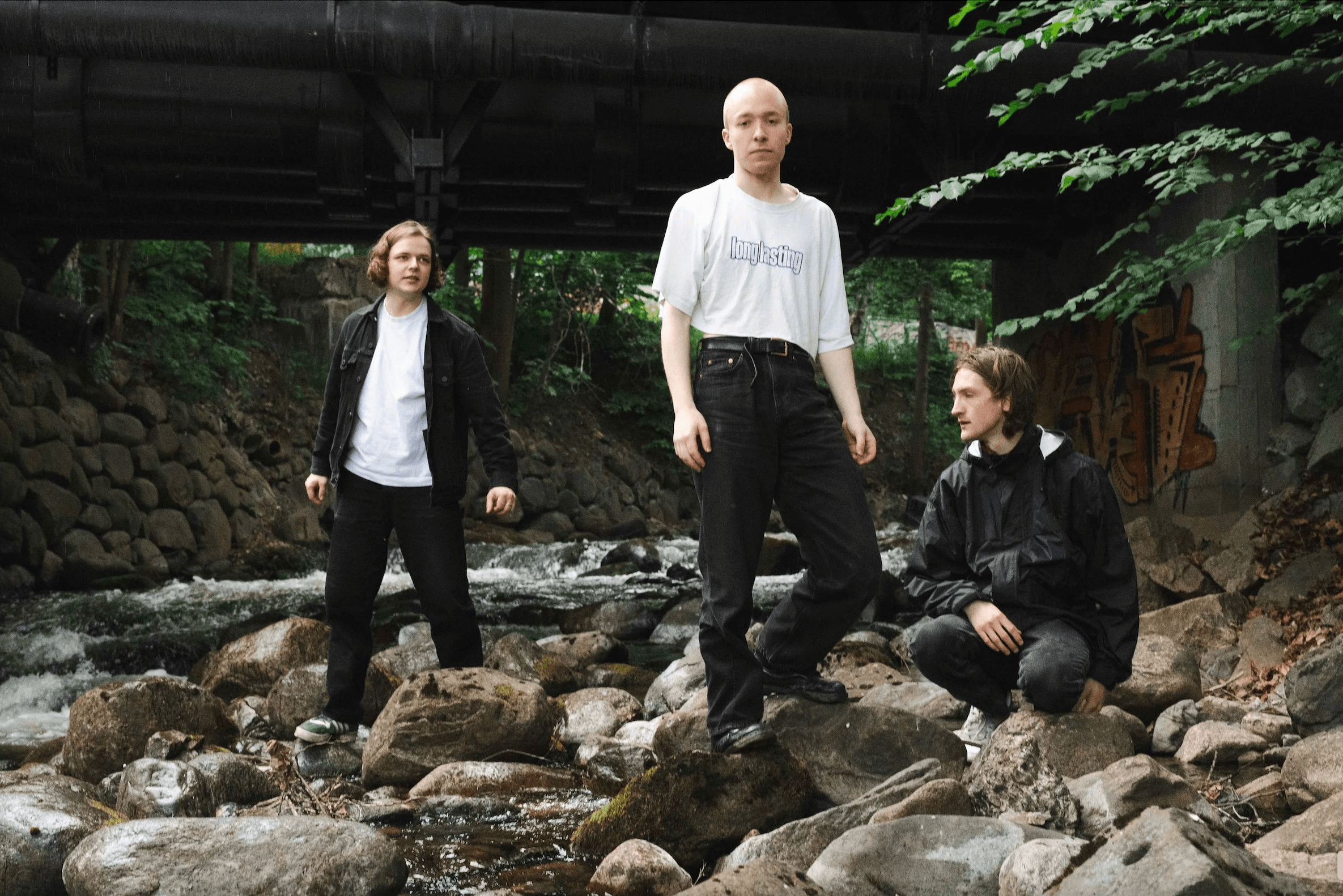
HangupsMusic.com – Oslo, Norway. The trajectory of a band is often defined by the company they keep and the speed at which they evolve. For the Norwegian post-hardcore outfit Hammok, that trajectory has just shifted into a higher gear. The Oslo-based trio has officially announced their signing to the prestigious Sargent House label—a move that places them alongside a roster of legendary boundary-pushers like Deafheaven, Chelsea Wolfe, and Russian Circles. Accompanying this landmark industry news is the announcement of their second full-length studio album, When Does This Place Become Our Scene, which is slated for a worldwide release on June 5.
The announcement marks a significant milestone for a band that has spent the last six years meticulously refining a sound that sits at the volatile intersection of punk, noise rock, and post-hardcore. Comprising vocalist and guitarist Tobias Osland, bassist Ole Benjamin Thomassen, and drummer Ferdinand Aasheim, Hammok has spent their formative years building a reputation for high-intensity performances and a sonic palette that refuses to settle into easy categorization. With the backing of Sargent House, the band seems poised to translate their localized Norwegian success into a broader international conversation.
To herald the arrival of the new record, Hammok has shared the lead single, titled "The Scene." The track serves as a mission statement for the album, both musically and philosophically. It is a song born from the exhaustion and exhilaration of the road, written while the band was touring and grappling with the complexities of modern subcultures. According to Osland, the song was a "natural response" to the positive reception they received while traveling, as well as the diverse array of people they encountered along the way. The lyrics of the single eventually provided the title for the album, posing a question that many artists in the digital age find themselves asking: at what point does a physical or digital space transform into a genuine, living community?
The music video for "The Scene," directed by Christoffer Bya, visually mirrors the band’s interest in perspective and transparency. Set in an outdoor environment, the video features the band performing atop a clear sheet of plexiglass. This choice of staging creates a sense of being suspended, highlighting the tension between the band’s grounded, visceral energy and the somewhat clinical, detached nature of the modern "scene." It is a striking visual metaphor for the themes explored throughout the upcoming record.
When Does This Place Become Our Scene is a self-produced effort, with Tobias Osland taking the reins behind the boards. This internal control over the production process suggests a deeply personal and uncompromising vision for the record. Lyrically, the album is expected to dive deep into the social politics of the hardcore genre, examining its historical lineage while simultaneously questioning how those traditions translate to the social media era. In an age where "community" is often measured in likes, shares, and algorithmic reach, Hammok is asking harder questions about the reality of human connection. Osland has noted that a central theme of the writing process was the concept of solitude—questioning whether being alone is a source of strength or a sign of alienation, and how one finds a sense of belonging in a fragmented world.
The band’s rise has been notably swift in terms of recorded output. While they have been active for nearly six years, their official debut didn’t arrive until 2022 with the Jumping/Dancing/Fighting EP. That release served as a jarring introduction to their chaotic yet controlled aesthetic, blending the raw aggression of early 2000s post-hardcore with a more modern, abrasive noise-rock edge. They followed this in early 2024 with their first full-length album, Look How Long Lasting Everything Is Moving Forward for Once, a record that solidified their status as one of Norway’s most exciting underground exports. To announce a sophomore LP so soon after their debut speaks to a period of intense creative fertility and a desire to strike while the iron is hot.
The transition to Sargent House is perhaps the most telling indicator of Hammok’s potential. The label has long been a sanctuary for artists who don’t fit neatly into the boxes of mainstream rock or metal. By joining this stable, Hammok is signaling that they are more than just a "punk" band; they are an experimental entity interested in the textures of sound and the weight of their message. The label’s history of supporting international acts with a dark, atmospheric, or aggressive bent makes it the perfect home for the trio’s next chapter.

The upcoming album’s tracklist suggests a varied emotional landscape. From the frantic energy promised by titles like "Blast Off (Blast Off) Blast Off" and "Semi-Automatic Machines" to the more introspective or perhaps cynical undertones of "When the Kids Are Too Old to Cause a Scene" and "Confidence of a Beaten Horse," the record appears to be a comprehensive survey of the modern youth experience. There is an inherent sense of urgency in these titles, a feeling that the band is documenting a specific moment in time before it evaporates.
As the June 5 release date approaches, the anticipation within the global hardcore and noise rock communities continues to build. Hammok is part of a new wave of bands that are reclaiming the "hardcore" label not just as a musical style, but as a framework for exploring social and psychological boundaries. They are moving beyond the tropes of the genre to address the existential dread and the yearning for authenticity that defines life in the 2020s.
For those who have followed the band since their early days in the Oslo underground, this new era feels like a deserved graduation. For new listeners, When Does This Place Become Our Scene offers an entry point into a world where the music is loud, the questions are difficult, and the sense of community is something that must be actively fought for rather than passively consumed.
The full tracklist for When Does This Place Become Our Scene is as follows:
01 The Scene
02 Semi-Automatic Machines
03 Blast Off (Blast Off) Blast Off
04 Gooning for Free
05 Bang
06 Groundbreaker
07 Tap Water
08 CND
09 Thirst
10 When the Kids Are Too Old to Cause a Scene
11 Confidence of a Beaten Horse
12 For My Friends
In the lead-up to the album’s release, Hammok is expected to announce further tour dates and promotional appearances. Given the themes of the record, these live shows will likely serve as the ultimate test of the questions Osland has posed. If a "scene" is defined by the people who inhabit it, then Hammok is currently in the process of building a new one, brick by brick and riff by riff. Their journey from the local stages of Norway to the global platform provided by Sargent House is a testament to the enduring power of DIY ethics combined with a sophisticated, forward-thinking musicality.
As the music industry continues to grapple with the shifting sands of digital distribution and the decline of traditional subcultures, Hammok’s inquiry into the nature of "the scene" is more relevant than ever. Whether they find the answers they are looking for remains to be seen, but the exploration itself—loud, abrasive, and deeply human—is sure to be one of the most compelling musical narratives of the year. With When Does This Place Become Our Scene, Hammok isn’t just asking where they belong; they are carving out a space of their own.