
 By admin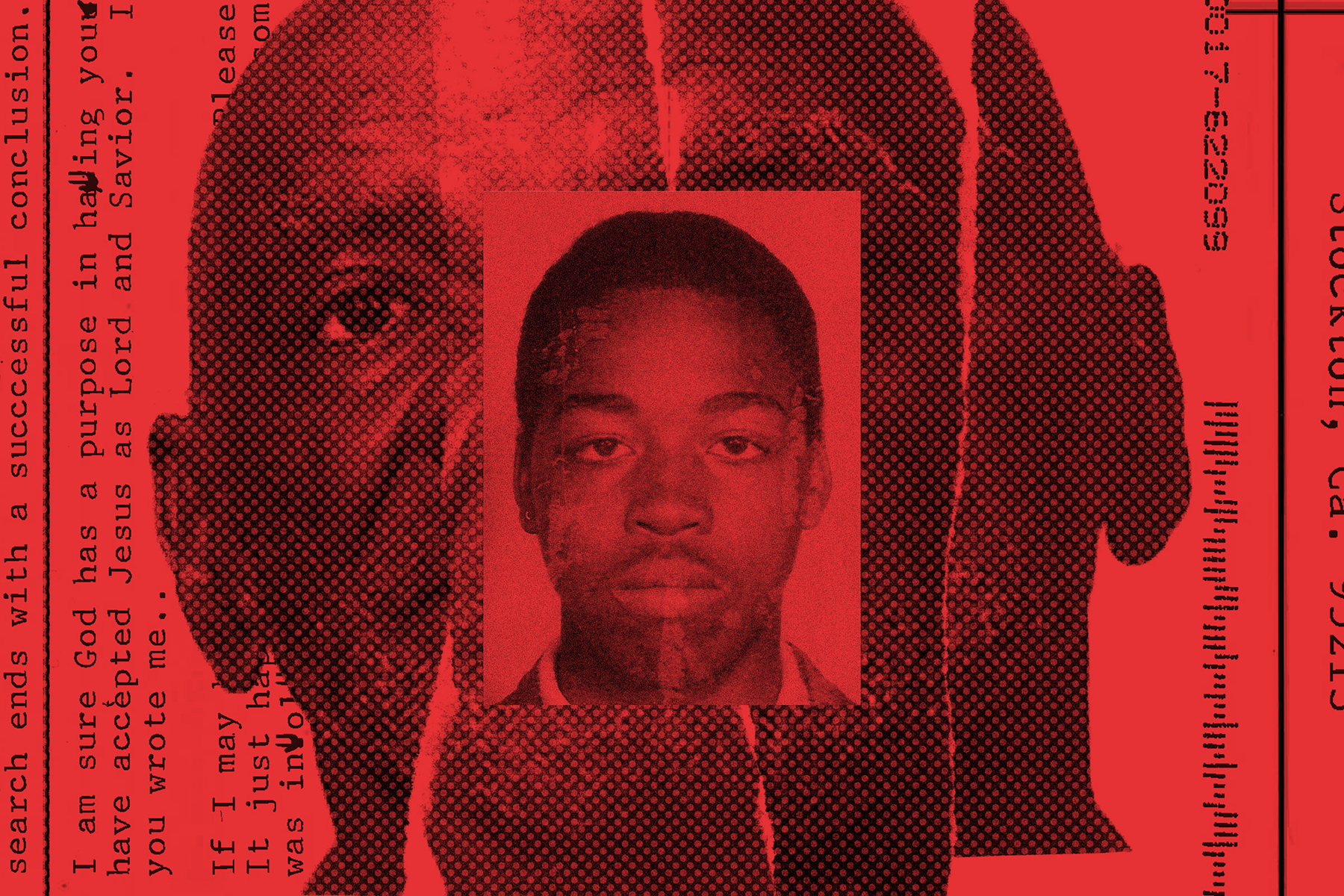
HangupsMusic.com – East Cleveland, Ohio, has known better days, its grand, historic avenues now lined with the ghosts of once-magnificent mansions, their facades crumbling under the weight of time and neglect. Yet, amidst this decay, a solitary Starbucks offers a surprising pocket of normalcy, a beacon in a city often overshadowed by its struggles. Here, Richard Jones, a 56-year-old tech entrepreneur, nurses a mocha, a sweet, creamy contrast to his rugged, military-man physique and neatly trimmed goatee. Though his journalism career ended in the Nineties, the scent of a compelling lead still ignites a familiar, fervent obsession within him—an intensity he half-jokingly attributes to his divorce. This relentless drive has now ensnared him in a chilling cold case: the decades-old murder of Frankie Little, a foundational member of the iconic R&B group, The O’Jays.
Little’s story is a tapestry woven with unfulfilled potential and heartbreaking neglect. A talented musician who stepped away from the spotlight just as The O’Jays were poised for global stardom, he later served in Vietnam, only to vanish without a trace from East Cleveland in the late 1970s. For years, his remains lay unidentified in a remote Twinsburg field, a tragic John Doe. It wasn’t until late 2021, aided by the groundbreaking science of forensic genealogy, that his identity was finally revealed, bringing a fleeting burst of media attention to a life largely overlooked. Yet, even with his name restored, the pursuit of his killer languishes, hampered by the passage of time and the limited resources of a small-town police force already contending with a surge of contemporary crime.
Jones, however, refuses to let the case fade back into obscurity. He’s consumed by a theory: that Little’s murder is linked to Samuel Dixon, a serial killer whose horrific crimes, despite their brutality, garnered surprisingly little public notice. Dixon, a Black man convicted in 2003 for the murder and sexual abuse of four individuals, has remained largely an anonymous figure in the annals of true crime. Jones believes this oversight might have allowed Little’s case to truly go cold, assuming Dixon is indeed responsible for another life lost. My own journey into this labyrinth began with a skeptical email in August 2025, bearing the subject line "Frankie Little Killer Found." Having previously chronicled Little’s identification for Rolling Stone in 2022, I was wary of sensational claims, but Jones’s conviction, conveyed during our subsequent phone call, was compelling enough to draw me to East Cleveland. What I discovered, through conversations and a disturbing correspondence with a little-known serial killer, added a new, horrifying dimension to an already profound tragedy.
Seated across from me in that East Cleveland Starbucks, Jones meticulously laid out his findings, a folder brimming with old articles, including my own 2022 feature, "The Mysterious Death of an O’Jay." He recounted how the details of Little’s demise – his body found dismembered, suggesting blunt force trauma or a shotgun blast – struck him as uniquely personal, or the work of a serial predator. "It had a personal touch to it, really personal – that or a serial killer," Jones affirmed, his gaze intense. That killer, he was increasingly convinced, was Samuel Dixon, currently serving multiple life sentences in a California prison.
To fully grasp Jones’s intricate web of connections, one must delve into the byzantine world of East Cleveland politics. The city itself, a grand vision of John D. Rockefeller abandoned during the Great Depression, now struggles with an alarming crime rate and pervasive poverty, with over half its children living below the poverty line. Enter Eric Brewer, a seventy-two-year-old Vietnam veteran and self-proclaimed "bomb-throwing, hell-raising, score-settling yellow journalist." I met Brewer in September, amidst the peeling paint of the East Cleveland City Council building, where he now serves as Mayor Lateek Shabazz’s chief of staff. Clad in black and a U.S. Navy ballcap, Brewer’s focus remained keenly on an old political adversary: Otis Mays, his rival in the contentious 2004 East Cleveland mayoral election. During that campaign, Brewer, leveraging his muckraking skills for his publication, The Cleveland Challenger, unearthed a damaging allegation: Mays, he claimed, had used the college transcript of his then-roommate, Samuel Dixon – the future serial killer – to secure a substitute teaching position in Cleveland. The Cleveland Scene independently corroborated this in 2004, and while the Ohio Department of Education’s records for Mays’s application have since vanished, Bluffton College confirmed Dixon’s attendance, and Mays’s absence.

Jones, having once written for Brewer’s publications, knew Mays well. The octogenarian Mays, still a fixture at council meetings, piqued Jones’s interest when his name surfaced during the investigation into Little’s disappearance. A critical detail from my 2022 article resonated with Jones: on the last day he was seen alive, Frankie Little had crossed the street to demand payment from a neighbor for odd jobs. Jones became fixated on identifying this neighbor. His diligent search led him to Rachella Womack, Little’s girlfriend at the time of his disappearance. As Womack described the cul-de-sac where she and Little had lived, Jones’s Google Maps search pinpointed a location strikingly close to Otis Mays’s address – a house Mays had inhabited for over five decades, some of those years with Samuel Dixon. Jones, driven by his hunch, visited Mays’s aging white house with red trim, now a dilapidated structure on a largely cleared street. Mays, seemingly disoriented, confirmed Dixon had lived there but denied any knowledge of Frankie Little – a denial Jones found suspect, given Twinsburg Police had already interviewed Mays about Little the previous year.
Frankie Little’s early life had glimmered with promise. A lifelong musician, more attuned to guitar riffs and custom clothing than sports or commerce, he joined The O’Jays in the mid-1960s, even earning a songwriting credit on their 1964 track, "Oh, How You Hurt Me." Eddie Levert fondly recalled Little’s "Curtis Mayfield style" and gentle nature, unable to reconcile the musician with the violent end he met. However, the demands of the music industry proved too much. Levert recounted Little’s homesickness when the band moved to California, leading to his return to Cleveland. Local barber Art McKoy remembered Little lamenting his choices while getting a trim, noting the musician’s descent into alcohol and drugs, which ultimately led to his departure from the rising O’Jays. After a tour of duty in Vietnam, Little briefly found love and fathered a child in California, but soon returned to East Cleveland, opening a record store and deli with his brother, Johnny. In the early 1970s, he had another child, Frankie Jr., with nurse’s assistant Diana Robinson, but she declined marriage, citing his previous marriage and his failure to connect with his first daughter. Frankie Jr. eventually lived with his father and Rachella Womack until Little’s sudden disappearance in 1979, an event Womack recalled as a jarring, inexplicable void.
Detective Eric Hendershott of the Twinsburg Police Department confirmed that Mays had been interviewed, not as a suspect, but due to his proximity to Little. Mays, however, had offered no useful information. Hendershott also acknowledged Jones’s tip about Dixon, stating that police were indeed "looking into" the serial killer due to his known "ties to the area." Yet, discrepancies cloud the picture. Womack had initially described the neighbor Little visited as an "approximately 50-year-old Black male" who had killed his wife, a detail that doesn’t perfectly align with Dixon’s profile at the time. However, Womack, a teenager then, now admits her perception of age might have been skewed. Hendershott, with the blessing of his superiors, provided Dixon’s mugshot and prison records. The image revealed an aged man with a bald head and a grizzled grey beard, his eyes disturbingly vacant. The documents, which I reviewed in my hotel room, were profoundly unsettling.
Born in North Carolina in 1940 to a minister and a nurse, Samuel Dixon’s early life held a veneer of respectability. He earned a degree in Bible studies from Bluffton College in Ohio in the 1960s. But trouble found him early: at 22, he was charged with vehicular manslaughter in 1962, followed by burglary and larceny at his alma mater and local businesses. His defense cited a "severe personality change." Later, he faced arrest for smuggling two male Mexican teenagers into the U.S. (though not charged) and soliciting a lewd act in 1990. After his divorce around 1965, Dixon relocated to Cleveland, where he seemingly maintained a low profile, managing local businesses and, according to Mays, residing with him for a period. He moved to California in the late 1970s, becoming an ordained minister in 1989, and claiming to be HIV positive "since they’ve known about it."
Dixon’s known killing spree, unusually, commenced in his late fifties, an age when most serial offenders cease their activities, deviating from the typical profile of men aged 20-40. His first three identified victims—37-year-old Robyn Whitehead, 36-year-old Salvadore Reyes, and an unnamed homeless woman—all perished in the spring of 2000. He claimed 46-year-old Gary Boothe’s life in 2001. Arrested in May 2001 for possessing Boothe’s rental car, Dixon chillingly confessed to the murders in agonizing detail, claiming divine instruction. He described raping their bodies for days post-mortem and attempting to dissolve some with acid, drawing inspiration from Jeffrey Dahmer, whose childhood home was less than twenty miles from where Little’s remains were found. "You’re going to go down in history," he boasted to a deputy. "You’re looking at a man who killed four people." Despite this declaration, Dixon remained largely unnoticed by the media, a phenomenon Dr. Allan Branson, author of The Anonymity of African American Serial Killers, attributes to systemic racism and the ingrained societal perception of serial killers as exclusively white males. This bias, Branson argues, blinded authorities and the public to the prevalence of Black serial killers, a category his research reveals to be far more extensive than commonly believed.
Forensic psychologist James Reavis, who spent nineteen hours interviewing Dixon for his defense, found himself deeply disturbed. "I would take breaks, and I would squat down by my car, and I remember crying on several occasions," Reavis confided, describing Dixon’s utter lack of remorse and his chilling pride in his actions. Dixon recounted luring victims, engaging in sex until they refused, then drugging, raping, killing, and continuing to defile their deceased bodies. He experimented with bleach to dissolve corpses and abandoned one victim in a shopping cart. His detachment was stark: of one victim’s death, he remarked, "I was disappointed because [of her] death, I knew then that the sex has to end." Reavis noted that even a polygraph specialist was profoundly affected by Dixon’s unsettling gaze and confessions.

Whether Frankie Little suffered such horrors at Dixon’s hands remains an agonizing open question. Dixon asserted to his probation officer that he was in California by 1977, but memories spanning fifty years are notoriously unreliable. Hendershott continues to investigate whether Dixon might have still been in Cleveland when Little disappeared or if he could have returned. The official police statement, while acknowledging Dixon’s ties to the area, found "no evidence that ties Dixon directly to Frankie Little," and noted that Dixon’s murders were sexually motivated, a motive not currently believed to be present in Little’s case. However, they haven’t entirely dismissed him, particularly given the dismemberment of Little’s body and its secluded discovery, mirroring aspects of Dixon’s known methods. The Twinsburg police hope for new leads from the public.
My attempts to contact Otis Mays about his connection to Dixon proved fruitless. Calls went unanswered or were met with silence before he hung up. Richard Jones later informed me that Mays was "pissed" and dismissing my inquiries as "BS." Reavis, while acknowledging the similarities in victim disposal, speculated that Dixon, typically a braggart, would have confessed if he had killed Little, unless some aspect of the murder deviated from his usual pattern. Branson, however, disagreed, suggesting that a specific detail or motive might have caused Dixon to withhold confession, particularly given the victim’s proximity.
Finally, I reached out to Dixon directly in prison. My initial letter, asking if he killed Little and for a confession, elicited a typewritten reply on the back of a torn medical form. The missing ‘y’ key made for a jarring read, a fittingly unsettling missive. "I never knew a Frankie Little, never lived in Twinsburg and he had nothing to do with my case," he wrote, concluding with unsolicited religious advice. My follow-up, specifically asking about his residency with Otis Mays in East Cleveland during the 1970s and the transcript incident, went unanswered for weeks. After offering paper and stamps, a handwritten reply arrived, his typewriter having "quit." He confirmed living with Mays but couldn’t recall specific dates. Then, unprompted, he denied killing the homeless Jane Doe victim, a striking reversal of his twenty-year-old confession. Subsequent letters offered little substance, leaving the question of Frankie Little’s killer frustratingly unresolved.
Despite the inconclusive leads, the Twinsburg police persist in their investigation, and Frankie Little’s family clings to the hope of closure. During my visit to Cleveland, I met Margaret O’Sullivan, Little’s sprightly 83-year-old cousin, whose child’s DNA upload led to Frankie’s identification. Perched beside me on her couch, she spoke with a tremor in her voice, describing the relief of knowing Frankie’s fate, even as the search for justice continues. "I’m glad they keep it open so it gives us some relief. Hopefully we get some answers," she said. She and Johnny, Frankie’s brother, now plan to visit Frankie’s grave in a military cemetery. I was also able to reconnect them with Frankie Jr., who has been incarcerated since 2006 for manslaughter. His voice, crackling over the prison phone, conveyed immense joy at re-establishing contact with his father’s family.
Richard Jones, the indefatigable former journalist, remains driven by his dual passions: the thrill of the chase inherent to true crime, and a deep-seated belief that Frankie Little’s family deserves the truth. His relentless pursuit, sparked by an email and fueled by a decades-old mystery, continues to shed light on a forgotten life and the dark corners of a city’s past, pushing for answers that might finally bring peace to a long-suffering family.